
Abstract:
Starcloud, an American space computing startup, is advancing a rather bold plan: sending Bitcoin mining equipment into space and trying to become the world's first company to mine Bitcoin in orbit. The company is supported by NVIDIA and other institutions. Its long-term goal is not just to send a mining machine into orbit, but to use solar energy and vacuum environment in space to establish a large-scale orbital data center so that high-energy computing tasks such as artificial intelligence computing and cryptocurrency mining can be run in space.
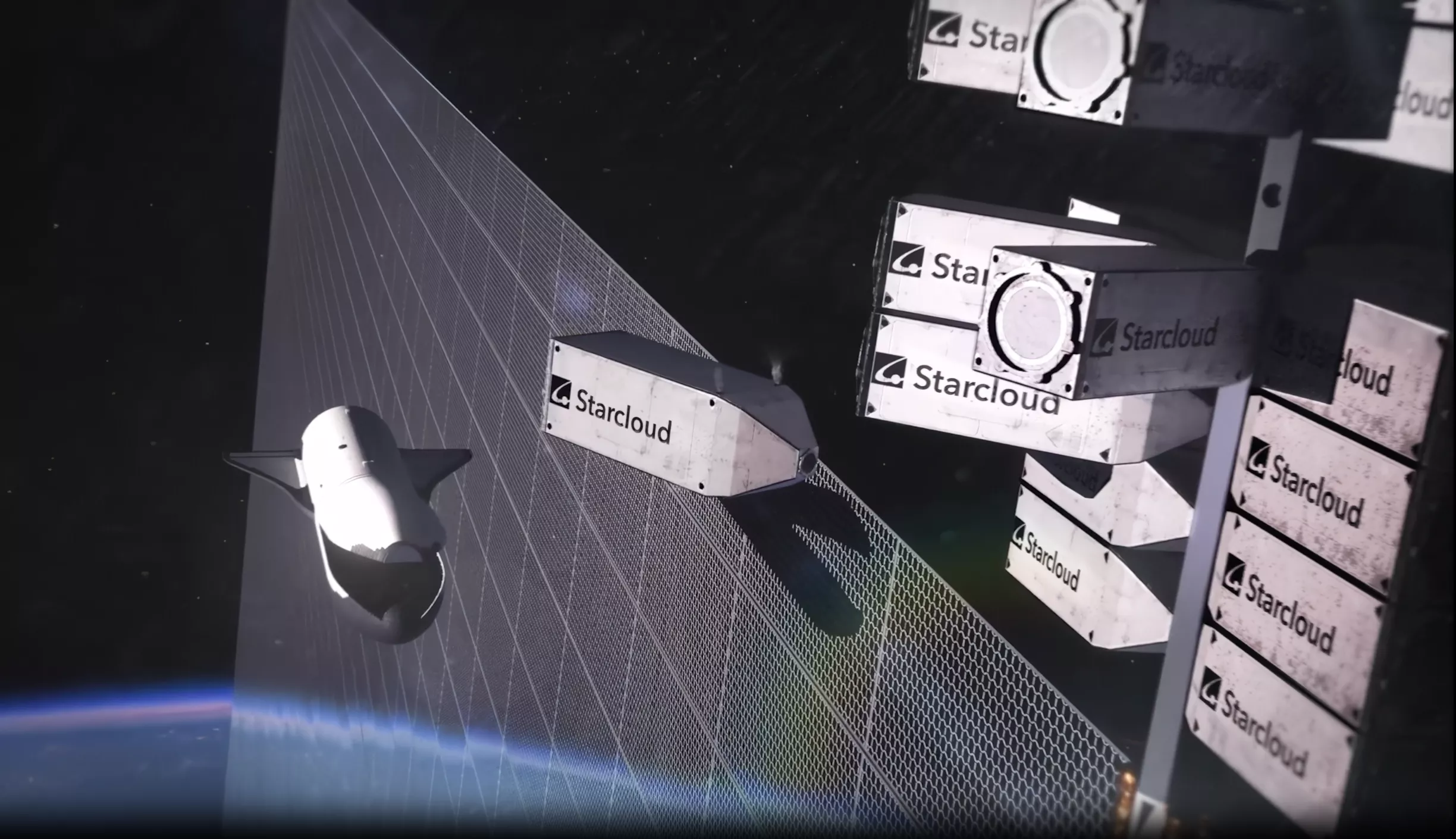
Starcloud was originally named Lumen Orbit and was established in 2024. It mainly develops orbital data centers. The company believes that deploying computing infrastructure into space has multiple advantages, the most important of which is that it can directly use solar power to generate electricity while avoiding some of the energy supply and land constraints faced by terrestrial data centers. The company also hopes to use the space environment to dissipate heat, thereby reducing the engineering stress caused by the large amounts of heat generated during the operation of high-performance computing equipment.
Starcloud has received support from NVIDIA and will launch a Starcloud-1 satellite equipped with NVIDIA H100 GPU into orbit in November 2025. The company previously said that this is the first time that data center-level GPU computing power has been truly deployed into space. Subsequently, Starcloud also successfully ran artificial intelligence models in orbit and attempted to conduct large-scale language model training directly in space.
Starcloud’s goals are also gradually expanding from a single experimental satellite to a complete orbital computing infrastructure. In February 2026, the company submitted plans to the U.S. Federal Communications Commission to deploy up to 88,000 satellites, which will be used to build an orbiting data center network. Although this scale is still very far away from actual deployment, it reflects that Starcloud does not regard space computing as a one-time technology demonstration, but hopes to eventually form a large-scale commercial infrastructure.
In this context, Bitcoin mining has become another experimental application in the Starcloud plan. The company plans to carry an ASIC mining machine specifically for Bitcoin mining on its second satellite, Starcloud-2, and hopes to verify the feasibility of running cryptocurrency mining equipment in an orbital environment.
Bitcoin mining requires a lot of computing power and continuous power supply, and one of the biggest costs of traditional mining farms is electricity. Starcloud believes that if the mining machine is placed in space, it can directly use solar energy to generate electricity, thus avoiding the need to purchase large amounts of electricity on the ground. In addition, the solar energy acquisition conditions in orbit are different from those on the ground. With appropriate orbit and satellite design, solar panels can obtain relatively stable energy input.
But space mining does not mean that you can simply tie an ordinary Bitcoin mining machine to a satellite. Real engineering challenges include power generation, cooling, device weight, launch costs, communications and long-term reliability.
Among them, heat dissipation may be the most misunderstood issue. Space is a vacuum environment, so there is no air convection heat dissipation common on the earth. The heat generated by electronic equipment cannot be taken away directly through the air and can only be dissipated through structural conduction and infrared radiation. Therefore, although space does not have the same air environment and cooling water system as terrestrial data centers, this does not mean that heat dissipation is naturally easier.
One of the core ideas previously proposed by Starcloud is to release the heat generated by electronic equipment into space in the form of infrared radiation through large heat dissipation structures. For a large number of continuously running GPU and ASIC equipment, how to build a large enough cooling system under limited weight and volume will become one of the key factors in whether the entire orbital data center solution can be expanded in scale.
At the same time, space computing can also avoid some of the infrastructure problems faced when building ground-based data centers. Large-scale AI data centers on the ground require the construction of substations, power transmission facilities, cooling systems and large buildings, and require continuous access to large amounts of power. With the rapid growth of AI computing demand, power grid capacity has become an important limiting factor for the construction of data centers in some areas.
The idea of Starcloud is to place these computing devices directly on orbit, generate electricity through solar panels, and then use the power for computing devices such as GPUs, CPUs, or Bitcoin ASICs. Because the equipment does not occupy land on the ground and does not need to be connected to the traditional power grid, the company hopes to eventually build a computing infrastructure that is completely different from terrestrial data centers.
Of course, this model still faces huge economic challenges.
One of the biggest costs remains launch. Whether it’s GPUs, ASIC miners, solar panels or cooling equipment, they all have to be put into orbit first. Even though rocket launch costs have continued to decline in recent years, long-term deployment of tens of tons or more of computing equipment into orbit still requires extremely high financial investment.
This is why Starcloud currently does not simply regard the "space Bitcoin mining farm" as an independent commercial project, but combines it with the orbital data center. The company hopes to generate revenue through AI computing, cloud computing and other high-value computing tasks to dilute the cost of satellites and launch infrastructure. Bitcoin mining can be used as one of the applications that can continuously consume computing resources.
Starcloud has already made some progress in financing in this regard. In March 2026, the company announced the completion of a US$170 million Series A financing, with a valuation reaching US$1.1 billion, making it one of the fastest startups to reach a unicorn valuation in the history of Y Combinator. The funds received by the company will be used to continue developing orbital data center technology.
The cooperation between NVIDIA and Starcloud is not simply a financial relationship. Starcloud entered the NVIDIA Inception entrepreneurial program as early as the Lumen Orbit period and has always used NVIDIA GPUs as an important part of its space computing solution. The H100 carried by Starcloud-1 is a representative of this cooperation.
For Nvidia, the Starcloud experiment also provides an opportunity to test high-performance GPUs operating in extreme environments. If orbital data centers become a reality in the future, GPU computing will no longer be limited to ground computer rooms, but may become the core infrastructure on satellite platforms.
Starcloud has already demonstrated its ability to run AI models in orbit. The company has previously used the NVIDIA H100 on Starcloud-1 to process satellite data and run artificial intelligence models in orbit. This mode can reduce the need for some data to be transmitted back to the ground from the satellite, allowing the satellite to directly complete the data analysis, and then only send the processed results to the ground.
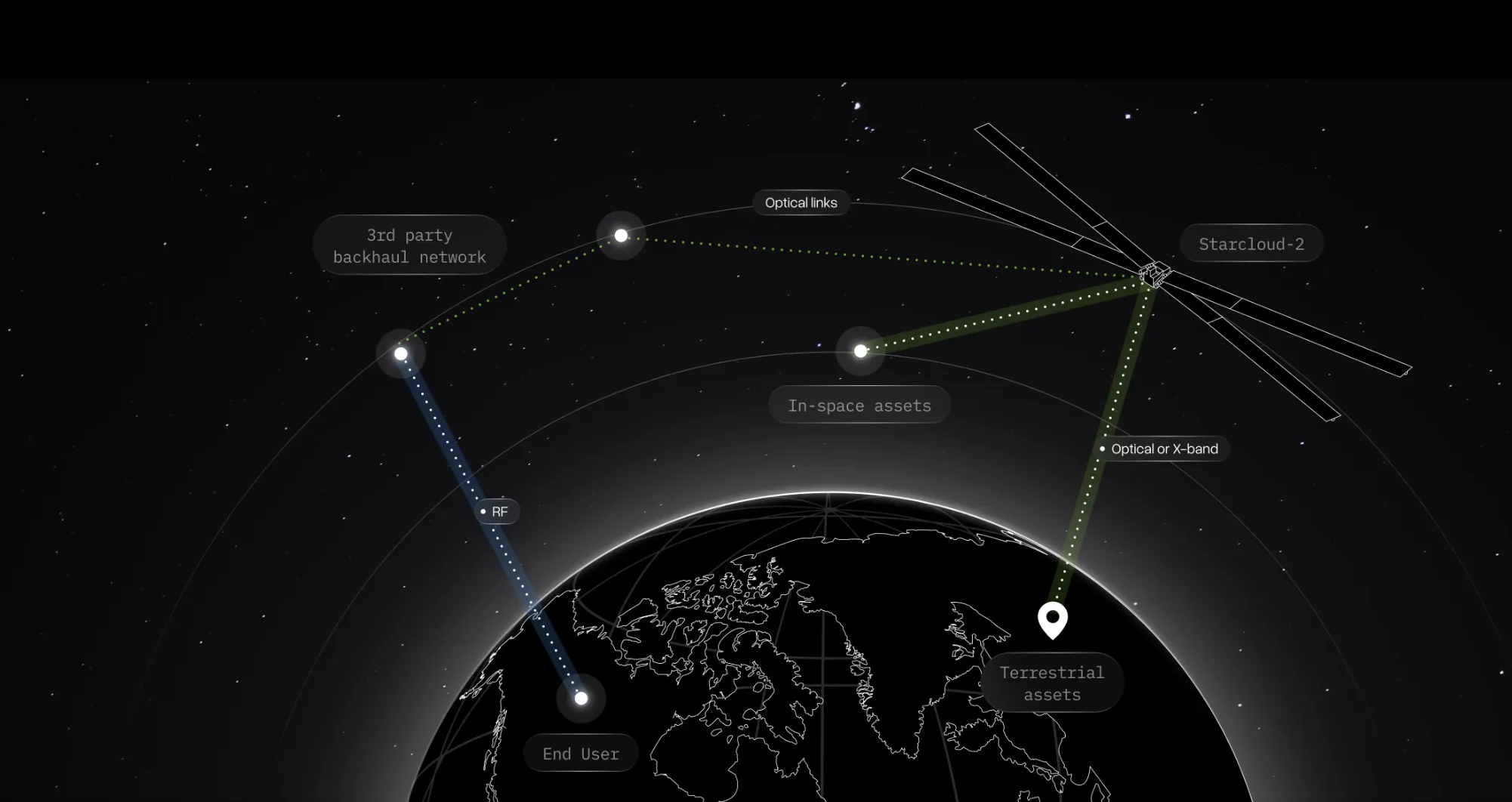
If this idea is eventually expanded to thousands or even tens of thousands of satellites, space computing may not only be used for AI training and reasoning, but may also undertake satellite image processing, scientific computing, communication network services, and other tasks that require large amounts of computing resources.
Bitcoin mining is one of the more special applications. Compared with AI computing, Bitcoin mining does not require processing complex data input, nor does it require frequent interaction with ground users, so from a pure computing task perspective, it is very suitable as a load that can run continuously in a remote environment. As long as the satellite can get enough power and the equipment can continue to work, hash calculations can continue to be performed.
But this does not mean that space mining is necessarily more profitable than ground mining. The income from Bitcoin mining depends on many factors such as mining machine computing power, power consumption, Bitcoin price, network computing power, and equipment costs. Once the mining machine is put into orbit, launch costs, satellite manufacturing costs, and maintenance costs must all be factored into the economic model. If these costs are too high, then even free solar power may not be commercially viable against above-ground mines.
Therefore, the more important significance of Starcloud's plan may lie in technical verification, rather than immediately establishing a "space Bitcoin mining farm" that can be profitable on a large scale.
If Starcloud-2 successfully completes this experiment, the company will obtain important data on the on-orbit operation of ASIC mining machines, solar power supply, thermal management, communications and remote maintenance. These experiences can also be used in future orbital AI data centers.
Starcloud’s long-term vision is to make space a new computing platform rather than a simple satellite deployment location. As artificial intelligence's demand for computing power and electricity continues to increase, the company hopes to deploy computing resources directly into orbital environments rich in solar energy resources, and form a distributed computing network similar to terrestrial cloud computing centers by increasing the number of satellites.
At present, this idea is still far away from large-scale commercialization. The plan of 88,000 satellites itself means extremely huge requirements for launch, communication, space traffic management and orbit maintenance. How to build a large-scale cooling system in orbit that can operate for a long time is also a problem that has not yet been completely solved.
However, Starcloud has proven something that was difficult to verify before with Starcloud-1: high-performance GPUs can indeed run on orbit and directly perform AI calculations. Next, the company hopes to further verify sustained high-load computing tasks such as Bitcoin mining through Starcloud-2.
If this series of experiments is ultimately successful, the future "space data center" may no longer be just a science fiction concept, but will gradually become a real computing infrastructure. By then, solar panels, GPUs, ASIC mining machines and large radiators may together form a new type of data center that is completely different from ground computer rooms, and Starcloud is trying to become a pioneer in this field.
Comments