
Abstract:
Apple Executive Chairman Tim Cook recently delivered a speech on the issue of children’s online safety at an event related to the United Nations General Assembly. The event comes amid global discussions around minors' use of social media, online platform supervision and digital safety. Cook emphasized that technology companies, governments and all parties in society have the responsibility to jointly reduce the risks that children face in the Internet environment.
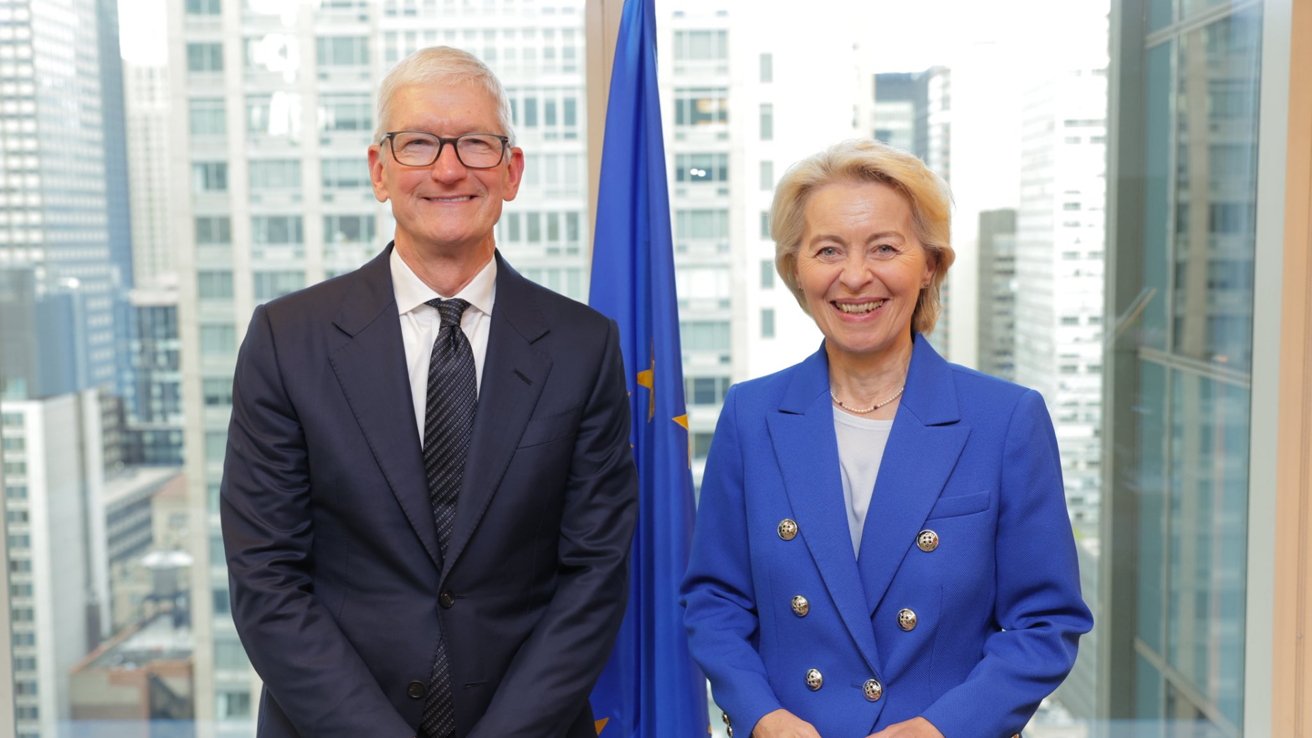
Cook will participate in relevant government and international affairs as Apple's executive chairman this time. After Apple completed the management transition in September this year, Cook no longer served as CEO, but became executive chairman and devoted more energy to government relations and the company's external affairs. Apple has previously made it clear that Cook's new responsibilities will include communicating with governments and other agencies. Apple has previously engaged with governments on issues such as child safety, artificial intelligence regulation and digital privacy.
Children’s online safety has become one of the issues that has received much attention during this session of the United Nations General Assembly. Governments around the world are considering how to protect minors while preventing online platforms from excessively collecting children's personal data or causing unnecessary restrictions on normal Internet use. At the same time, social media platforms are under increasing pressure to demonstrate that they are doing enough to prevent children from being exposed to harmful content and risks such as cyberbullying and sexual exploitation.
In related discussions, Cook emphasized that protecting children does not mean sacrificing privacy. Apple, which he represents, has long regarded privacy protection as an important principle for its products and services. Therefore, Apple prefers to achieve child protection through device-side processing, parental control, and reducing the platform's access to children's sensitive information.
During the United Nations General Assembly, the issue of children’s online safety was also linked to relevant policies recently promoted by Australia. Australia has implemented restrictions on the use of social media by children under the age of 16, making it one of the first countries in the world to systematically regulate the use of social media by minors. Australian Prime Minister Anthony Albanese met with Cook during his previous visit to the United States, and the two parties discussed children's online safety and Apple's parental control features for minors. Albanese later said Cook believed Australia was leading the way in regulating social media.
In recent years, Apple has continued to add child safety features to iPhones, iPads and other devices. Parental controls allow parents to restrict their children's use of specific apps, manage screen time, and control access to some communications and content. Apple has also continued to expand communication security features to reduce the risk of children being exposed to sensitive content.
Apple has also previously launched a communication security feature. When the system detects that children may receive or send nude photos, it can prompt through a device-side mechanism. In terms of design, such functions try to prevent Apple from directly obtaining user communication content to reduce the impact of child protection measures on privacy.
However, the balance between children's online safety and privacy has always been controversial. Some governments and law enforcement agencies want technology companies to further strengthen age verification, content filtering and detection of harmful information, while privacy groups worry that requiring mandatory age verification for all users could force companies to collect ID documents, biometric information or other sensitive data.
Apple has previously communicated with members of the U.S. Congress on related issues. When the United States launched legislative discussions on child safety supervision in the App Store in 2025, Cook met with members of the U.S. House of Representatives. Apple at the time objected to plans that would require app stores to verify users' ages and potentially collect sensitive information from children, and advocated for more parental decision-making on whether to provide children's age information to app stores.
Apple’s position is therefore not simply against child safety regulation, but rather an emphasis on the way regulatory measures are designed. Apple wants to avoid creating a system that would require technology companies to centrally collect large amounts of minors' identifying information, preferring to make child protection tasks shared between parental controls, on-device technology and app developers.
This time Cook discussed child safety during the United Nations General Assembly, which also occurred in the context of global governments further strengthening the protection and supervision of Internet minors. Europe, Australia, and some states and federal levels in the United States have been studying or implementing age restrictions, parental consent mechanisms, and social media responsibility systems in recent years.
Australia’s relevant policies have particularly attracted international attention. The country has begun restricting the use of some social media platforms by children under 16, while requiring technology companies to take measures to prevent minors from circumventing age restrictions. The Australian government hopes to establish a more stringent digital platform responsibility system and promote other countries to refer to similar practices.
When Cook previously met with Albanese, he also discussed the parental control tools Apple is developing and improving. Albanese said Apple's related features show that large technology companies can proactively improve cybersecurity levels through product design without having to rely entirely on government-mandated regulation.
The United Nations General Assembly’s discussion around children’s online safety is also linked to broader digital technology governance issues. With the rapid development of artificial intelligence, the online risks that children may be exposed to are changing, including harmful content generated by AI, deep forgery, automated cyberbullying, and precise induction of minors. As a result, governments and technology companies have begun discussing how to adapt existing child protection mechanisms to the new artificial intelligence environment.
For Apple, child safety has gradually become one of the important issues in its communication with governments and international agencies. After Cook transitions from CEO to executive chairman, although he will no longer be responsible for Apple's daily operations, he will still assume important government relations and external communication responsibilities. The discussion of child safety at a relevant occasion of the United Nations General Assembly also shows that Cook's future work focus is shifting from specific product launches and company operations and management to further shifting to Apple's relationship with governments, international organizations and social institutions.
As the global regulatory environment continues to change, Apple needs to respond to requirements from two directions at the same time: On the one hand, governments require technology companies to take more active measures to protect children; on the other hand, privacy advocates are worried that age verification and content regulation may lead to an expansion of the scope of personal information collection. Apple is currently trying to find a balance between the two through device-side processing, parental controls and privacy protection technology.
Cook’s discussion of child safety at the United Nations General Assembly does not mean that Apple has accepted Internet age verification or social media restrictions proposed by all countries. On the contrary, Apple's previous position in relevant legislative discussions in the United States shows that the company will still put forward its own opinions on specific regulatory measures. In the future, how Apple finds a balance between children's safety, privacy protection and government supervision will continue to be an important issue in its government affairs and product policies.
Comments