
Abstract:
The Raspberry Foundation has recently adjusted the selling price of Raspberry Pi products again. Among them, the 2GB memory version, which has been protected before and has not increased simultaneously with previous rounds of price increases, has also been unable to maintain its original price. According to the latest announced price, the price of the Raspberry Pi 5 2GB version has increased from the previous price of $65 to $77.50, an increase of $12.50.
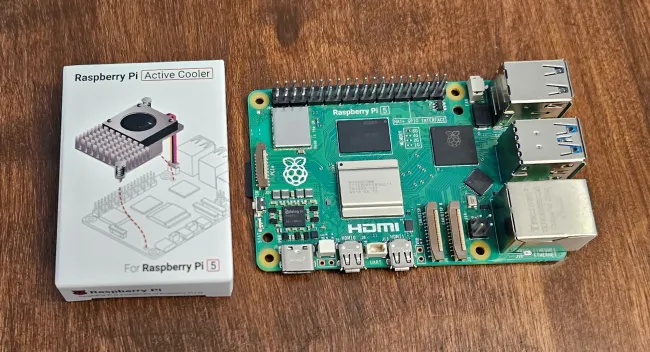
The direct reason for this price increase is still the continued rise in global memory market prices. Raspberry Pi founder Eben Upton said that current memory prices have reached an "unsustainable" level, so even entry-level 2GB products have to make price adjustments. Previously, the Raspberry Foundation had tried to minimize the impact of memory price increases on entry-level users by maintaining the prices of 1GB and 2GB versions. However, as costs continue to rise, this strategy has become difficult to maintain.
This adjustment not only affects Raspberry Pi 5, but also Raspberry Pi 4. The current price of the Raspberry Pi 4 2GB version has risen to $67.50, while the Raspberry Pi 5 2GB version has reached $77.50. By comparison, the Raspberry Pi 5 4GB is currently priced at $110, the 8GB version is $180, and the 16GB version is $305.
It is worth noting that when the Raspberry Pi 5 2GB was initially launched in August 2024, the official price was only $50. At that time, the positioning of this version was to lower the entry barrier for Raspberry Pi 5, allowing users who did not need a large amount of memory to obtain the performance and I/O capabilities of Raspberry Pi 5 at a lower price. Now the price has risen from US$50 to US$77.50, a cumulative increase of 55% in more than two years.
The Raspberry Pi 5 itself uses a quad-core Cortex-A76 processor with a maximum frequency of 2.4GHz and is equipped with a VideoCore VII GPU. Compared with Raspberry Pi 4, its CPU and GPU performance have been significantly improved, and the self-developed RP1 I/O control chip has been added to improve the bandwidth performance of USB, storage and other peripherals. Raspberry Pi 5 also supports PCIe 2.0, dual 4K 60Hz display output and 4K 60Hz HEVC hardware decoding. Therefore, although the 2GB version has limited memory capacity, it still has strong practical value for lightweight servers, network equipment, embedded projects and some desktop applications.
However, the current price increase of Raspberry Pi is no longer just an adjustment of a single product. Over the past year or so, the massive demand for memories such as DRAM, LPDDR and HBM in artificial intelligence data centers has continued to push up the price of the entire memory industry chain. The Raspberry Foundation has repeatedly announced increases in the selling prices of some Raspberry Pi products. In February and April 2026, the Raspberry Pi made price adjustments and launched the Raspberry Pi 4 3GB version to fill the expanding price space between 2GB and 4GB products.
Judging from the current product prices, it has become increasingly difficult for the Raspberry Pi 5 to maintain its early image of a "low-priced single-board computer." In particular, the original most attractive feature of the 2GB version was the low threshold of around US$50. Now that it is close to US$80, users have to consider other ARM single-board computers and second-hand market products when choosing the Raspberry Pi 5.
Currently, memory prices are still significantly affected by the demand for AI servers, and the Raspberry Foundation has not given a clear price reduction timetable this time. This means that if the global memory market cannot significantly alleviate supply and cost pressures, the price of subsequent Raspberry Pi products may continue to be affected.
Comments