
Abstract:
A third-party extreme braking test made the brake pedal, a component hidden at the foot of the cockpit and rarely noticed by consumers, become the focus of the entire Internet overnight. After the incident broke out, executives from Lantu, GAC Honda, Wangwang, Mengshi and other brands successively posted their own brake pedal assemblies on social platforms, showing materials, structures and bench test data. A public "show of muscles" around brake pedal safety was staged.
The first to speak out was Lu Fang, chairman of Lantu Motors.
On the night the incident was exposed, Lu Fang directly posted a real-life photo of the brake pedal on Weibo with the text "
Multi-layered high-strength steel plate main beam!"
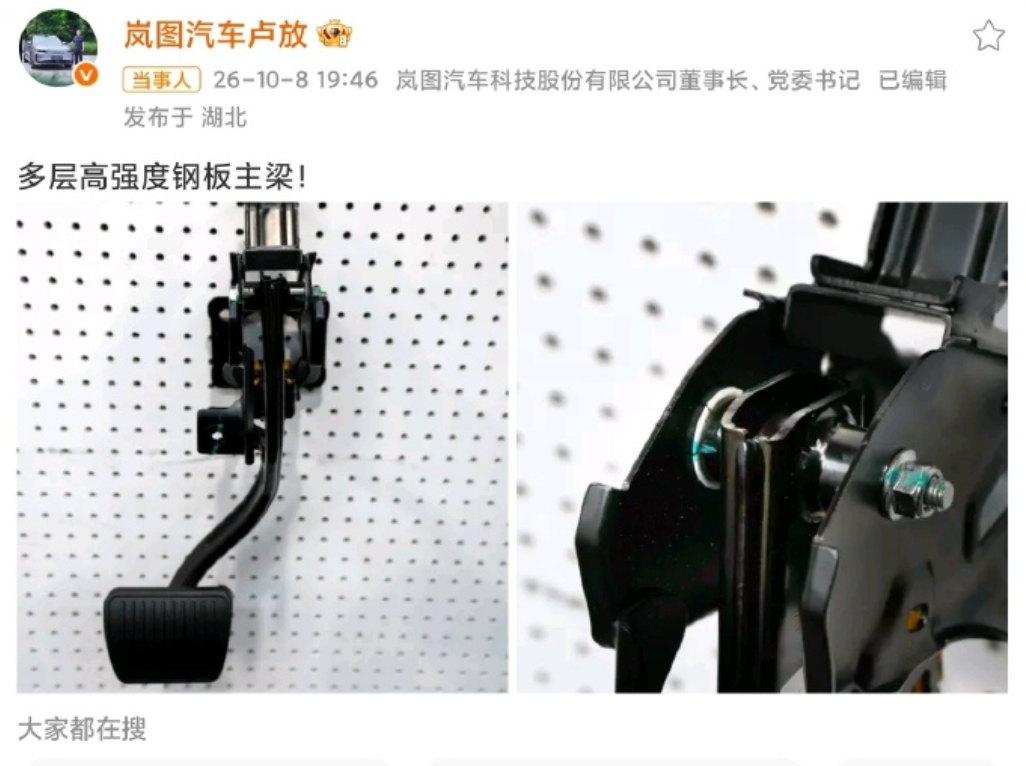
The photo clearly shows the metal structure of the pedal assembly, without redundant comments, only showing the hardware itself. Later, Lu Fang added that whether to use steel or plastic is not the key point. What really matters is the safety concept, bottom line and principles adhered to in vehicle design, and whether the company can establish a scientific, complete and continuously accumulated development system and quality system with safety as the core.
Following this, Lin Zhibin, deputy general manager of GAC Honda, showed off the Accord brake pedal and showed the actual measured indicators.
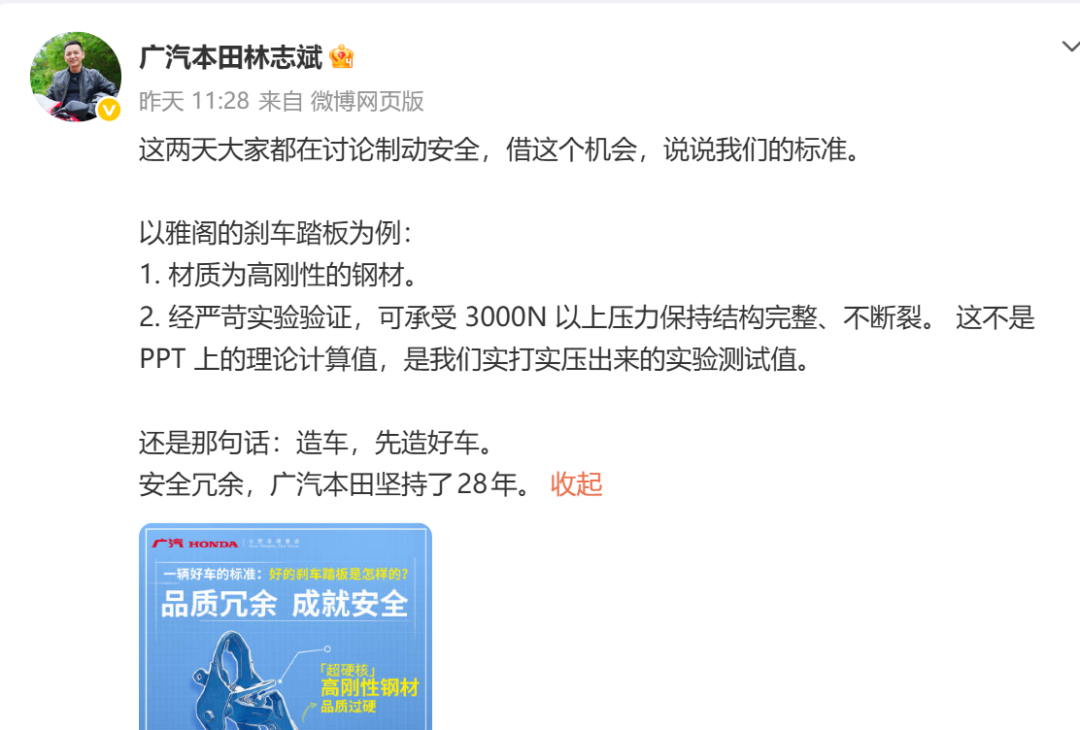
He introduced on Weibo that the Accord brake pedal is made of high-rigidity steel and has been tested to withstand
a pressure of more than 3000N to keep the structure intact without breaking.
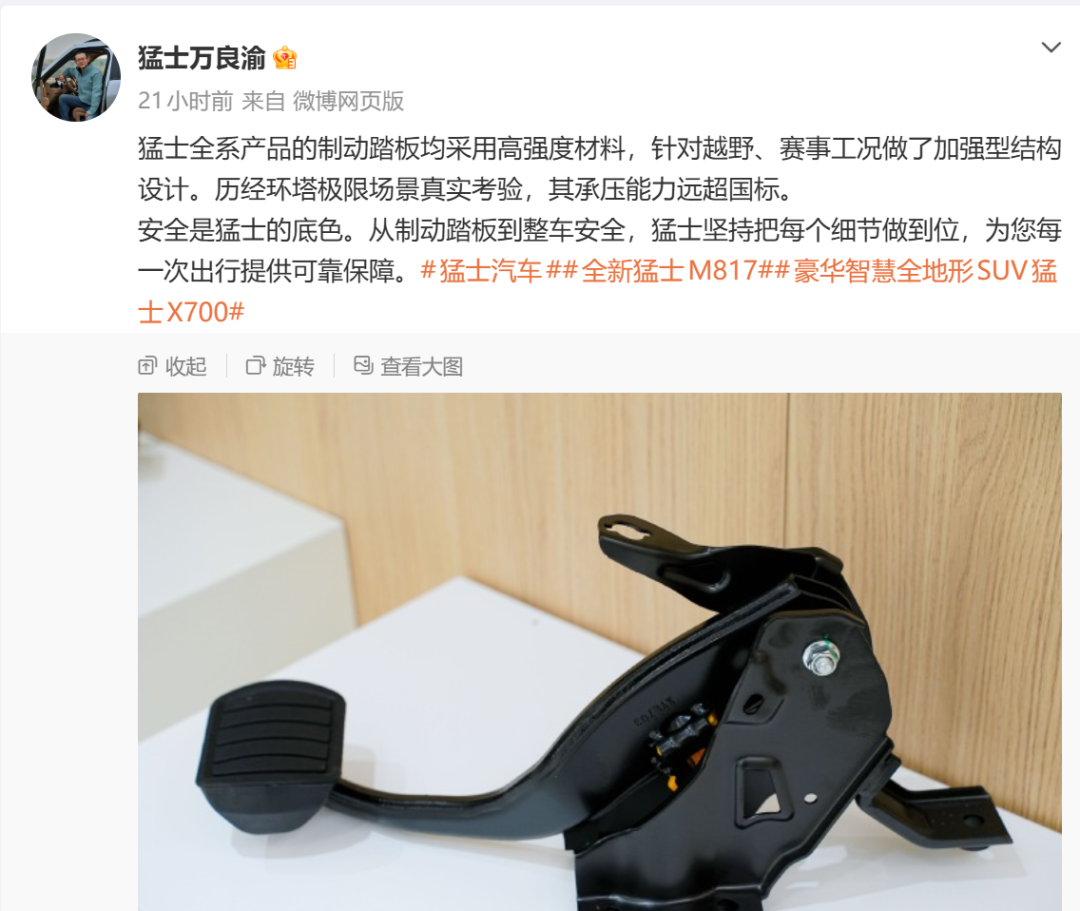
Wan Liangyu, CEO of Mengshi Motors, said on the same day that the brake pedals of all Mengshi products are made of high-strength materials. The reinforced structure is designed for off-road and racing conditions. It has been tested in extreme scenarios around the tower, and its pressure-bearing capacity far exceeds the national standard.
Zheng Yu, assistant general manager of BYD Yangwang Automobile and head of marketing and user development, introduced through a video that the brake pedal assemblies of Yangwang U8, U8L and U7 are all made of metal, and the pedal force complies with the corporate standard of 2,500 N.
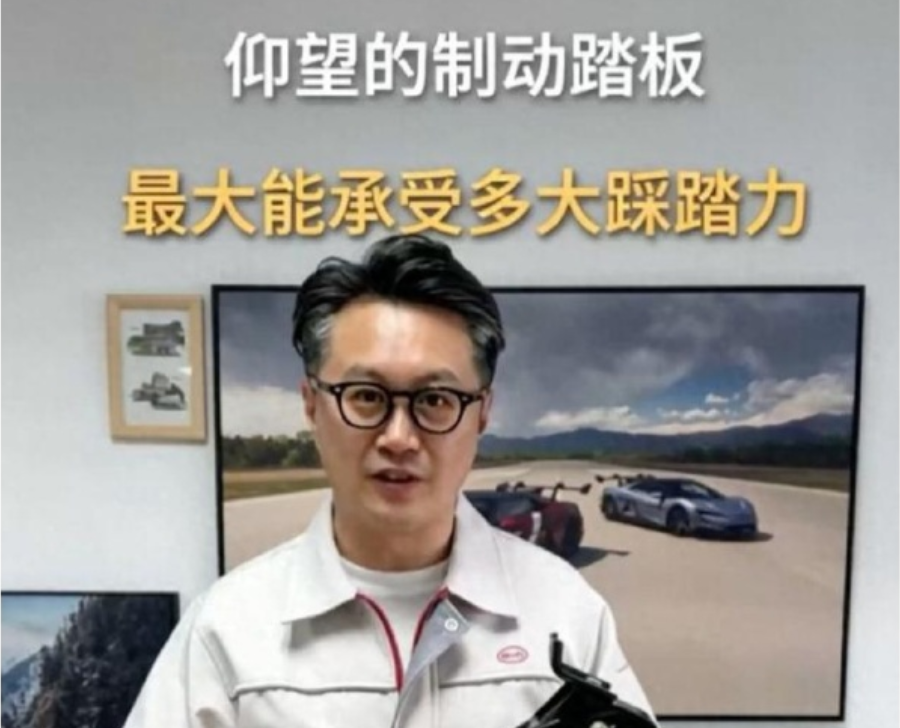
However, as of the morning of October 10, the video is no longer visible on Weibo.
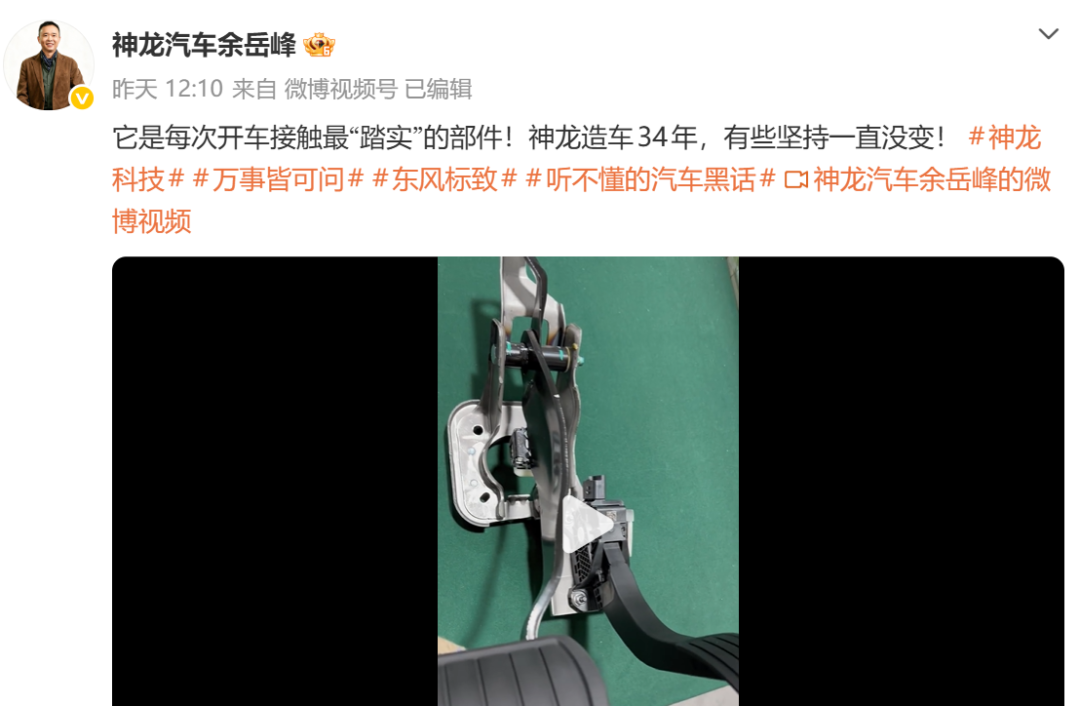
Yu Yuefeng of Shenlong Motors also wore a pedal and posted on Weibo: It is the most “steady” part that you touch every time you drive! Shenlong has been making cars for 34 years, but some of its persistence has never changed!
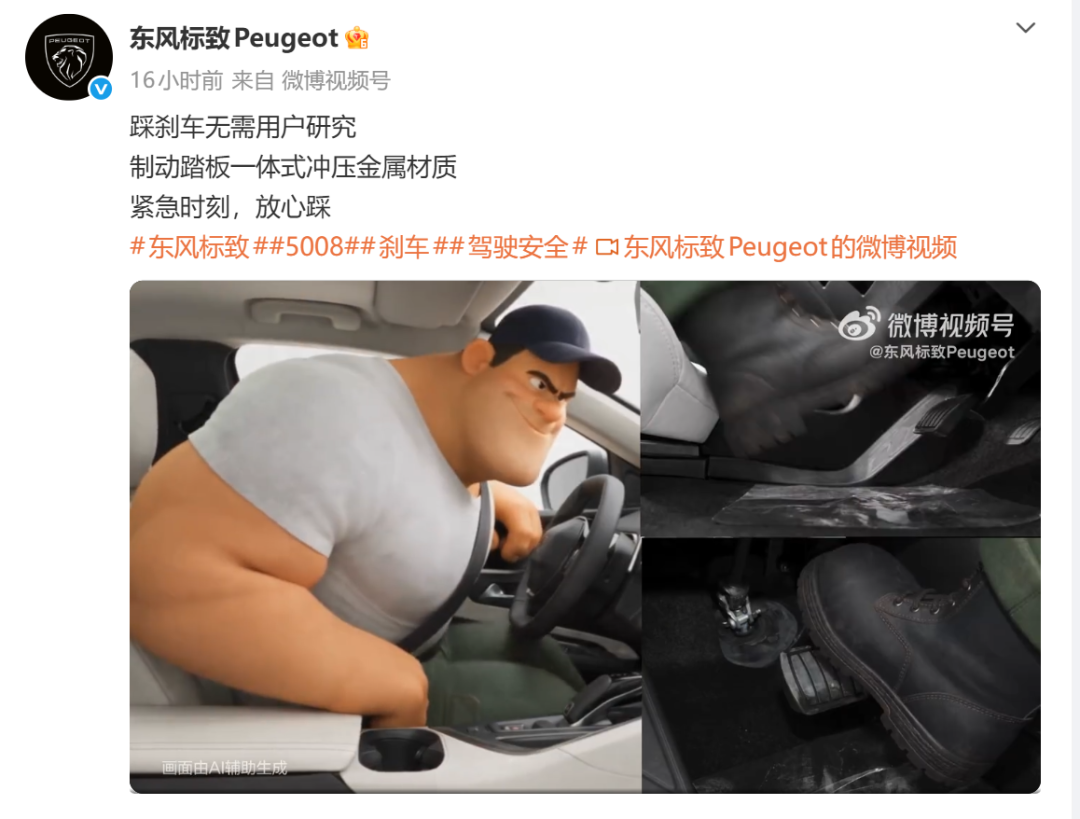
Dongfeng Peugeot also posted a video talking about the brake pedal: no user research is required to apply the brakes. The brake pedal is made of one-piece stamped metal, so you can step on it with confidence in an emergency.
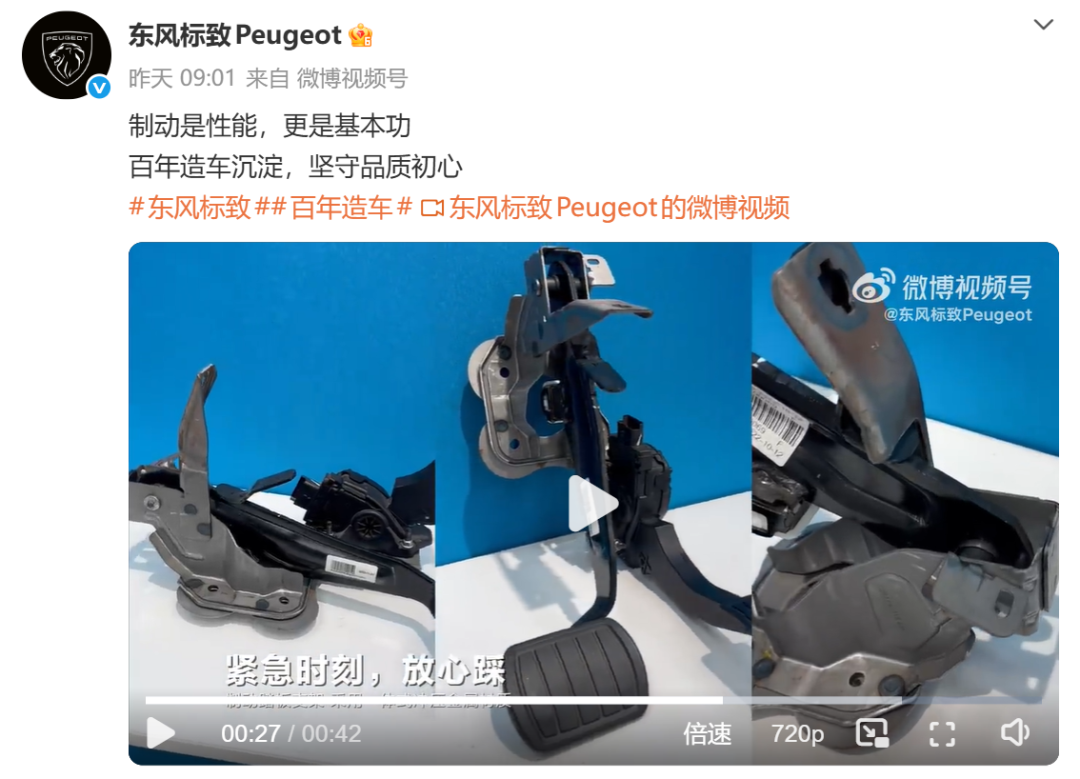
Dongfeng Peugeot posted more than one video, and another video showed a metal brake pedal.
Buick released a video in which a staff member held up the brake pedal and gestured: It is as thick as an arm.
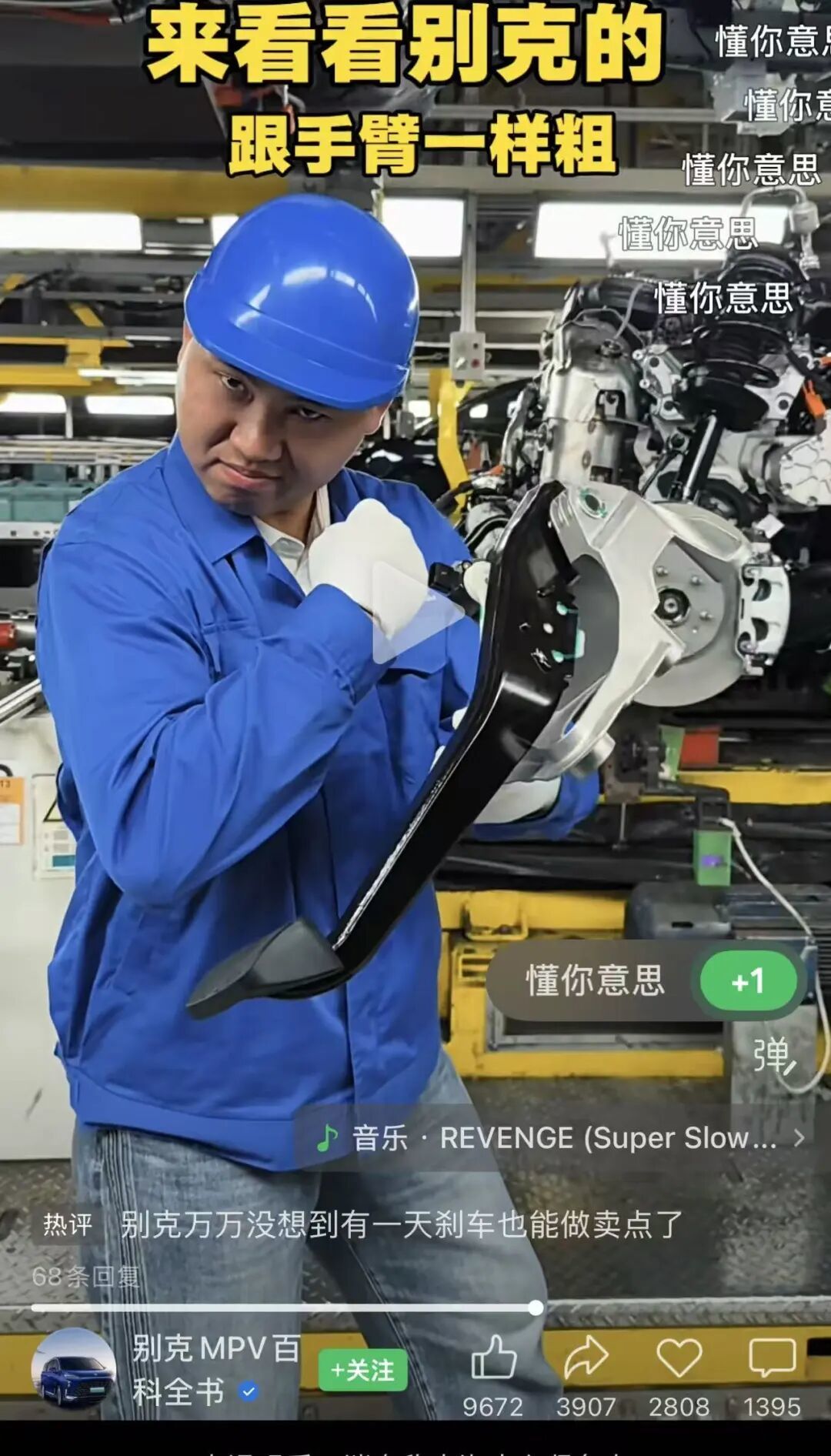
Hot review: Buick never expected that brakes would one day be a selling point.
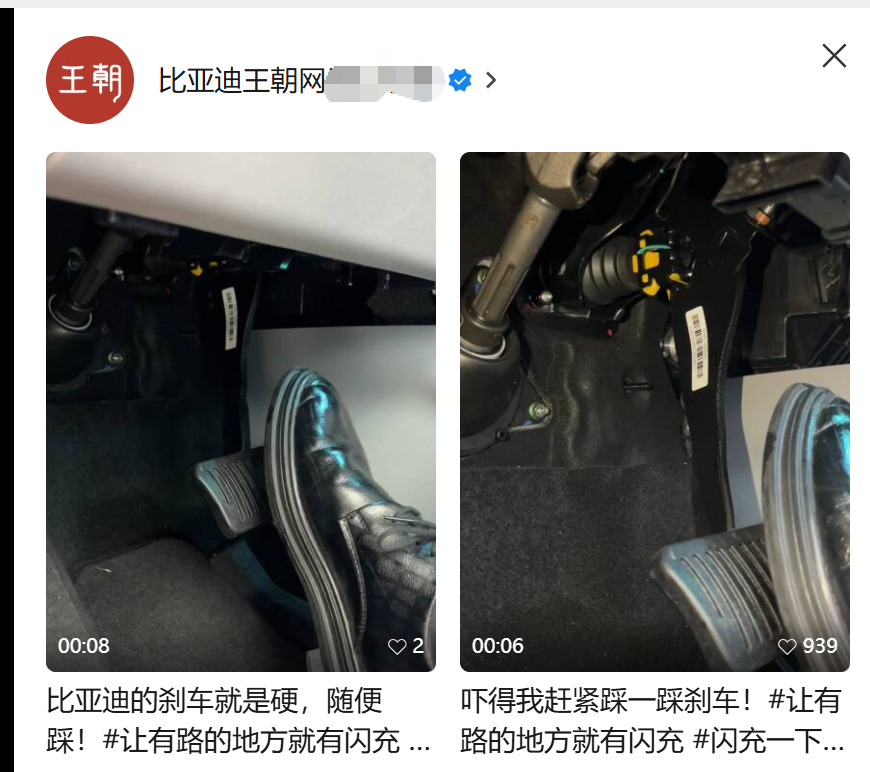
BYD-related accounts also posted multiple videos: BYD’s brakes are hard, just step on them!
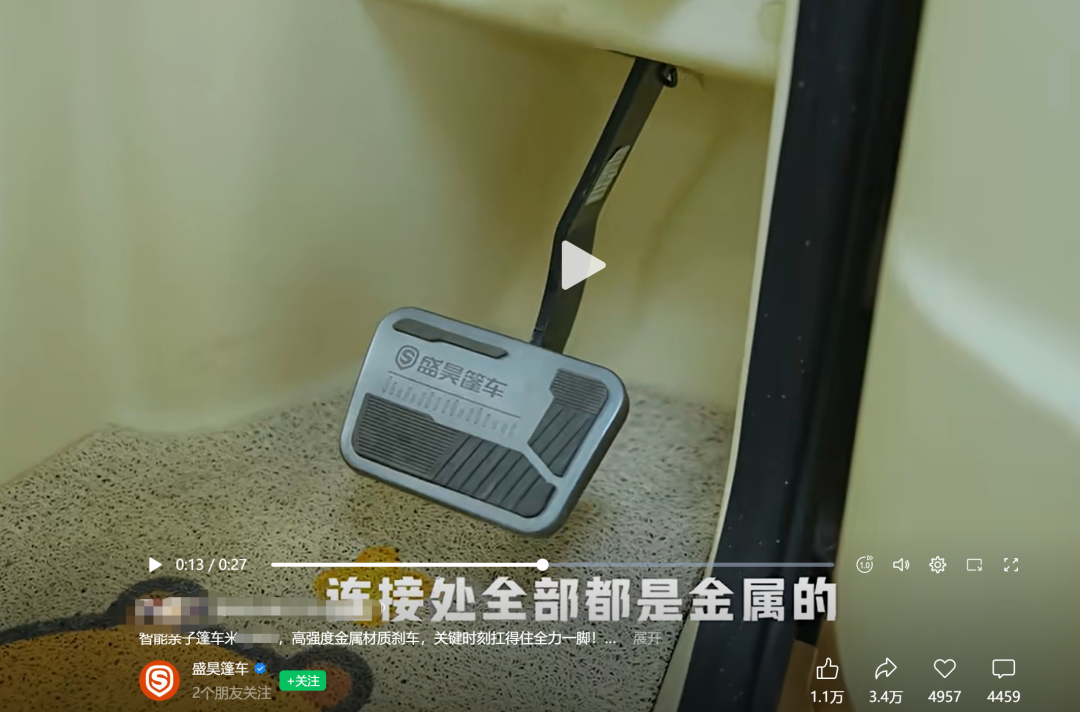
Not only traditional car companies, but Laotou Le also came to join in the fun.
Shenghao Caravan also posted a video of slamming on the brake pedal, saying that the whole vehicle was made of high-strength metal and the joints were all made of metal.
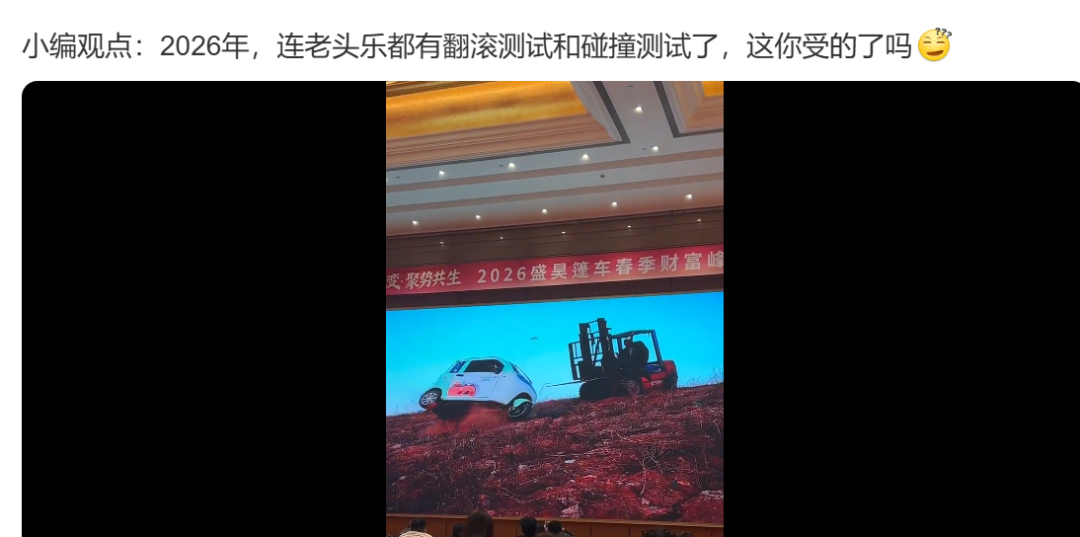
Laotoule also keeps up with the times, and they have also conducted rollover tests and crash tests.
Another phenomenon worth noting is that none of the new car-making forces, including Xiaomi, Weilai, Xpeng, Ideal, etc., have taken advantage of this hot spot.
Car companies focus on showing off pedals. Is this a safety science popularization, or is it a marketing opportunity in a crisis?
Objectively speaking, the brake pedal is the most front-end human-machine component of the vehicle braking system. Once it fails, it will directly affect driving safety. It is completely reasonable for the public to be highly vigilant.
Public opinion is divided into two groups: one group believes that this is taking advantage of competitors' crisis marketing, taking advantage of other people's mistakes and stepping on other people's pitfalls, and should be criticized. For example, some bloggers think that this is adding insult to injury, and maybe one day the boomerang will fall on their head.
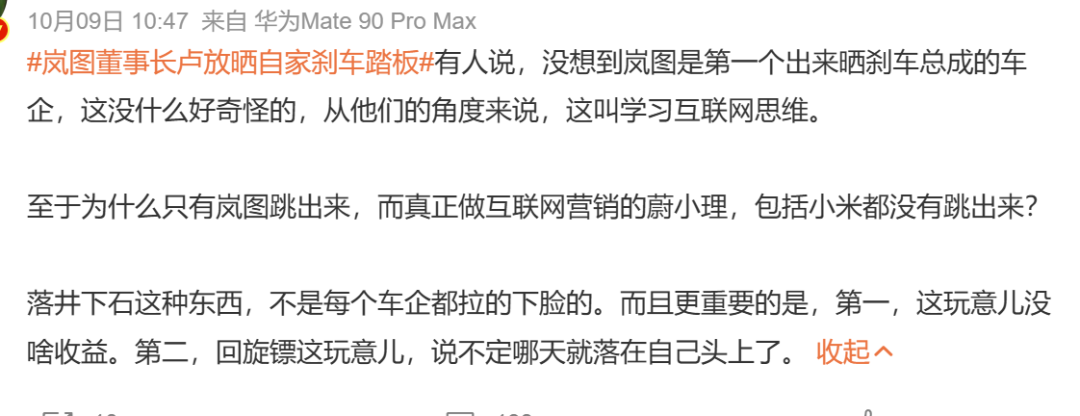
The other group believes that this is a rare safety science popularization, and it is a good thing for consumers to make the parts hidden under the chassis public.
In the past, car companies rarely disassembled and displayed low-level safety parts such as pedals in publicity. This crisis has forced the industry to bring the safety parts underfoot to the table.
However, there are also opinions to remind that posting a photo of a pedal and a single pressure value does not equal a complete safety verification. Pedal safety requires comprehensive consideration of materials, stress structure, fatigue durability, lateral load, and vehicle collision conditions. You cannot make a conclusion based on just one parts diagram.
The aftermath of the incident continues.
The China Automotive Industry Center has issued a questionnaire on brake pedal non-metallic materials to car companies, and the industry has begun to re-examine the boundary condition verification standards of pedal assemblies. For consumers, the greatest value of this controversy is that it makes everyone realize that car safety is not only about airbags and body steel, but also the inconspicuous brackets and shafts hidden under the feet, which are also the key to saving lives.
When the heat subsides, what is more important than showing off parts is that the industry establishes a unified verification system that covers extreme boundary conditions, so that the brake pedal of every car can maintain the bottom line of safety, whether it is daily commuting or sudden emergency braking.
Comments