
Abstract:
Is traditional programming really coming to an end? 11 days, 6778 commits, and over 1 million lines of new code. Approximately US$165,000 of Tokens were burned throughout the process. Recently Bun 1.4 was officially released, directly rewriting a large amount of Bun's underlying code from Zig to Rust. The merge record on GitHub shows that one change reached "+1009, 257 lines, -4024 lines".

What is exaggerated is that these 1 million lines of code were not typed out bit by bit by hundreds of programmers.
Jarred Sumner, the core developer who led the entire project, first built an Agent working framework, and then put AI into it and rewritten it in parallel.
11 days later, the main project was basically completed.
In the following months, Agent continued to fix bugs, run tests, and polish it repeatedly.
To this day, this set of code has been officially released with Bun 1.4 and is running on the computers of millions of developers.
After reading it, Paul Dix, the founder of InfluxDB, wrote an article directly: "The end of programming".
He directly judged that the familiar software development method of "programmers write the code themselves and let another programmer review it line by line" is dying.
1 million lines of code
Human beings can’t stand it
What really shocked Paul Dix was that these 1 million lines of code were so much that no one could even see them.
If a developer can only submit a few PRs a week, then of course he can review them seriously.
But he observed that some developers within OpenAI and Anthropic can now submit dozens or even hundreds of PRs a week.
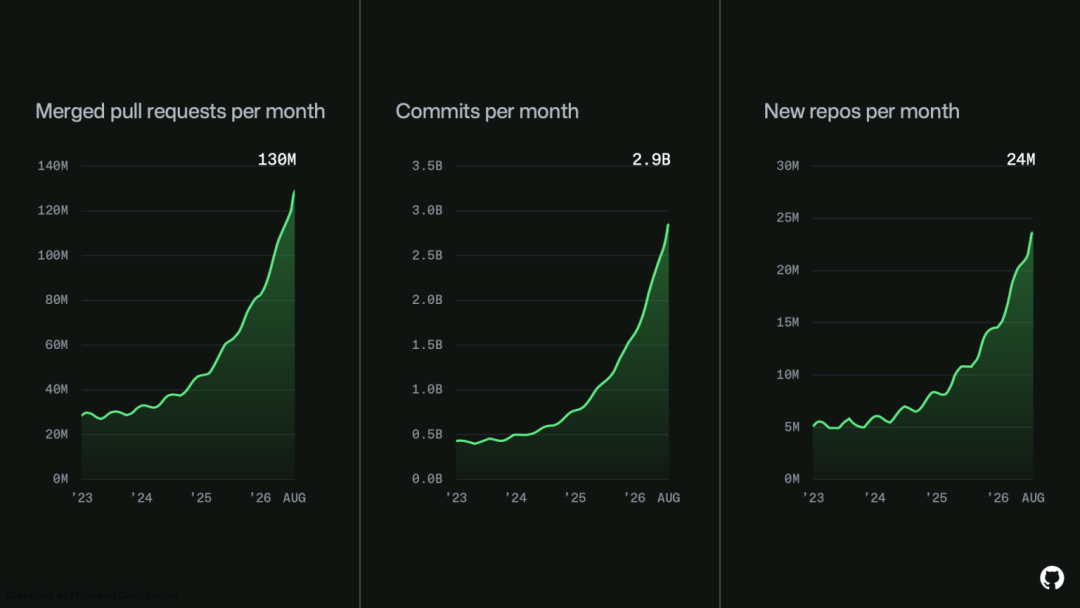
At this level, looking at the code line by line is basically an impossible task.
The way they work has begun to change.
Write Prompt, build Harness, do tests, set verification conditions, and then put the Agent into the loop.
Let the machine produce the code by itself, while humans monitor the results. Bun 1.4 is an extreme case of this style of play.

Jarred didn’t type out 1 million lines of Rust himself.
What he does is more like building an assembly line: first tell the Agent how to migrate, what results are considered correct, and then let multiple Agents advance in parallel.
It didn’t end after the first version came out. I continued running, testing, and revising.
So Paul Dix feels that many people say, "Isn't this just translating Zig into Rust?", which somewhat underestimates this matter.
It’s not unusual to have 1 million lines of code translated.
The key is to be able to repair these 1 million lines of code all the way to stable release.
Employees of Company A and OpenAI
Already living "one year later"
Paul Dix also has an interesting judgment.
The developers of Company A and OpenAI are actually living in the "world of ordinary programmers one or two years from now".
They can use the latest models, and Token is almost enough.
Ordinary developers are still calculating their weekly quota, but they can already have the most powerful model running wildly in the background all day long.

Bun's rewriting this time is equivalent to a public demonstration of this working method in advance:
How far can a smart enough model, coupled with an almost unlimited amount of Tokens and a reliable Harness, push the speed of software production.
Of course, human handwritten code will not disappear tomorrow.
Large company processes, accountability systems, and security reviews will keep the old ways alive for many years to come.
Paul Dix himself believes that traditional programming methods may still drag on for another ten years.
But the fastest group of people no longer look like traditional programmers.
They began to determine requirements, break down tasks, build an Agent assembly line, and do acceptance checks.
As for whether 5,000 lines of code, 50,000 lines of code, or 1 million lines of code are generated below, you may not read it with your own eyes.
The real value is from code to verification
The more code generated by AI, does not mean that the software is naturally better.
Quite the opposite. In the future, there will definitely be a lot of bugs, junk code, and software that no one wants to maintain.
Paul Dix himself admitted this. What has really changed is the approach to producing software.
Previously, the code itself was the core asset.
In the future, a large amount of code may not be read completely by any human being from birth to online.
What humans really need to grasp is system behavior, test results, performance indicators, security boundaries and user experience.
The code has changed from a "work" to an intermediate product automatically generated by the machine. This also explains why Harness has suddenly become so important.
1 million lines of Rust may be just the beginning.
The most valuable programmer in the future may not be the person who types code the fastest. Probably the person who makes a bunch of AI work the most.
Comments