
Abstract:
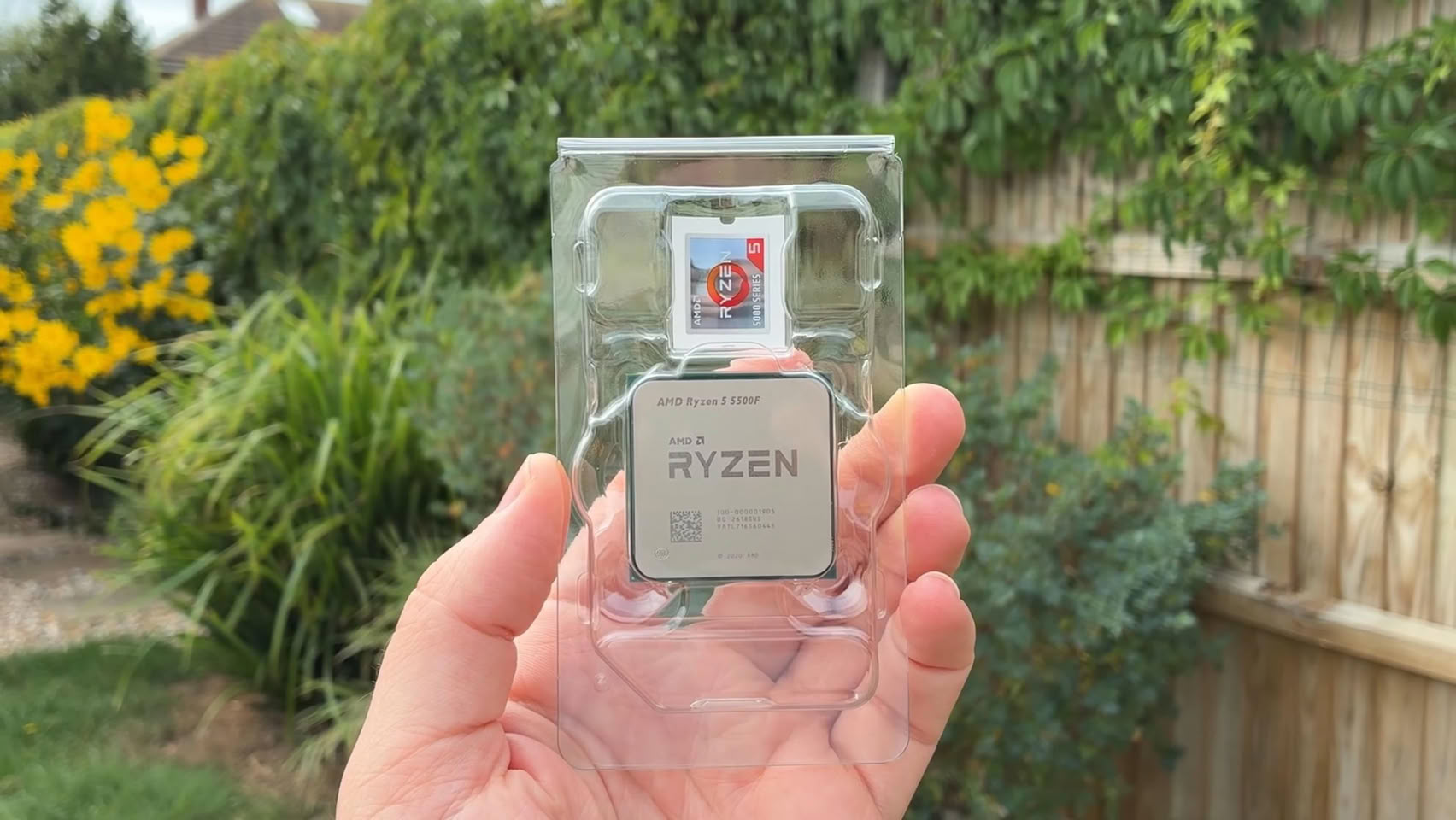
The Ryzen 5 5500F recently launched by AMD is showing strength beyond expectations. Although this new processor, which sells for only $99, looks very close to the Ryzen 5 5500 in terms of product naming, the latest exposed game test results show that there is a big gap between the two in actual game performance. In some games with high CPU load, Ryzen 5 5500F can even lead Ryzen 5 5500 by up to 16%.
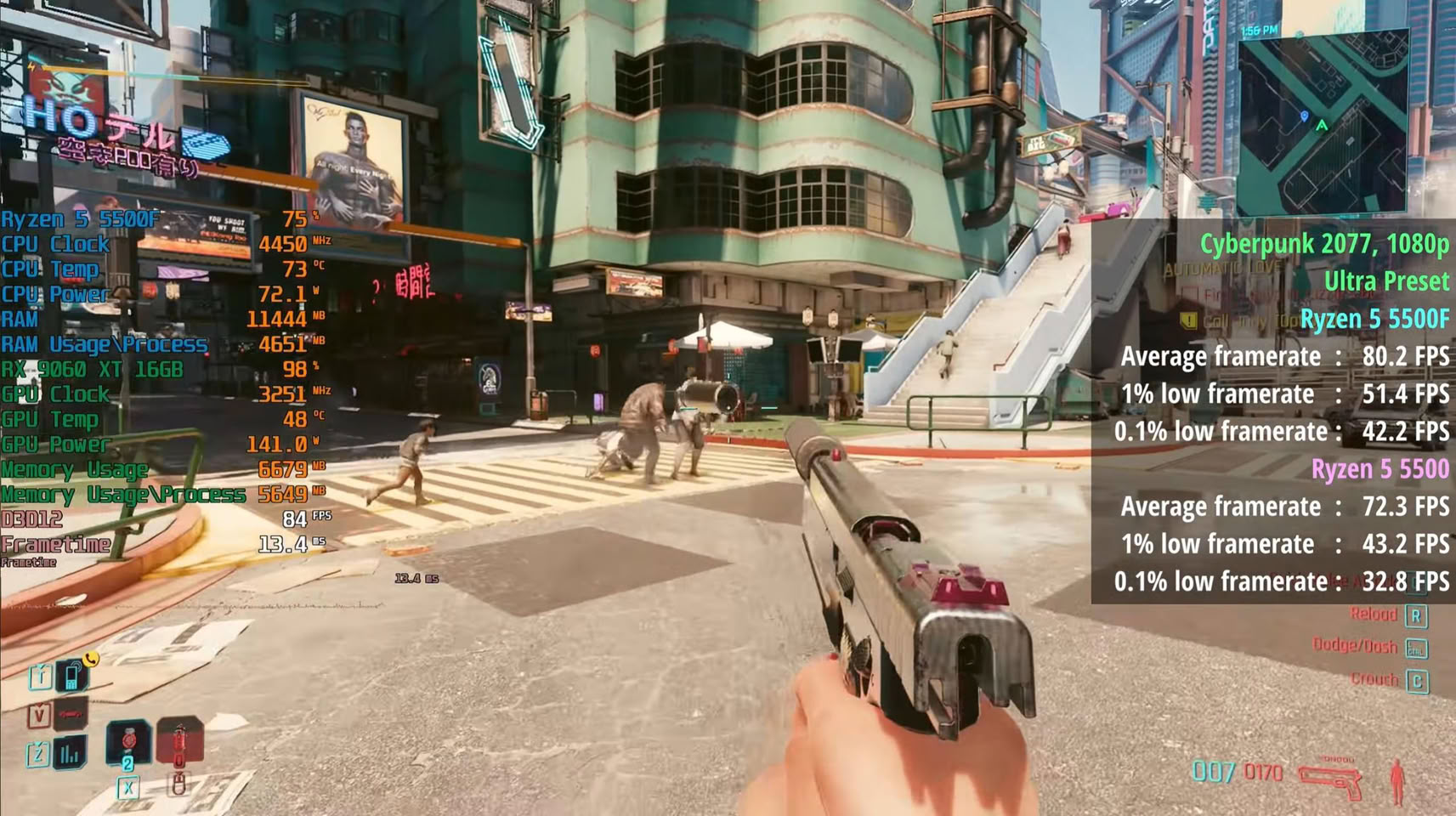
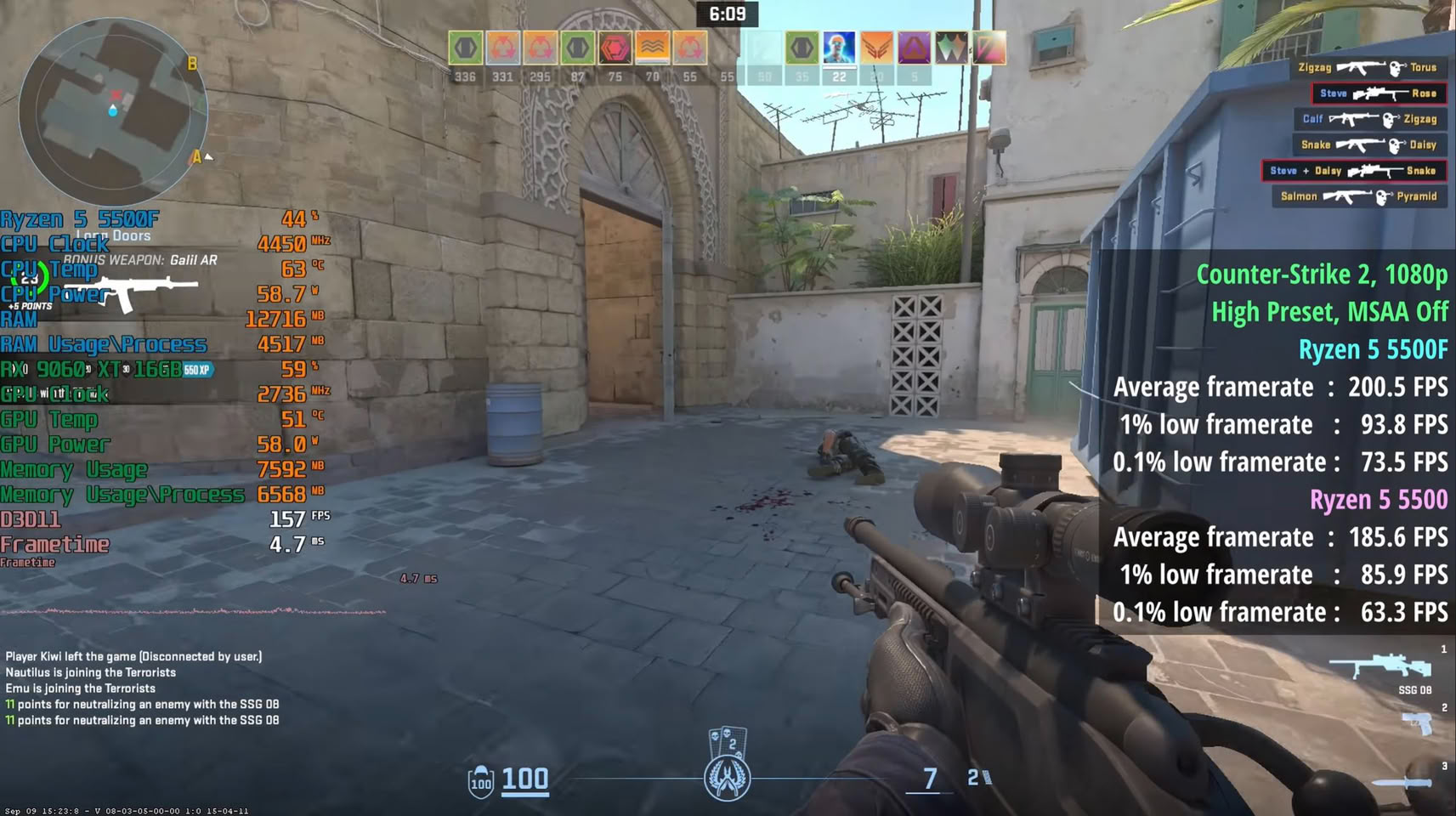
This test was completed by the hardware channel RandomGaminginHD. The test platform was equipped with a Radeon RX 9060 XT 16GB graphics card and tested seven games at 1080P resolution. Judging from the results, Ryzen 5 5500F has achieved clear advantages in many games.
Among them, "Battlefield 6" has the largest performance gap, with Ryzen 5 5500F leading by about 16% in average frame rate; "Cyberpunk 2077" leading by about 11%; "GTA V Enhanced" leading by about 9%; and "Counter-Strike 2" leading by about 8%. These games are all sensitive to processor performance, so it is easier to reflect the differences between the two CPUs.
However, in games that rely more on graphics card performance, such as "Crimson Desert" and "Red Dead Redemption 2", the gap is significantly narrower. When the RX 9060 XT becomes the system performance bottleneck, the frame rate difference between the two processors drops to single digits or even almost disappears.
It should be noted that the current relevant data still comes from a single test platform and a single reviewer, so it is not enough to finally define the real gap between the two products. However, judging from the current results, the 5500F does show stronger gaming capabilities than the original 5500.
The reason for this difference mainly comes from the underlying architectural design. Although both processors also have a 6-core 12-thread configuration and are positioned as entry-level products in the Zen 3 era, their internal implementation methods are different.
The Ryzen 5 5500F uses a core architecture code-named "Vermeer", which is the design used by many of AMD's high-end Zen 3 processors. At the same time, it has an acceleration frequency that is 200MHz higher than the Ryzen 5 5500 and supports the PCIe 4.0 standard.
In contrast, Ryzen 5 5500 uses a single-chip design code-named "Cezanne" and only supports PCIe 3.0. Although the specifications of the two look very similar on the surface, the differences in core architecture and I/O capabilities are ultimately reflected in game performance.
However, the 5500F is not without compromises. Compared with the Ryzen 5 5600, which also belongs to the Vermeer family, it is only equipped with 16MB L3 cache, while the latter has 32MB L3 cache. This is why the 5500F, although clearly ahead of the 5500, has not yet reached the performance level of the 5600 series. In some CPU-sensitive games, the smaller L3 cache capacity still limits its further potential.
AMD’s launch of 5500F also means that the AM4 platform, which has been around for many years, has gained new vitality. For players who still use DDR4 memory and AM4 motherboards, this 6-core processor, priced at only $99, provides an extremely low-cost upgrade solution.
Judging from the test results currently exposed, the Ryzen 5 5500F is not a reskin product of the 5500 that simply cancels the core display, but a new model with actual performance improvements. If more subsequent evaluation results can verify the current data, then the 5500F is likely to become one of the most noteworthy new choices for AM4 platform players in the $100 price range.
Comments