
Abstract:
While taking the stage at the All-In Summit in Los Angeles recently, NVIDIA CEO Jensen Huang unexpectedly received a live call from US President Trump. This sudden call quickly became the focus of the event. In addition to the two people's exchanges around the development of artificial intelligence, the folding screen mobile phone that Huang Renxun used to answer the call also attracted attention.
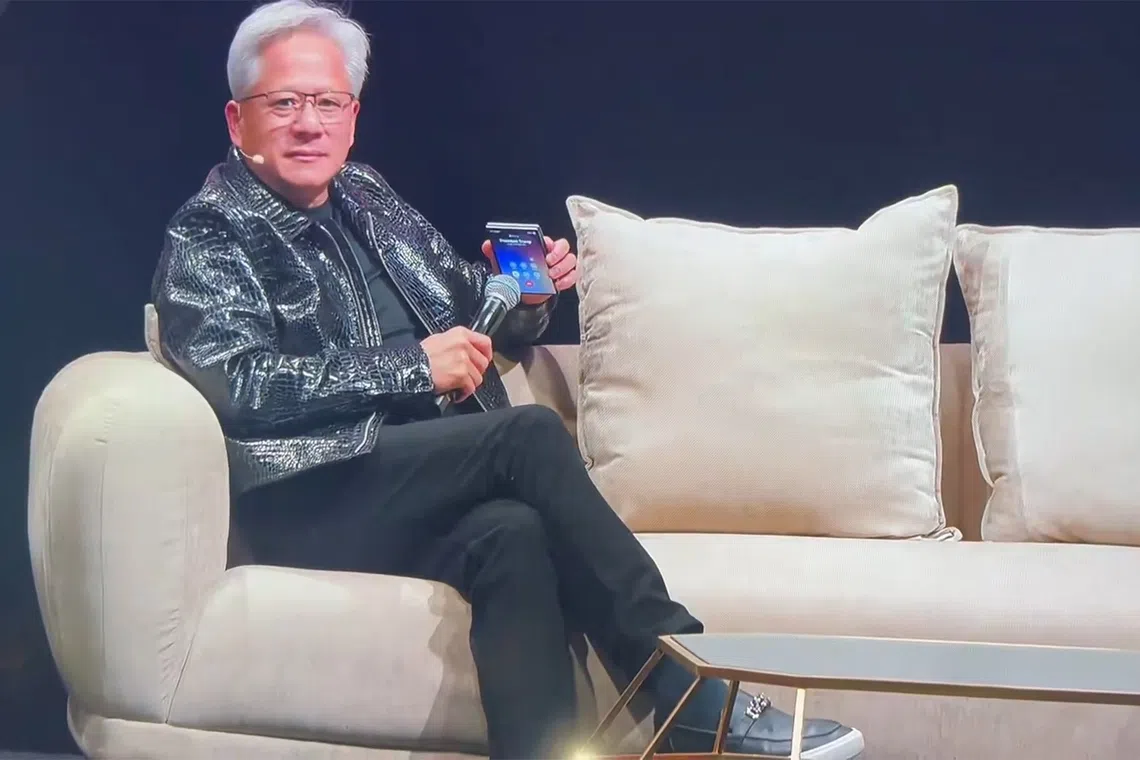
Huang Jen-Hsun attended the event wearing his iconic crocodile leather jacket that day. After Trump called, the staff handed a folding screen mobile phone to Huang Jen-Hsun, who then connected the phone and tried to let the audience hear the exchange between the two through the speaker. Trump also joked on the phone that Huang can develop the most complex computer chips in the world, but he can't seem to figure out how to turn on the speakers. In fact, Huang was asking the on-site staff to provide additional microphones so that the entire audience could hear the call clearly.
The phone actually appeared to be the Samsung Galaxy Fold 8. After the call was connected, the conversation quickly turned to the current controversy surrounding the speed of artificial intelligence development and safety issues. Huang was discussing with All-In podcast host Dario Amodei, CEO of Anthropic, the idea that improvements in artificial intelligence capabilities should be slowed down. Elon Musk and OpenAI CEO Sam Altman have previously publicly expressed support for similar views.
Trump clearly opposes the idea of slowing down the development of artificial intelligence. He believes that the current rising concerns around the risks of artificial intelligence may benefit those who do not want the United States to continue to promote the development of artificial intelligence, including China and some political forces. Trump even called related concerns a "hoax" and emphasized that the importance of artificial intelligence has surpassed that of the Internet, so the United States cannot slow down its development because of these concerns.
Huang Renxun responded: "You are right, we will not let this happen." The audience then burst into applause. Huang Renxun also told Trump with a smile that thousands of people were applauding at the scene.
Trump then further stated that the United States does need to maintain a certain degree of caution in the development of artificial intelligence infrastructure and needs to advance related projects in a more prudent manner, but this does not mean that the United States should stop developing the entire industry. He made it clear that he supports Huang Renxun and hopes that the United States will continue to maintain its leading position in the field of artificial intelligence.
The exchange between the two took place against the backdrop of growing concerns in American society about the construction of artificial intelligence data centers. Trump and his supporters, including Y Combinator CEO Gary Tan and others, had believed that opposition to data center construction could be an international public opinion move aimed at hindering U.S. economic growth. However, relevant polls show that the American public's concerns about data centers do not entirely stem from so-called political manipulation. A recent Gallup survey shows that about 70% of Americans are opposed to the construction of data centers in their areas. More than half of the respondents are worried about the impact of data centers on local environmental resources, and about 20% of the respondents are worried that data centers will drive up the cost of living and affect the quality of life.
The live call between Huang Renxun and Trump also further highlighted the interest relationship between Nvidia and the rapid expansion of the US artificial intelligence industry. Nvidia's current business model is highly dependent on artificial intelligence companies continuing to purchase more computing chips, so for Huang Renxun, it is obviously of great commercial significance to continue to promote the construction of artificial intelligence infrastructure and the expansion of computing capabilities.
Despite this, the outside world is still not sure whether Huang fully agrees with Trump’s judgment on the risks of artificial intelligence. As the head of Nvidia, he needs to promote the rapid development of the artificial intelligence industry while also dealing with more and more questions about energy consumption, data center construction, artificial intelligence security and potential social impact.
After this unexpected presidential phone call, Jen-Hsun Huang himself and NVIDIA still sent a clear signal: No matter how the outside world's concerns about the development of artificial intelligence increase, NVIDIA will not actively support the path of slowing down the development of the artificial intelligence industry, and the United States is still working hard to regard artificial intelligence as a core area of future technological competition and economic growth.
Comments