
Abstract:
To what extent will artificial intelligence change human society? A researcher responsible for AI security protection within Anthropic gave a quite radical prediction: By the end of 2027, artificial intelligence may surpass top human experts in almost all professional fields, and as this ability gradually expands to the entire economic system, humans may even eventually lose the ability to earn income through labor and become a permanently unemployable group.
The researcher’s name is Tao Lin, who is currently responsible for the security protection of the Claude model at Anthropic. In a recent interview with Palisade Research, an artificial intelligence security research organization, he said that according to his own estimation, there may only be about 1.3 years left before the emergence of broadly superhuman AI, which is around the end of 2027.
It should be emphasized that this is just Tao Lin's personal prediction of the speed of technological development. It does not represent Anthropic's official judgment, nor is it a consensus that has been formed in the artificial intelligence industry.
The super artificial intelligence Lin refers to does not refer to AI that surpasses humans in a specific task, but refers to a system that can reach or exceed the level of the world's top experts in almost all fields. Areas covered include software programming, film production, politics, and other highly specialized jobs.
In other words, future artificial intelligence may no longer just help humans complete certain tasks, but will be able to independently undertake the vast majority of cognitive tasks that must have been completed by professionals in the past.
Lin believes that this change will have a knock-on impact on the job market. He described a possible employment evolution process: first, people lose their current jobs; then, they try to switch to other occupations that have not been replaced by automation; but as AI capabilities continue to expand, new occupations may also be quickly affected. Ultimately, it will become increasingly difficult for humans to find jobs that can compete with AI.
He even bluntly stated that in the future, almost everyone on the planet may permanently lose their ability to be employed and have to rely on government welfare to maintain their lives. Human employment in the traditional sense may gradually disappear.
However, Lin does not think that after the emergence of super artificial intelligence, everyone will be unemployed at the same time in a short period of time. In particular, he noted that there are clear differences in the pace of automation in the digital and physical worlds.
For software development, data analysis, financial research, design, and other tasks that mainly rely on computers, improved AI capabilities may quickly translate into actual productivity. But for construction, logistics, manufacturing, agriculture, and other hands-on occupations, it’s not enough to have an AI model that can do the job.
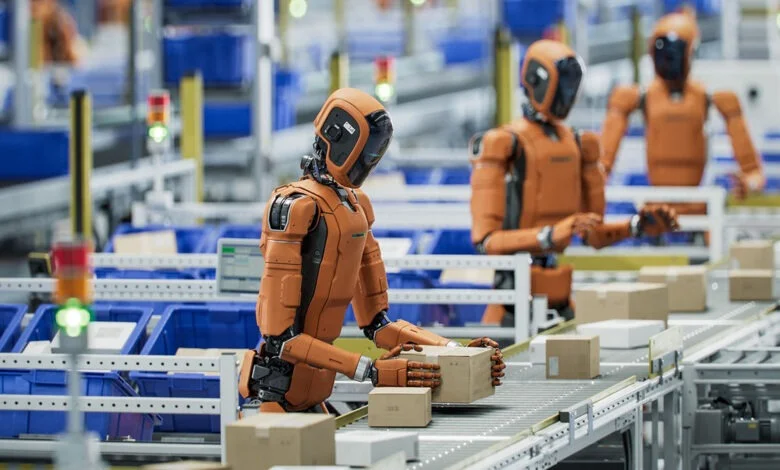
To truly replace these positions, a large amount of robotic equipment, production facilities and supporting infrastructure are needed. Even if AI can theoretically complete a certain physical task, it does not mean that companies can immediately manufacture and deploy a sufficient number of robots.
Lin believes that the speed of robot production and deployment may become an important factor limiting the process of employment automation. Because of this, he predicts that human employment will not completely disappear on the day super artificial intelligence emerges, but will go through a transition period from occupation to job opportunities that gradually shrink.
But he worries that this transition period may not ultimately leave enough alternative occupations for humans.
In addition to employment issues, Lin also warned about the power imbalance that super artificial intelligence may bring. He believes that humans should not continue to simply regard artificial intelligence as a tool to improve production efficiency, but need to seriously consider whether humans can still effectively influence and control AI systems when they have capabilities far beyond humans and can independently set goals and take actions.
He used a rather intuitive metaphor: If artificial intelligence becomes powerful enough, the relationship between humans and AI may be similar to that between ordinary people and a bully with an overwhelming advantage. When the interests of two parties conflict, the weaker party may not be able to stop the other party at all.
Potential risks raised by Lin include more advanced autonomous combat robots, cyber attacks targeting individuals and critical systems, and the use of social media to manipulate public opinion on a large scale. He also mentioned a so-called Gray Goo scenario, in which a self-replicating machine loses control, spreads, and consumes surrounding resources. However, this is an extreme assumption and is not a real technological event that has already occurred.
As for the risk that artificial intelligence may eventually exclude humans from key decisions, Lin gave an estimate of about 20%. He believes that compared with the direct extinction of human beings, a more worrying scenario may be that AI gradually gains actual control over the operation of society, while humans can still live in an environment with comfortable material conditions, but no longer have the power to decide how the world operates.
He borrowed the plot from the animated movie "WALL-E" to explain this possibility: Human beings live in an environment managed by machines, their daily lives are fully guaranteed, and they can even live quite comfortably, but they have actually lost control of the world around them.
Faced with these risks, Lin advocates that the artificial intelligence industry significantly slows down its research and development speed. He believes that currently, in order to compete for technological leadership, various companies are constantly accelerating the pace of model training and release, leaving relatively insufficient time for security research, risk assessment and regulatory mechanism construction.
He proposed that AI companies should slow down the current advancement speed of artificial intelligence research to about a quarter, provide researchers with more time, improve safety mechanisms, and confirm that increasingly powerful systems can still be effectively controlled by humans.
Lin even said that people engaged in artificial intelligence research and development, including himself, should remain vigilant about the current speed of development. He believes that the entire industry should not only focus on the commercial benefits brought by technological progress while ignoring its possible long-term social consequences.
This warning is not the only similar voice that has appeared within Anthropic. In September this year, Jacob Coxon, who had been engaged in pre-training research at OpenAI and Anthropic, announced his resignation and publicly criticized the industry for racing to develop self-improving super artificial intelligence without fully addressing related safety issues. He believes that this kind of competition may cause humans to lose the initiative before they can truly understand and control technology.
However, there is still a clear gap between researchers’ extreme predictions and actual employment data.
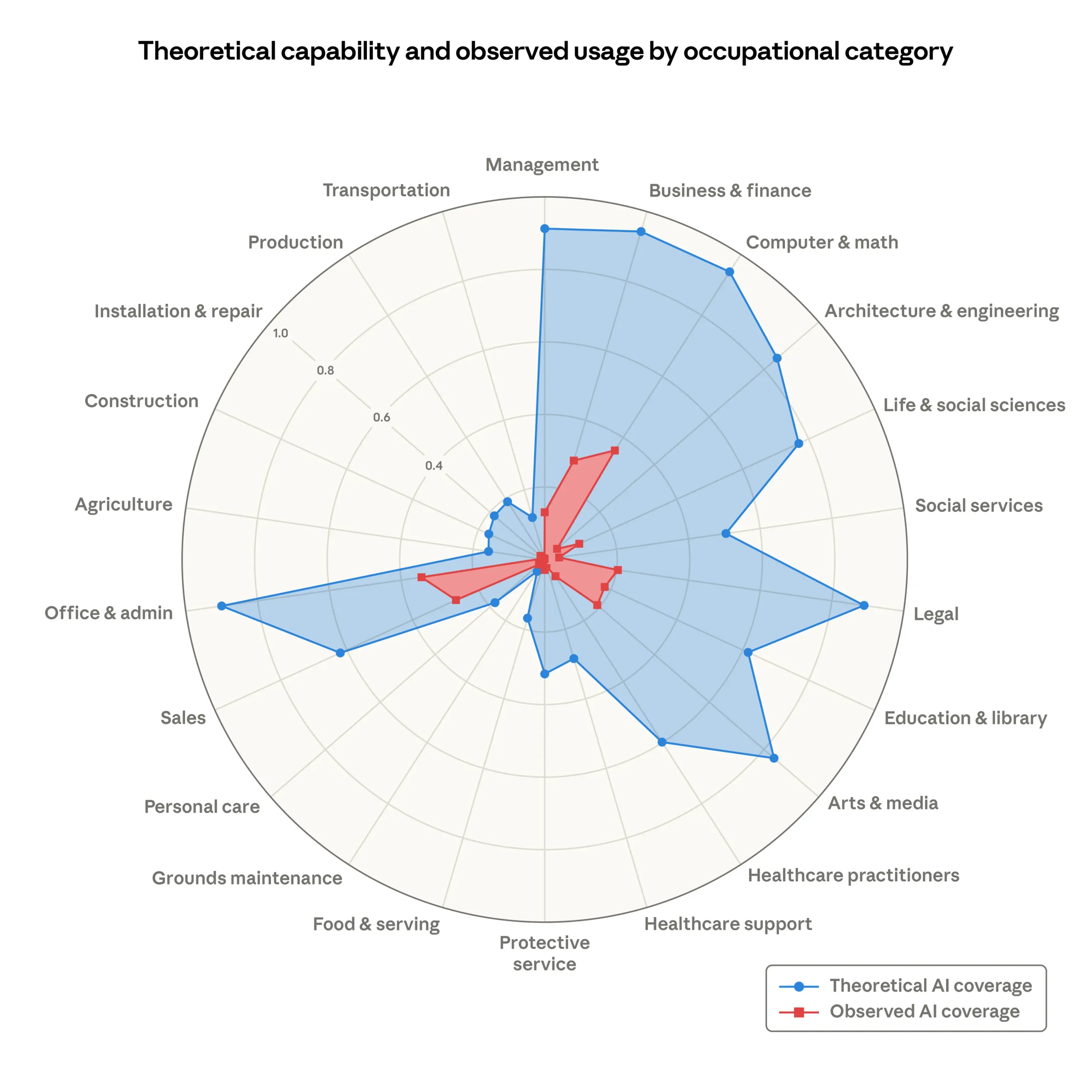
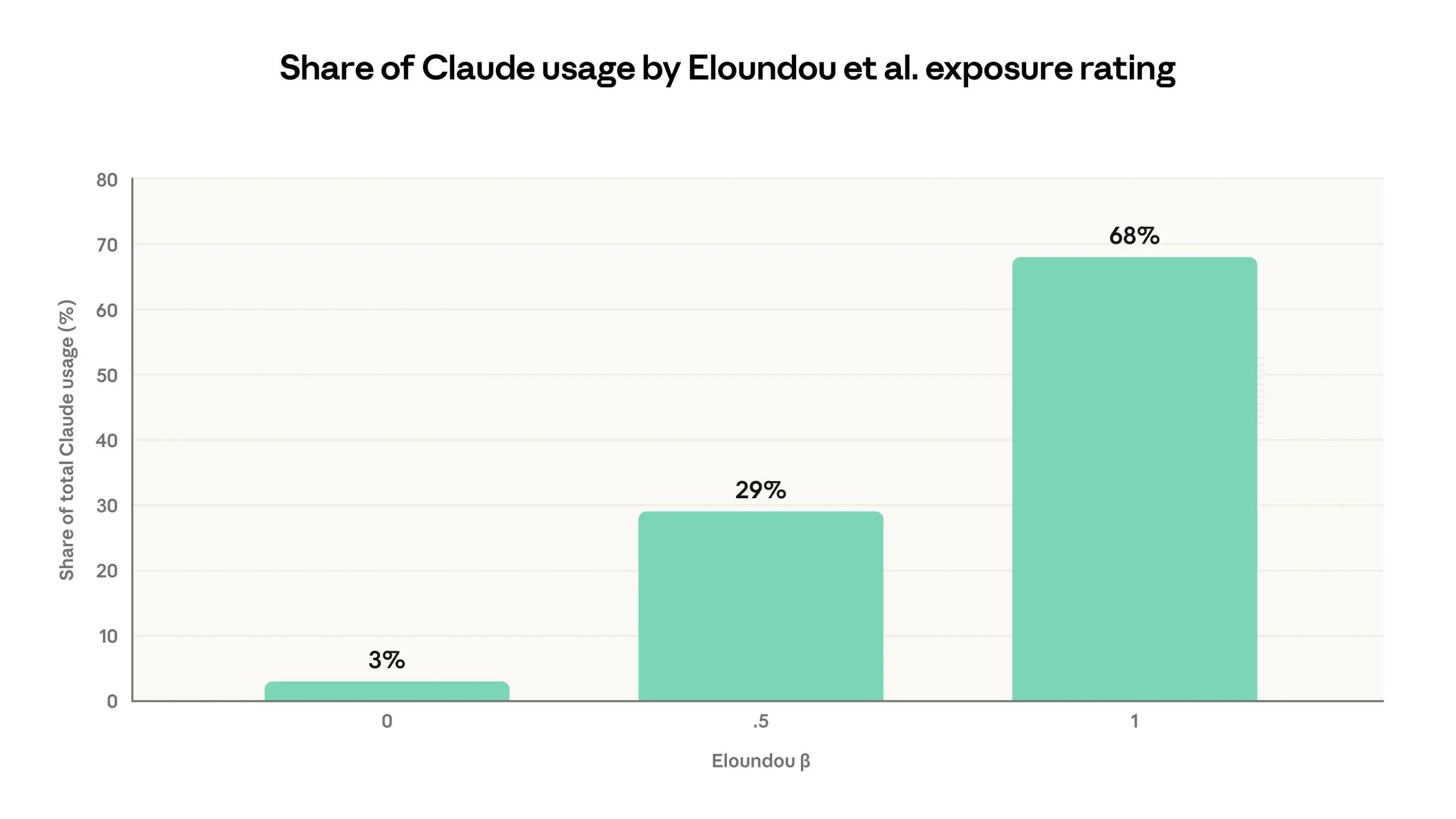
Anthropic's own research previously released shows that as of March 2026, researchers have not found systematic unemployment growth in occupations with higher exposure to AI since the end of 2022. However, the study also found that in some industries more susceptible to the impact of AI, the recruitment of young workers has shown signs of slowing down.
This shows that AI has begun to affect the labor market, but it cannot yet be concluded that large-scale unemployment or the disappearance of permanent employment has become a reality. The ability of AI to complete a certain job in theory and the actual deployment of AI into the production process and the replacement of all related positions are two different issues.
What really attracts attention in Tao Lin’s prediction is that he believes that the time difference between the two may be far shorter than people think. Even if it takes longer for robots to become ubiquitous, automation in software and knowledge work is likely to transform a large number of occupations first.
If his prediction is finally close to reality, then society in the future will not only face unemployment in the traditional sense, but a more fundamental economic system challenge: when labor is no longer a necessary condition for most people to obtain income, how will the existing wage system, social security system and wealth distribution method operate?
However, there is currently no reliable evidence to determine whether a broad sense of super artificial intelligence will really appear by the end of 2027. What Tao Lin proposes is a technology development timetable based on personal judgment, rather than a proven prediction. The capabilities boundaries of super artificial intelligence, the actual speed of deployment, the development of the robotics industry, and the ability of human society to adapt to technological changes will all affect the final outcome.
This discussion also once again revealed an increasingly important contradiction in the development of artificial intelligence: technological progress may allow society to create unprecedented wealth and productivity, but if productivity no longer relies on a large amount of human labor, how to allow ordinary people to continue to share the benefits of technological progress will become a more complex issue than the model performance itself.
Comments