
Abstract:
Anthropic warned investors that the company’s outspoken advocacy for artificial intelligence (AI) safety could make it a target for government retaliation. The comments highlight the potentially disproportionate impact of government-related risks on Anthropic's future business after repeated friction with the Trump administration over the past year.
Anthropic said in its IPO filing that its stance on AI regulation and the views publicly expressed by company executives could subject it to significant government pressure.
Anthropic mentioned in its prospectus: "We have received and may continue to receive more attention and may continue to face more stringent scrutiny. We may be targeted by specific government agencies, even if other companies in similar situations have not been treated in the same way."
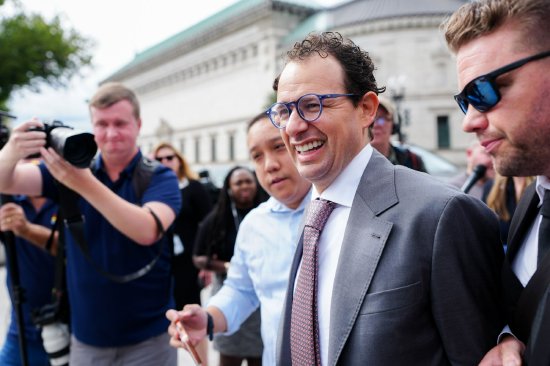
In September, Anthropic CEO Dario Amodei arrived at the White House for a meeting.
Anthropic's run-in with the Trump administration stems from a dispute earlier this year over what safety guardrails should be in place when the Pentagon uses the company's technology. Anthropic has recently been at odds with government officials over whether its cutting-edge Mythos model is safe enough. CEO Dario Amodei has backed a coordinated slowdown in AI development to give security teams time to catch up with technology advances, a stance that has angered Trump.
Investors must now weigh the regulatory risks Anthropic faces. The company's technology is easy to use and can be marketed as an everyday consumer product, but powerful enough to be considered a cyber weapon and possibly even a catalyst for biological warfare, and therefore subject to greater scrutiny. For Anthropic, repeated conflicts with the Trump administration add another layer of risk to the uncertainty facing the entire AI industry.
Sarah Kreps, director of Cornell University's Tech Policy Institute, said: "For AI, the boundaries of government power are still being gradually clarified, sometimes through direct confrontation with individual companies. It is difficult for investors to put a price on this uncertainty."
Anthropic disclosed in its prospectus a variety of adverse impacts that the government may bring, and mentioned a series of proposed federal legislation, including forced closure of models and even nationalization of AI companies. Earlier this year, some officials, including Vice President Vance, floated the idea of using the Cold War-era Defense Production Act to force companies to disclose information and cooperate with national security agencies. Bloomberg reported on this.
Anthropic also listed the risks that government intervention may pose to AI development efforts, including the possibility that trade controls may cause companies to lose overseas customers, and the possible legal consequences of model misconduct. Anthropic said the company may not be able to "fully understand or explain" the actions taken by the systems it is developing, and it will continue to push for regulatory measures that could in turn hinder its own business.
Anthropic said: "If the regulatory or other similar measures we advocate are adopted, we will also be subject to these measures, and the new regulations may increase our compliance burden, limit our flexibility in product development or deployment, affect how and when we develop or release new models, or otherwise slow down our growth."
Anthropic also warned that the technology it is developing could ultimately pose a threat to humans. This echoes the fears of many AI researchers in Silicon Valley about catastrophic consequences, fears that Trump and his allies have dismissed as a "hoax."
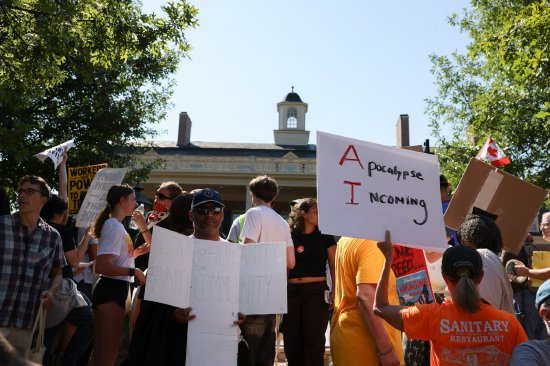
In September, the G20 held in Chapel Hill, North Carolina. A demonstrator holds a sign against AI outside the Innovation Ministerial Conference.
The company stated: “If advanced AI systems are not developed, deployed, and operated under appropriate safety guardrails, supervision, and safety measures, they may pose catastrophic or even existential risks to humanity.”
Anthropic said its recent efforts to combine AI models with scientific research could lead to restrictions aimed at preventing the creation of deadly biological weapons. If the model is misused for cyberattacks, Anthropic may be subject to legal liability and suffer reputational damage.
The Trump administration is not only a regulator of Anthropic, but also an important customer of the company's products, further increasing the company's exposure to government decisions. Anthropic said revenue directly from contracts with government agencies accounted for about 1% of total revenue in all periods covered by IPO filings, with data going back as far as 2023.
William Reinsch, former Under Secretary of the Bureau of Industry and Security of the U.S. Department of Commerce, said: "Anthropic's situation is somewhat special, because during the Trump administration, many actions were very arbitrary, and Anthropic was treated differently from other companies."
Matt Pearl, a former director of the White House National Security Council and now director of the strategic technology program at the Center for Strategic and International Studies, said: "We don't know what kind of agency Anthropic and other leading AI companies will eventually become. I have never seen a situation like this. The final shape of a large company and its most fundamental relationship with the government are in such an unresolved state."
Comments