
Abstract:
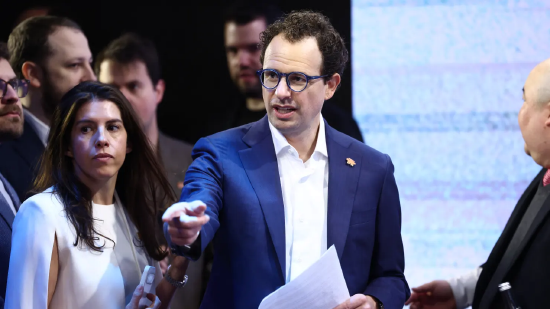
Startup investor Ben Narasim is so excited about Anthropic’s blockbuster IPO that he plans to host a party at his home in Silicon Valley later this month. Sake, vodka and Krug champagne will be available. Each attendee will receive two jars of caviar. "This is a celebration of the most substantive, important, incredibly wonderful thing that's ever happened in the history of venture capital," Narasinh, a founding partner at Tenacity Venture Capital, said in an interview, adding that he didn't even invest in the company.
Anthropic raised a record $93.5 billion in its IPO and received an additional $26 billion from tech giants who bought at the offering price. The stock rose 17% in its debut on Thursday, giving Anthropic a market capitalization of $1.8 trillion and providing a much-needed windfall for the Silicon Valley startup ecosystem.
This is a rather divisive scene on Wall Street: Wall Street took a sharp turn this week driven by AI. Led by Nvidia's 23% plunge, the stock's biggest weekly drop in 18 years, Nasdaq has fallen 10% over the past five trading days, its worst week since the early days of the coronavirus pandemic in 2020.
Investors and analysts have been debating this week: whether Anthropic will trade alongside AI hardware stocks — given its reliance on advanced chips, storage and data centers — or stand on its own as the first public pure-play AI developer that has enjoyed unrivaled growth in less than six years.
This question may linger for a while, but Friday's market performance showed that Wall Street doubts Anthropic can grow enough to match its lofty valuation. As of the weekend, the Claude developer had a fully diluted market value of $1.6 trillion, trailing only six U.S. companies: Apple, Microsoft, Alphabet, Nvidia, Amazon and SpaceX.
At a time when the tech market is roiled by rising interest rates, rising anti-AI sentiment and a crisis at Nvidia’s executive ranks, Anthropic’s IPO is part boom excitement, part relief for an industry hungry for exit channels.
After venture capital-backed IPOs brought in $73 billion in proceeds in 2021, the total raised over the next four years was just $39 billion, according to Jay Ritter, professor emeritus at the University of Florida. There are 126 technology companies going public in 2021, compared with 34 in 2025.
When going public is “not worth it”
Meanwhile, the private equity market continues to swell, with companies raising increasingly larger sums of money at sky-high valuations without the pressure of quarterly earnings reports. Many startups that had hoped to go public earlier this decade fell out of favor amid the AI boom. They have experienced massive layoffs, cut-price financing and acquisitions at very low prices.
“Not long ago, the mainstream wisdom in Silicon Valley was that the default path was to avoid going public as much as possible,” said Somesh Dash, general partner at venture capital firm IVP. The view at the time was, "It's too long, it's too difficult, it's not worth it," he said.
Anthropic is very young compared to some of these companies, but it is a huge attractor of private equity capital. According to Anthropic’s prospectus, investors had poured $141 billion into the AI lab as of September.
For some Silicon Valley companies participating in these funding rounds, the returns are like nothing they have ever seen. Menlo Ventures and Lightspeed Venture Partners each hold Anthropic stock worth about $25 billion based on the IPO price. Bessemer Venture Partners holds a stake worth about $10 billion, partner Byron Dieter said.
Bessemer’s Dieter also rejoiced on Thursday, posting on
This is quite a change from just a few years ago, when Anthropic was generating almost no revenue and success was far from guaranteed. In 2023, Anthropic’s Claude 2 struggled to keep up with Google and OpenAI’s models. In April 2024, Bessemer investors wrote in a memo that if Anthropic failed to achieve its goals, "it is very possible that we will lose all or part of our capital."
Lightspeed guru Chahal said Anthropic is clearly the team taking a more measured approach to AI. Rather than focusing solely on Nvidia-led AI chips, the company has chosen to also use alternatives from Amazon and Google. Anthropic said it generated $1.72 in revenue for every $1 spent on computing power in the third quarter, up from 68 cents a year ago.
"Yes, it requires a lot of capital, but when you look deeper, you realize that capital is flowing to computing power, and this team is best equipped to use that computing power in the most efficient way, and then we can connect the dots," Chahal said. He added that the indicators suggest it "will be a very high-quality business."
IPO pipeline?
Anthropic isn’t the only big winner in venture capital this year.
SpaceX hit the market five months before Anthropic debuted on Nasdaq, and before this week it was the largest IPO in history to date. SpaceX, founded by Musk in 2002, has generated outsized returns for companies including Sequoia and Andreessen Horowitz.
SpaceX and Anthropic alone will make 2026 a monster year for the venture capital industry, easily surpassing any other year in terms of IPO proceeds. And OpenAI's investors hope the market's appetite for trillion-dollar companies will remain strong next year as the company eyes a potential IPO in 2027.
IVP's Dash said that in his AI portfolio, "a lot of companies are starting to prepare for IPOs," even if they are only "the fourth, fifth, sixth year of establishment." He hopes to see at least six companies go public in the second half of 2027 with valuations in excess of $10 billion each.
However, the bigger picture is ominous.
Jensen Huang's abrupt departure from Nvidia leaves the chip giant without a clear leader at a time when the company is already facing growing concerns about a spending slowdown. Nvidia is a key investor in Anthropic and OpenAI, as well as a key supplier and financing partner to the entire AI industry, which is suffering across the board.
In January next year, after this month's midterm elections, the Democrats will control the House of Representatives and the Senate. The midterm elections included the passage of several referendum proposals that could hinder data center development. Anthropic investor Brad Gerstner predicted after the election that market dynamics would cause Anthropic to price toward the lower end of its range.
Narasin said he wasn't even sure the company would get that far.
"I'm worried they're going to delay," Narasim said.
The results were even more impressive after Anthropic priced above its expected range and expanded its offering, he said.
“This will be a bedtime story for future VCs for years to come,” Narasim said. "A company was founded, backed by angel investors and later venture capital" and in just a few years "became the largest IPO ever."
Comments