
Abstract:
Apple’s recently released EU product information document reveals the battery capacity of its first foldable screen phone, iPhone Duo. This device is equipped with a battery with a total capacity of 4883mAh, which is composed of two cells with capacities of 2962mAh and 1921mAh. Relevant information has appeared on the Internet before, and the release of the EU product information document further confirmed this data.
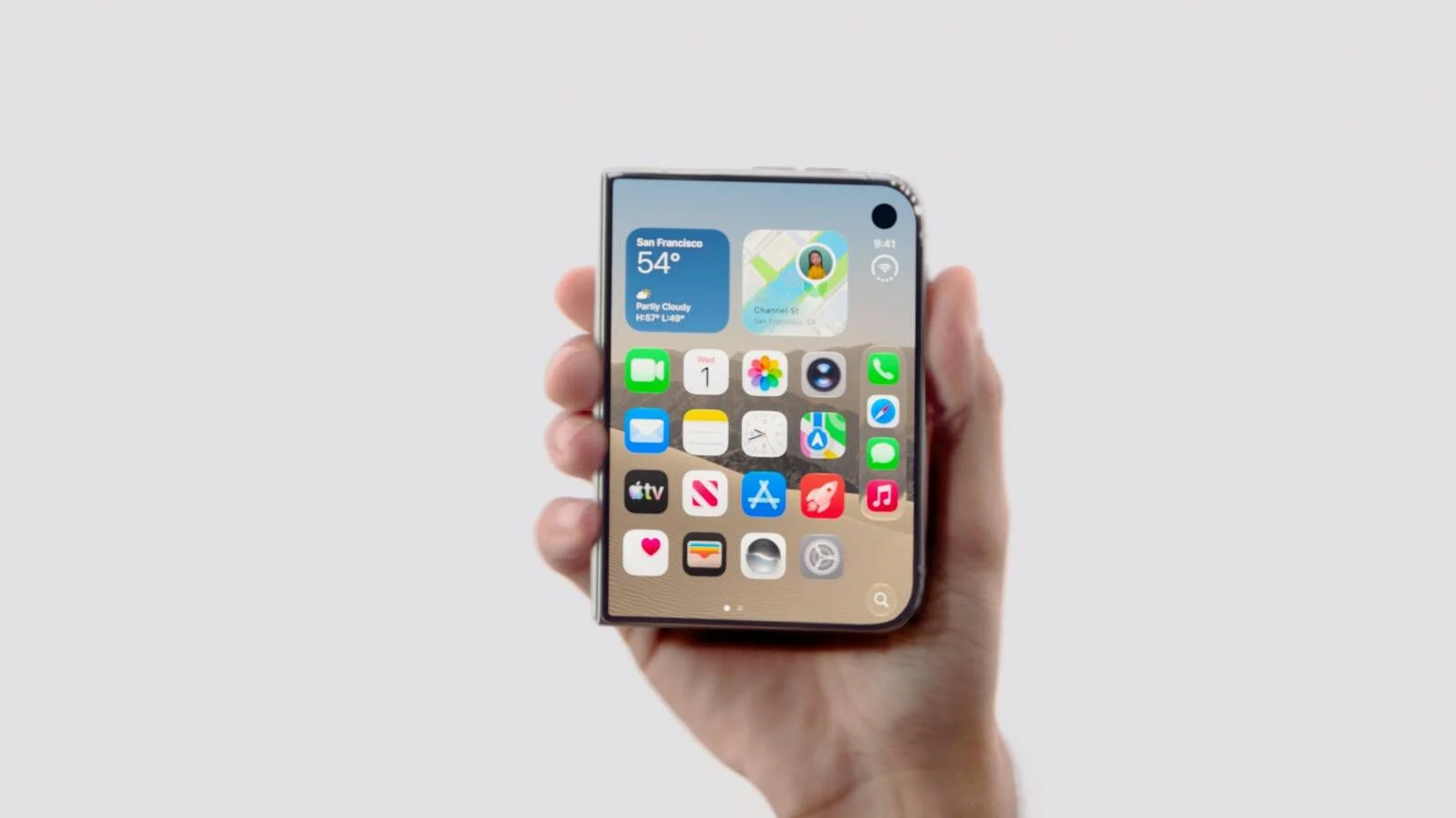
According to MacRumors report on October 18, Apple announced the EU energy label and related product information of iPhone Duo on October 16. Documents reveal that the device has a rated battery capacity of 4883mAh. Apple usually does not directly announce the mAh capacity of iPhone batteries in official product specifications, so such regulatory documents have become an important channel for the outside world to understand its actual battery specifications.
Previously, leaked information about the battery capacity of iPhone Duo pointed out that the device uses two independent batteries with capacities of 2962mAh and 1921mAh respectively, for a total of 4883mAh. The official product information released this time is consistent with previous revelations.
Since iPhone Duo uses a pure eSIM design and does not come with a physical SIM card slot, different regional versions do not need to adjust the internal space to accommodate the SIM card slot. Based on this, MacRumors believes that the capacity data of 4883mAh should apply to the global version, and there will not be a difference in battery capacity due to the difference in internal layout between the physical SIM card slot version and the pure eSIM version like some traditional iPhones.
From a capacity comparison, the battery capacity of iPhone Duo is between that of iPhone 18 Pro and iPhone 18 Pro Max. According to data obtained by iFixit’s previous disassembly, the battery capacity of the pure eSIM version of iPhone 18 Pro is 4288mAh, while the battery capacity of iPhone 18 Pro Max reaches 5567mAh. In comparison, the iPhone Duo has 595mAh more than the iPhone 18 Pro, but 684mAh less than the iPhone 18 Pro Max.
For a phone with a book-style folding design, the 4883mAh capacity reflects Apple’s trade-offs between body thickness, hinge structure, screen size and battery space. Folding screen mobile phones need to allocate internal space to two displays, hinges, motherboards, cameras and other components, while also maintaining a reasonable body thickness in the unfolded and folded states. Compared with traditional candy bar mobile phones, this structural design will bring more restrictions to the battery layout.
iPhone Duo uses a dual-battery system, with two batteries located in two parts of the fuselage. Apple has previously stated that iOS will manage the two batteries as a whole, rather than letting users operate them separately. The use of two batteries helps to adapt to the internal space layout of the foldable body, but this does not mean that the two batteries have the same capacity, nor can the battery life of the entire machine be judged solely by the number of cells.
The battery life data released by Apple also shows that which screen is used will significantly affect battery performance. According to Apple's previously announced specifications, the iPhone Duo uses a 7.6-inch internal screen to play videos in the unfolded state, with a maximum battery life of 31 hours; when only using a 5.4-inch external screen to play videos, it can last up to 44 hours. According to typical usage scenarios defined by Apple, the battery life of the device is up to 24 hours. This typical usage scenario assumes that the user uses both internal and external screens equally to send and receive messages, take photos, play music, social applications, video streaming, games, web browsing and navigation at the same time.
This means that although the battery capacity of iPhone Duo is lower than that of iPhone 18 Pro Max, the actual battery life difference cannot be simply calculated from mAh figures. Screen size, display technology, processor energy efficiency, modem power consumption, and which screen the user spends their time on will all affect final performance.
Apple said that iPhone Duo uses the new generation A20 Pro chip and C2 modem, and optimizes internal space and energy efficiency through dual-battery design and pure eSIM structure. The device also supports wired fast charging. When using a USB-C power adapter with a power of 60W or more, the battery can be charged to 50% in about 20 minutes. In terms of wireless charging, the machine supports MagSafe and Qi2, and the maximum wireless charging power is 25W.
However, battery capacity alone does not indicate battery durability. The EU product information document also involves information such as battery cycle durability, but these laboratory indicators are not exactly the same as the actual battery life in daily use by users. For foldable mobile phones with a dual-battery structure, the attenuation of the two batteries after long-term use, how the system manages battery health, and how to replace the battery during maintenance are also issues worthy of attention.
The announcement of capacity information gives the outside world a clearer understanding of the hardware configuration of Apple’s first foldable screen phone. 4883mAh is not the largest battery capacity in the current smartphone market, but considering that the iPhone Duo needs to accommodate two screens and a complex hinge mechanism in a folding structure, this number still needs to be comprehensively judged based on the body design and actual battery life performance.
iPhone Duo is expected to be officially launched on October 23. As the devices begin to be delivered to users, subsequent disassembly and actual endurance tests are expected to further reveal the internal structure, charging management methods and long-term performance of the dual-battery system.
Comments