
Abstract:
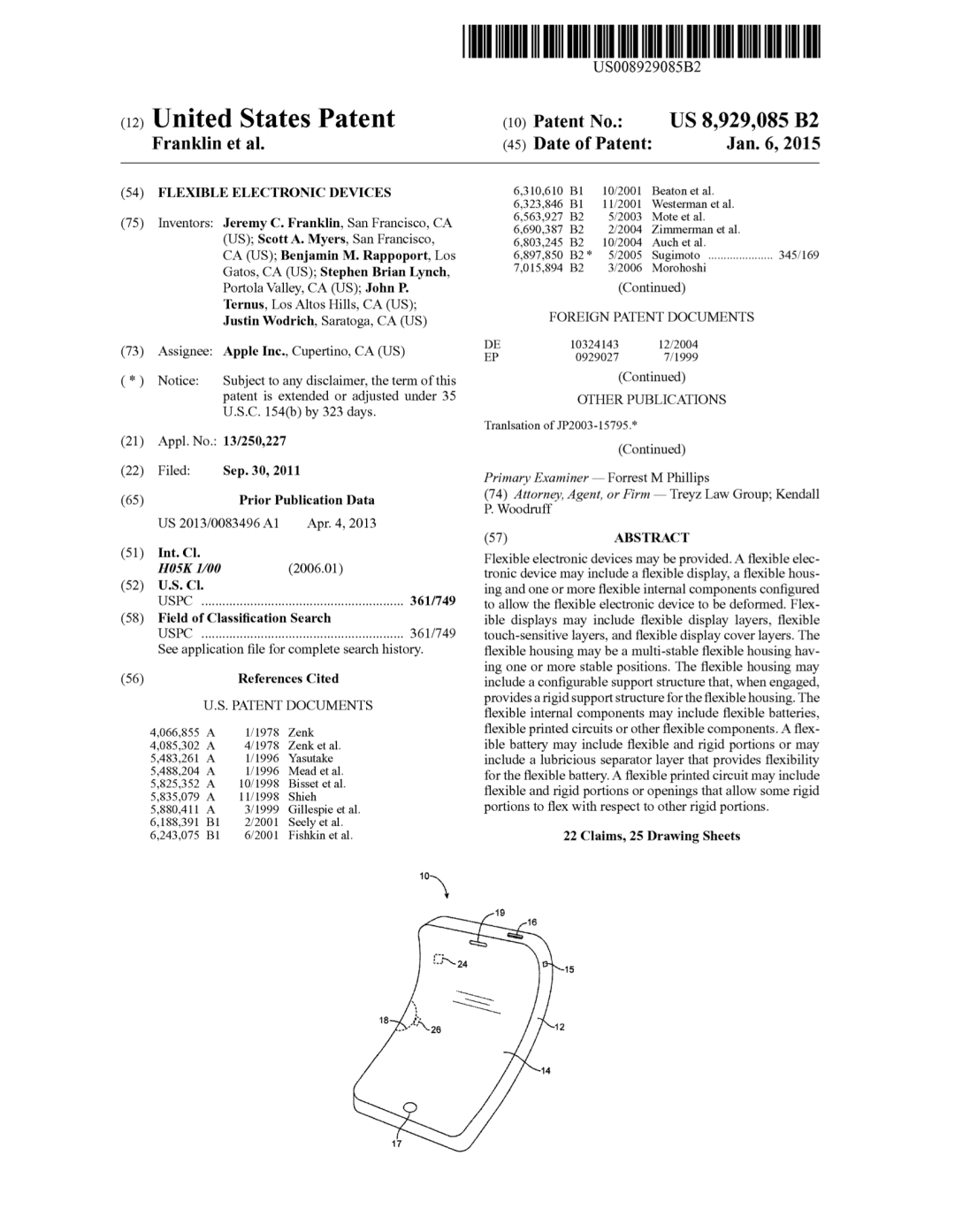
On September 30, 2011, Apple submitted a patent application called "Flexible electronic devices". It describes a device with a screen that can be folded in half. It can be put into a pocket when folded, and it relies on sensors to determine whether it is open or closed. This patent was granted in January 2015. There are six inventors, one of whom is John P. Ternus.
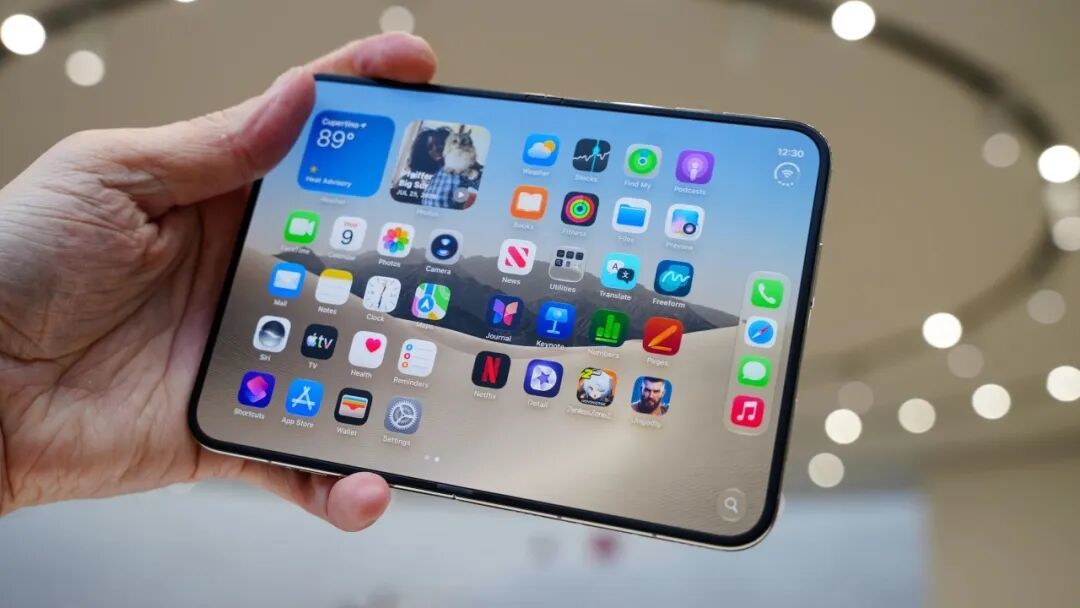
Fifteen years later, on September 9, 2026, the engineer who signed the name for the first time stood at a press conference as Apple CEO and released iPhone Duo.
Although this is the most important product at the first launch for the new CEO, in the past fifteen years, Apple's extensive pre-research work on folding screens has been carried out under the water for a long time.
According to a report by Bloomberg’s Mark Gurman the day before the launch, Apple engineers did not start seriously working on the folding iPhone until about 2016. The project was initiated by Ternus’ predecessor and head of hardware engineering Dan Riccio. The direction has never been decided. A few years ago, I tried an iPad mini that could be unfolded into a large tablet.
In February 2019, Samsung and Huawei released their first foldable screens four days apart: the Galaxy Fold was over 15 mm thick when closed, while the Mate X simply folded the screen outside, and the crease was a groove visible to the naked eye. Apple thought of this eight years earlier than these two companies, and has done nothing at this time.
The turning point is 2020. When Cook returned from a business trip in Asia, he saw Samsung and Huawei folding machines everywhere, and he turned to the folding iPhone. The Bloomberg report quoted a sentence: Cook is the earliest and largest supporter of this project.
What really stuck with the engineering team were four things: whether the creases were visible, whether the hinge could withstand repeated opening and closing, how to make the flexible cover glass for the inner screen, and how to hide the camera under the screen. The cover glass was eventually customized with Corning, and the hinges were made of titanium and aluminum. These four things are all hardware issues.
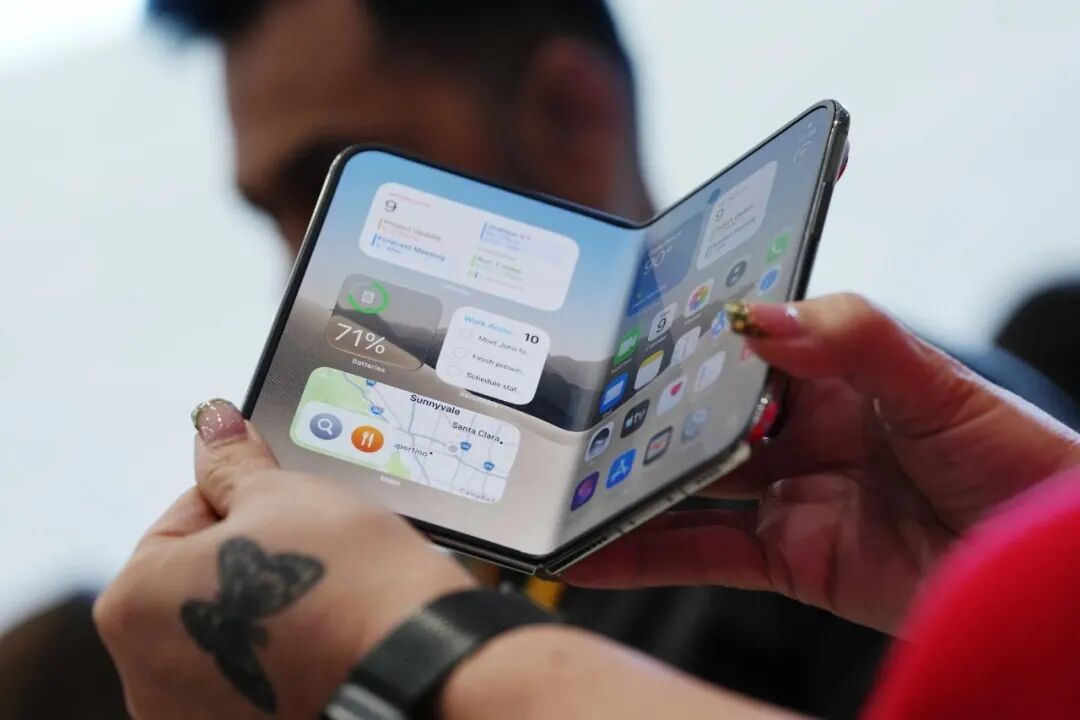
Seven years have passed since those two machines in 2019. Huawei Mate X7 is 9.5 mm and 235 grams, and Xiaomi Mi 18 Fold sells book-style folding for 10,999 yuan. Apple was the last one to enter the market. The iPhone Duo it handed over was 11.3 mm closed, weighed 254 grams, and priced from 15,999 yuan in China. It was the thickest, heaviest, and most expensive folding screen of the same size.
TrendForce’s prediction on the day of the press conference was that this machine could sell approximately 5 million units this year and capture 24.8% of the global folding screen market in the first year; Counterpoint’s estimate in July was 25%. A folding screen that lags behind in almost every hardware parameter, but analysts agree that it can cut off a quarter of the screen as soon as it is launched.
Using "Apple brand premium" to explain this matter is undoubtedly a lazy approach on this issue: the problem that the folding screen has not solved for seven years has never been on the hinge. Hardware problems can be caused by spending money and time, but the only thing that Huawei, Samsung, and Xiaomi have not accumulated in the past seven years is to make the apps on their mobile phones honestly change for folding screens.
01
Answers to Android folding screens in the past seven years
There is only one sentence for the software problem with the folding screen: the App is written as a vertical rectangular screen. After unfolding, the screen becomes approximately square, and the App does not know what to do.
Google’s solution will be finalized in Android 12L in 2022: Apps that will not adapt will be displayed as a vertical bar in the middle of the screen with black on both sides, which is called compatibility mode. This is a catch-all solution, assuming developers will catch up as soon as possible. Four years later, this premise has not been established. In the wide folding adaptation guidelines that Google gave to developers in July this year, the problems listed are still that the screen is stretched, cropped, and turned horizontally after expansion.
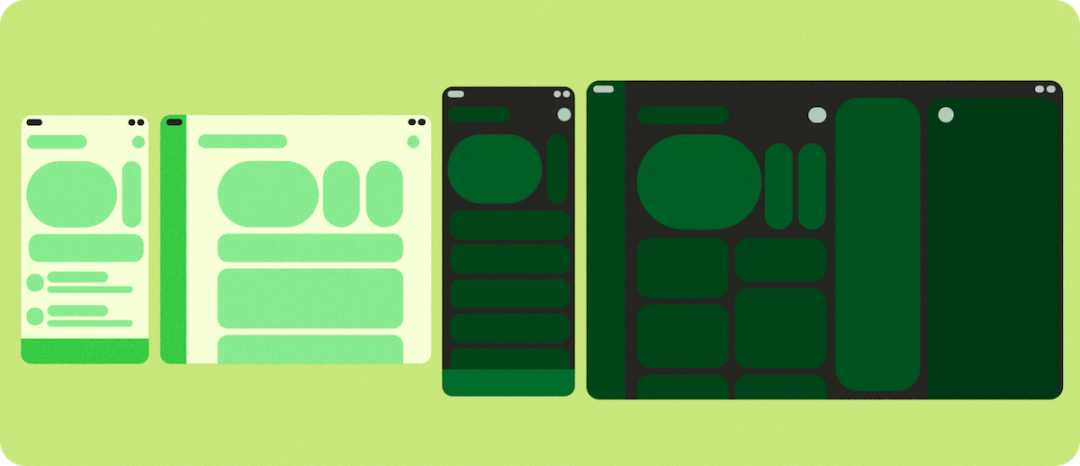
Google has already included content on folding screen adaptation in the Android development specifications, but the progress has been slow | Image source Google
Starting from Android 16, the Android system ignores the orientation and size restrictions declared by the App by default on large-screen devices, and developers can temporarily apply for exemptions; by Android 17, the exemption is cancelled, with the exception of games. It took four years for a platform developer with Android to go from "begging" to "forcing", and it will take another year to see the effects after reaching "forcing".
The reason why developers do not follow is first reflected in the volume: folding screens so far only account for less than 2% of global smartphone shipments. If a developer changes the interface for it, the revenue will not cover the cost.
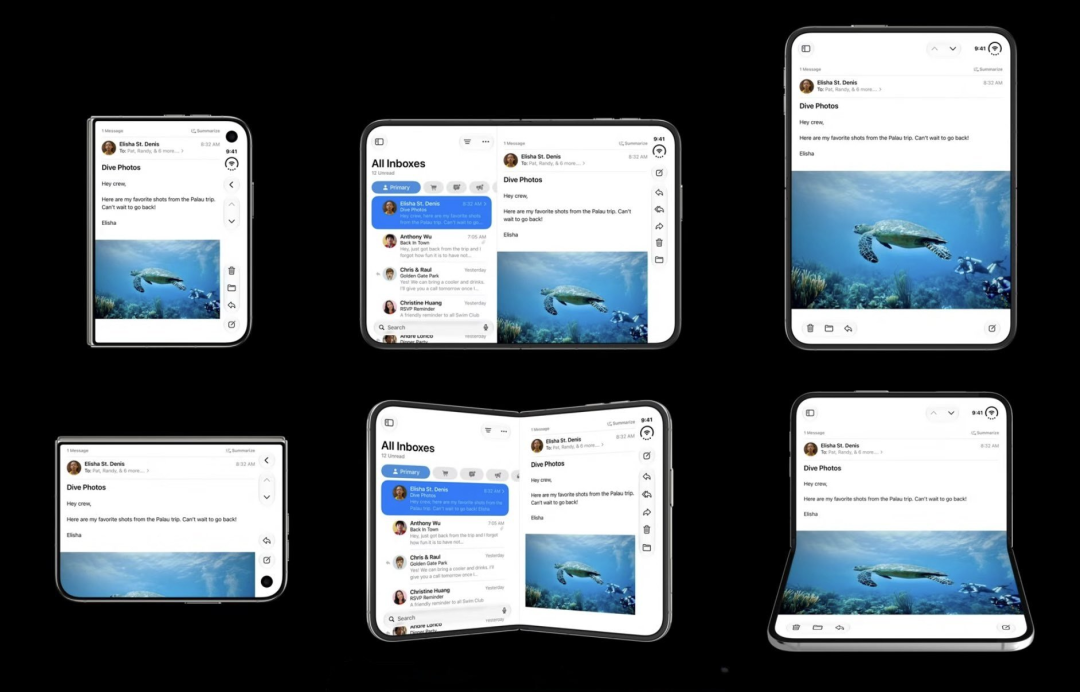
Secondly, the form is not uniform: Samsung's external screens in the past few generations were narrow strips with a ratio of 21:9, domestic manufacturers made wide external screens close to candy bars, and Huawei Pura Just because a developer has adapted to one company does not mean that it has adapted to a folding screen.
In China, this problem is half covered by Huawei’s share
. According to IDC data, China shipped 2.8 million folding screens in the first quarter of this year, a year-on-year increase of 65%. Huawei alone accounted for 60%. Pura X has shipped more than 1.5 million units in one year since its launch. Even so, it doesn't allow all apps to be modified for a 3.5-inch square screen.On the hardware side, there are no secrets at all: Duo’s folding panels are exclusively supplied by Samsung Display, and the Korean media The Elec reported in April this year that the contract period is three years; manufacturers such as Lens Technology and Lingyizhi Manufacturing, which also supply domestic mobile phones, responded to the media on the day of the press conference, saying that they supplied UTG ultra-thin glass, screen support plates and hinge precision parts.
In other words, the screen of Apple’s first folding screen comes from Samsung, and the structural parts come from the same factories that supply Huawei and Xiaomi. The hardware supply chain for foldable screens is shared by the entire industry, and no one can build a moat based on it.
The only thing that can build a moat is the operating system.
02
New solution for iPhone Duo
Apple’s plan for the folding screen ecosystem is to turn it into an iPad in your pocket.
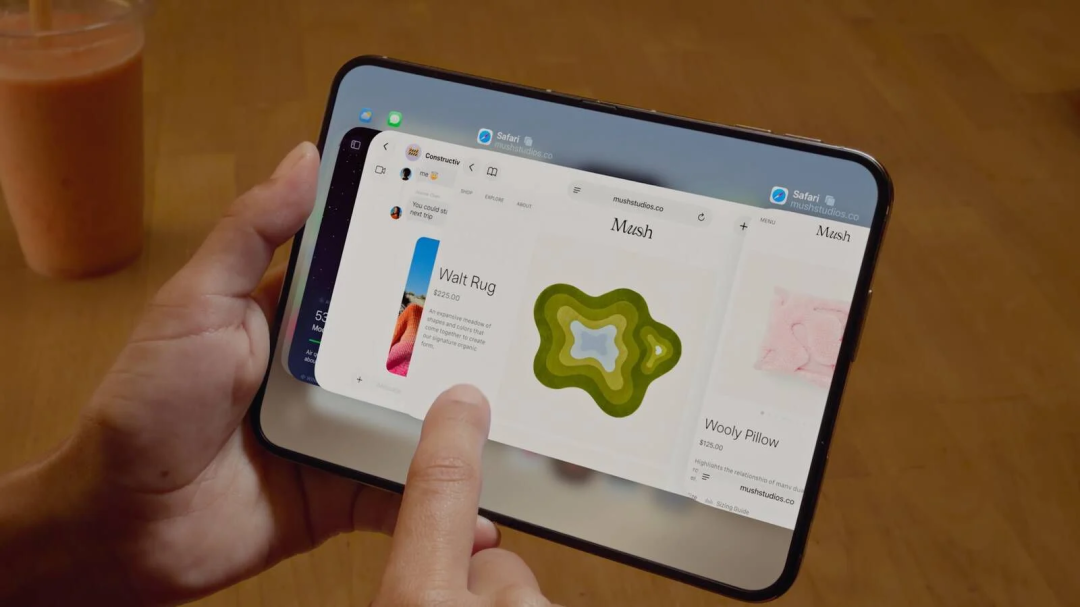
At first glance, the interaction of inner screen expansion is not much different from iPadOS | Image source: Apple
But this approach wasn't improvised just for Duo. iOS abstracted screen sizes into two categories: "compact" and "regular" in 2014. Since then, developers have been required to use a set of interfaces to serve both iPhone and iPad; in 2015, the iPad had split screen, and in 2022, there was front-end scheduling. By last year's iPadOS 26, Apple simply scrapped the split screen and side pull that had been used for eleven years and replaced it with a real window.
For twelve years Apple has been doing the same thing: enabling an app to deliver the same experience to users on all screen sizes without making assumptions about what screen it will be displayed on.
This is exactly what a folding screen needs. So Apple doesn’t have to invent anything this time. It only needs to add the last layer of folding-related things to its twelve-year foundation: where is the hinge, how to half-open and close, and how to connect the two screens.
This style of play can help Apple achieve "the first battle is the end": although it enters the market seven years later than its competitors, the first generation must be a finished product. The Android camp is selling and supplementing at the same time. It took Google four years to dare to make adaptation mandatory; Apple put all its efforts in making up for the problem before entering the market.
To do this, the first problem Apple needs to overcome is the new size: the iPhone Duo is a 5.4-inch, 84 mm wide external screen when closed. Apple's caliber is that the display area is equivalent to 90% of the iPhone 18 Pro; when unfolded, it is 7.6 inches, with an aspect ratio close to 1:1.42, which is slightly longer than the iPad.
In Apple's guidelines for developers, the external screen corresponds to "compact width" and the internal screen corresponds to "regular width":
In other words, an app that has already been developed for iPad does not need to re-understand what it is on Duo. It only needs to take out the iPad layout when it is expanded.
.Apple chose a side in this step. It does not follow the narrow and long external screen that Samsung has been doing for seven years, but stands on the other side: the Duo's external screen size is almost exactly the same as the 5.38-inch Xiaomi 18 Fold released on September 7. Samsung itself also changed its tune this year. According to GSMArena's comparison table, the Z Fold8's external screen was made into a 5.5-inch widescreen. Google immediately sent developers the wide-folding adaptation guide in July.
The form of folding screens will converge to the same answer in 2026, and Apple’s rules are written according to this answer.
The second is the development interface: iOS 27 has added a concept called "reserved area". The system tells the app where the hinge and camera are located, and the app moves the content away from the crease when it is half opened and closed; the toolbar, tab bar, and smart island are moved from the upper and lower ends of the screen to the side and placed vertically, leaving a complete rectangle for the content.
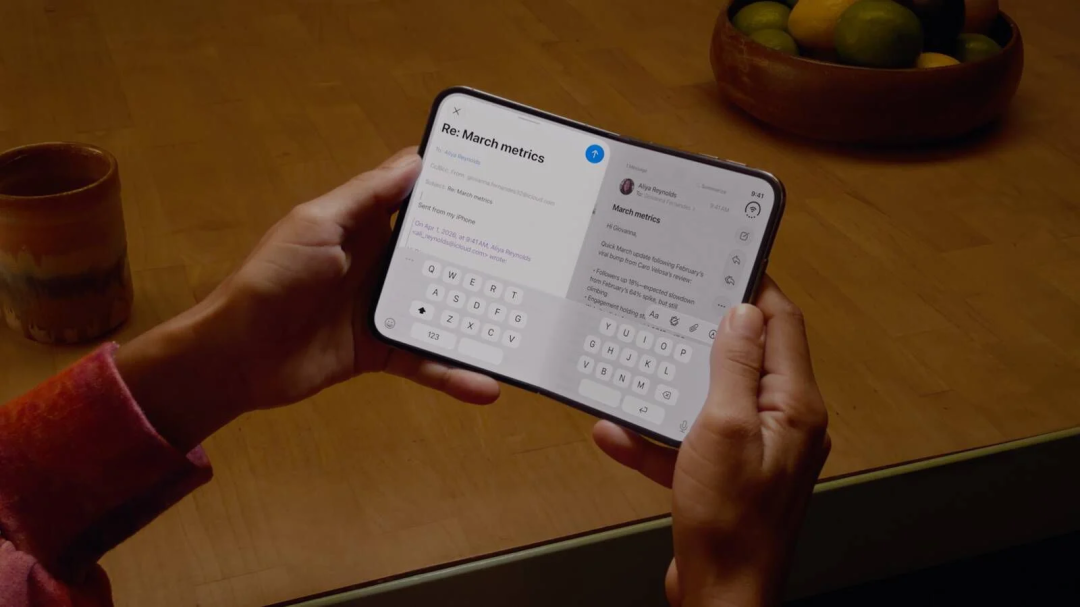
The Dock and Smart Island are raised to the side, leaving a full rectangle for the content|Image source: Apple
Apple has only one piece of advice for developers: Don’t draw a separate interface for each posture, make a layout that will adapt to your needs. Even the horizontal or vertical screen has been relegated to a secondary position. The first question is the size category.
The outer screen is "compact" when held vertically, and the inner screen is "normal" when held horizontally and vertically. The interface is determined by how much space is available, not by which direction the machine is facing.
In addition to the rules, Apple also gave me something that was not required.
The same App can open two interfaces on two screens at the same time, and the two screens can also display their own interfaces. From this perspective, Duo is not necessarily a special machine, but more like the starting point for the iPhone application form replacement.
iOS 27 opens a set of interfaces specifically for Duo's hinges, called onHingeChange in SwiftUI and UIHingeInteraction in UIKit. Not only can the app know whether the machine is closed, half-open, or fully open, it can also get the continuously changing hinge angle.
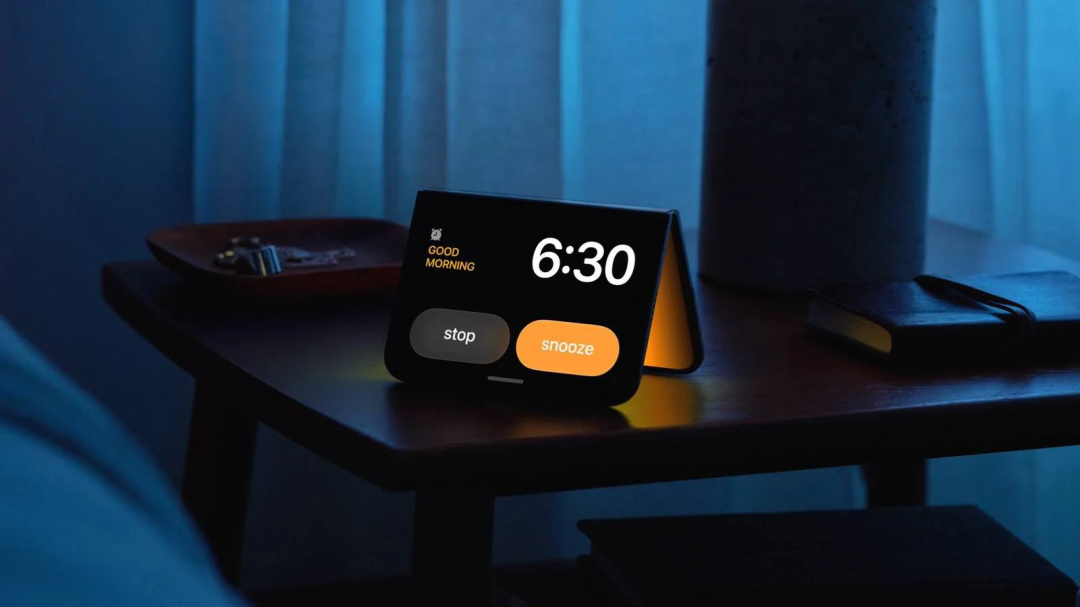
The collapse action can therefore be used for more than just switching interfaces. Angle is a continuous input quantity: the camera can map it to a certain parameter, the 3D software can use it to rotate the angle of view, and the music software can use it to push and pull the pitch. Apple's own example demonstrates the last one. When the machine is folded to different angles, the pitch of a virtual guitar changes accordingly, like using a tremolo. You don’t have this dimension on a straight iPhone.
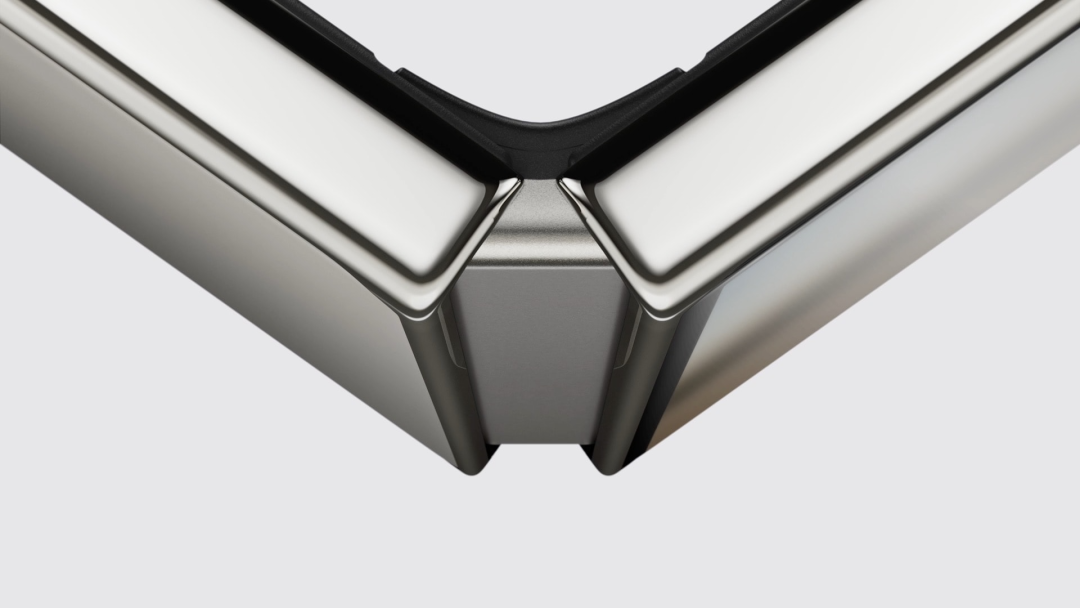
The hinge angle is a continuous input, and the official example uses it to push and pull the pitch | Image source: Apple
Another way to use two screens is to leave the external screen for others to see. At the press conference, Apple demonstrated three: during FaceTime, people next to you can join the call from the external screen; when you use the rear camera to take pictures of people, the person being photographed can see the viewfinder on the external screen; and there is also a dedicated one for coaxing children, putting an animation on the external screen to attract their attention.

The official version of iOS 27 will be launched on September 14, and Duo will be pre-installed with 27.1 when it leaves the factory in October. After the press conference, Apple launched six technical lecture videos on its developer website, scheduled two online labs on September 16 and 17, and three Q&A sessions on September 23. The Xcode 27.1 beta version and supporting interfaces that fully support iPhone Duo will be released later this month. Apple will release it later this month, which will include a Duo simulator that can be opened, closed, rotated, and folded in half on the Mac.
03
Apple’s “Deadline”
According to Apple's instructions to developers, apps on iPhone Duo are divided into three categories: Apps that have not been recompiled according to iOS 27 development tools are framed in a safe area in the middle of the screen, surrounded by black borders; apps compiled according to iOS 27 can occupy more area, but there is still blank space; only apps recompiled according to 27.1 can occupy two screens.
This seems to be the same thing as Android's compatibility mode, the difference is who puts the pressure on it. Android folding screen users see black borders and complain about their phones; iPhone Duo users see black borders and complain about that app: on the same phone, Netflix, Zoom, and Slack have been named and adapted at the press conference. Whoever still has black borders will look outdated.
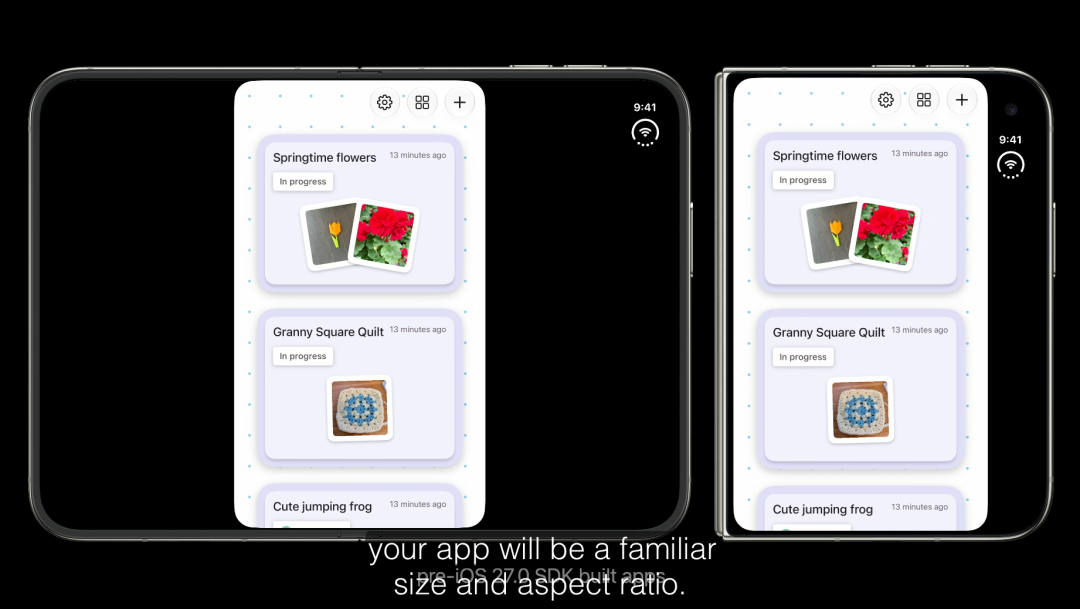
Three levels of compatibility mode, black borders are punishment for old apps|Image source: Apple
Apple has precedent for doing this. In 2017, the iPhone It took less than nine months from launch to when all apps were forced to adapt.
Currently, Apple has not announced the iPhone Duo adaptation deadline, but the third-level compatibility mode is the first step in the same set of actions. As usual, the App Store deadline will appear next year.
The reason why only Apple can do this is that it has three things at the same time: the only form, an app store that almost all apps cannot bypass, and a scale commitment of 5 million units in the first year. For developers, 5 million devices with the same shape are worth investing in than 15 million Android folding screens with different proportions.
TrendForce has another number in the same forecast: the Android camp’s folding screen shipments will total about 15.2 million units in 2026, a year-on-year decline of more than 20%, and the total market volume will only increase by 0.5%. Almost all of Apple’s 5 million units will be taken away from Android. Counterpoint is more optimistic, believing that the total market will rise by 21%, but both companies will give Apple a quarter of the share.
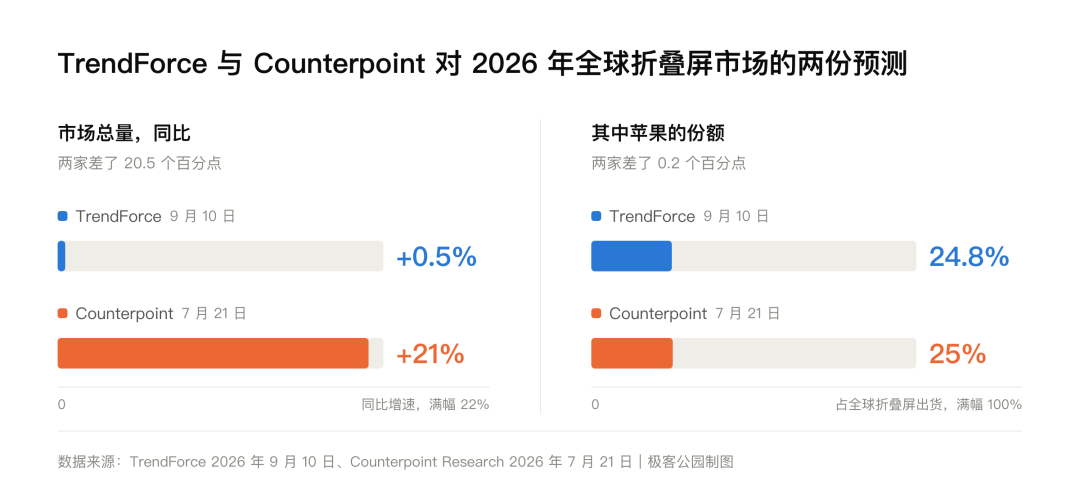
The difference between the two organizations is in the total amount, and the agreement is in Apple's quarter | Image source: Geek Park
The cost falls on two groups of people. The first group is developers. There are only six weeks from the launch to the release on October 23. It is difficult for the first batch of users to get Duo without seeing black bars on some apps.
The other group is users of the National Bank of China. Duo only supports eSIM in mainland China. To activate it, you have to go to the operator's business hall. The official website of Apple Smart's launch time still says "subject to regulatory approval."
This explains to some extent the sense of contradiction mentioned at the beginning: analysts gave a 25% share to the heaviest and most expensive folding screen. The bet was not on Apple’s hinge, but on Apple’s ability to change the app within a few months. This is the first time in seven years that someone has the conditions to do so. Huawei's 60% share in China also confirms the same truth: the two most stable companies in the folding screen market happen to have their own operating systems, and Samsung, which relies on Android to make a living, both institutions predict that its share will drop this year.
But this only answers half the question.
App adaptation determines whether a folding screen is easy to use or not. It does not determine whether a person should buy a folding screen
.In the past seven years since the earliest folding screen mobile phones were released, folding screens still account for less than 2% of global smartphone shipments, and TrendForce’s forecast for the global total in 2026 has only increased by 0.5%. The question that no manufacturer has really answered in the past seven or eight years is: why is it worth spending an extra 5,000 yuan on a mobile phone just to get it discounted in half?
Apple is in a more difficult position than anyone else on this question. It was the last one to enter the market and was the most expensive. It also made some subtractions on this machine: no independent telephoto and no Face ID.
Friends can say that they are exploring new forms, but Apple cannot say the same. Its users are holding the iPhone 18 Pro Max at the same conference, and the difference between the two machines is a full 5,000 yuan. Pay more money, lose a telephoto lens, lose a face unlock, and get a 7.6-inch screen that will be opened several times a day.
The second half of the folding screen competition is no longer about whose phone is thinner, but whose operating system can make the app obedient. At least in this round, Apple has a greater chance of winning.
Comments