
Abstract:
Apple's new CEO John Tenas hopes that the company will seriously promote the robot business, but judging from the development progress of this first-generation product planned to be released to the outside world, he may face a tough battle. The device has a 9-inch screen, a movable robotic arm, and looks like a lamp from a Pixar animation.
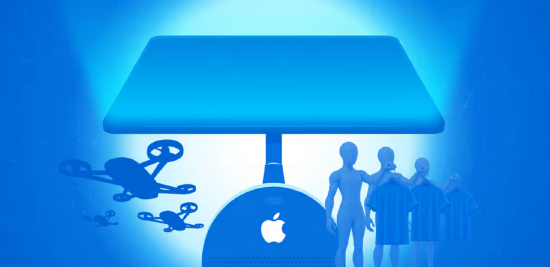
Apple started this robot project as early as 2019, with the internal code name J595. The initial positioning of the project was conservative, and it was mainly envisioned for video calls; the role of the robotic arm was to follow the user as he moved around the room. But as management hopes to add AI capabilities to it, the project goals have expanded significantly.
According to the current design plan, this robot is equipped with cameras and various sensors, which can fully perceive the surrounding environment and act autonomously: when someone walks into the room, it can turn on the lights and even try to drive away the cats on the table; it also has built-in obstacle avoidance capabilities to prevent collision with surrounding objects.
People involved in the project revealed that most of the robot's hardware solutions were finalized about two years ago, but the software team has been struggling to keep up. The hardware team responsible for J595 hopes to speed up the pace and release the product as soon as possible; while the software team advocates delaying the launch. Over the past year, the software team has been streamlining the original functionality, intending to converge the product's core capabilities to simple home automation tasks such as FaceTime calls and turning on the lights.
Apple plans to sell this robot for about US$1,000. Due to the influence of component prices, the final price may be higher. Multiple former employees said it may be named Home View Ultra, following the naming system of the Home View, a fixed desktop device released by Apple last month. Apple originally hoped to launch it next year, but the release time may also be postponed to 2028 (the hardware team originally planned to launch it this year).
The difficulties in developing this robot reflect the challenges faced by Apple in the early days of Turners' tenure. Apple is good at iteratively updating iPhones and Macs every year, but it is not good at developing new categories from scratch. The company has always had a slow pace. For example, the Vision Pro headset was polished for about 8 years and was officially launched two years ago to a lackluster market response. If J595 comes out next year, the development cycle will be close to this length.
Under the wave of AI, Apple has been particularly slow. Siri's major revision took several years. Even if new AI functions were launched this year, it still lags behind competing products such as Meta's Muse and OpenAI's Dots on the AI intelligent agent track.
Former CEO Tim Cook postponed the release of many new products to coincide with Turners taking office in September, so that the launch of new products would be synchronized with the time when he took office. Since then, Apple has successively released Home View, foldable iPhone Duo and touch screen MacBook, but market reviews have been mixed: the $2,899 MacBook was criticized for being overpriced; the Duo was very popular, but there were frequent complaints of screen cracking; Home View was criticized for being just an enlarged version of ApplWatch, relying heavily on Siri, whose performance is still unsatisfactory.
When Turners took over, a number of strong competitors were deploying AI hardware and robots. A year ago, OpenAI acquired a hardware startup co-founded by former Apple chief design officer Jony Ive. Since then, Ive has devoted himself to building an AI hardware product line for OpenAI. OpenAI has also poached more than 400 Apple engineers to invest in related projects. OpenAI plans to launch a donut-shaped smart speaker next year, with a movable structure and camera to sense the user and the surrounding environment.
Meta is also intensively launching hardware, including AI glasses and VR headsets. Compared to Apple, some Meta projects go from concept to implementation very quickly: its pocket AI device Charm is said to have been developed in less than a year and is expected to be shipped in December.
Tesla is developing Optimus, a humanoid robot that Musk says will help with housework. A large number of start-ups have also joined the competition, such as the robotics company 1X, which originally planned to put humanoid robots into homes this year. Its Neo robot became popular when it was revealed last year, with videos showing it washing dishes and folding laundry.
In addition to J595, under the leadership of senior executive Kevin Lynch, the Apple robotics team is also exploring other forms: wheeled follower robots and indoor flying robots. Apple also has a project to develop robots that specialize in specific daily chores, such as folding laundry. In theory, the development difficulty of robots that only focus on a few fixed household tasks is much lower than that of general-purpose humanoid robots that need to handle a variety of tasks. The minutes of the informed meeting show that Turners is very interested in the direction of robots dedicated to housework.
A former engineer who participated in the J595 project commented: Apple "has been torn apart in order to catch up with the AI wave."
"iPad on a stick"
The research and development of J595 lasted nearly ten years and was taken over by many Apple executives. Many of the people in charge were juggling multiple projects at the same time, making it difficult for them to devote themselves to this device. Bloomberg has previously disclosed some information about the robot.
The earliest prototype was completed in 2018. The following year, Cook observed a prototype demonstration and approved the project to proceed. Early prototypes were larger than current designs, and some Apple engineers joked that they looked like "an iPad on a stick."
The robotics hardware team was led by Matthew Costello, who was previously responsible for Beats (the headphone brand acquired by Apple in 2014); software development was handed over to Apple's Special Projects Group, which at the time was mainly promoting Project Titan, Apple's self-driving car project. For a long time, veteran engineer Brian Lynch (a veteran of the iPod era) was responsible for both the car's cockpit and the J595: He envisioned the robot not just at home, but also on the center console of an Apple car.
In 2021, the head of the special projects team changed: Doug Field resigned and joined Ford, and Kevin Lynch took over. Lynch is famous for developing health tracking features for Apple Watch and saving this product line, but at that time most of his energy was focused on self-driving cars. The robotics business was mainly responsible for Chris Surrey, who once led Apple Watch software development.
Early in the early stages, project members knew that if it was going to support its hefty price tag, it couldn't just be a fancy FaceTime device. After the advent of ChatGPT in 2022 triggered an AI craze, the team began to increase AI capabilities and create a more complex experience. The team hopes to add a large number of active intelligent functions to allow the device to complete a variety of tasks autonomously. The Robotics Department has also set up a dedicated AI research branch, led by Vladen Coltun; he was responsible for the AI business at Intel and joined Apple in 2021.
However, Apple’s self-developed AI capabilities are significantly different from competing products. The team is therefore allowed to use externally available models, including open source models and Google licensed models. The team originally planned to connect J595 and Siri in the future, but in the early stages of robot development, the Siri team and the robot team were independent of each other, and the Siri team itself was already under great pressure to iterate.
After Apple halted its self-driving car project in 2024, Lynch turned all his focus to home robots, and a large number of former car project employees were deployed. Three people involved in the project said that many employees who were working on robots earlier were disappointed with his management style and believed that he seldom communicated and listened to front-line opinions.
Lynch chose to lower the functional expectations of the first-generation J595: he plans to launch a basic version first, and then gradually increase capabilities through updates. The idea is the same as that of the Apple Watch. The original Apple Watch was released in 2015, and it was only later that health and fitness sensors were added, making this wearable device truly popular.
Turners takes over the helm
Before being promoted to CEO, Turners, then the head of hardware, was skeptical of many new projects, such as the aborted autonomous driving project and the Vision Pro head display. But three people familiar with the robotics project said he has higher expectations for Apple's robotics track.
Last year, the reporting lines of Kevin Lynch and the special projects group were transferred from Senior Vice President John Giannandrea to Turners (Giannandrea once headed Apple's AI business and resigned earlier this year).
In April, Apple officially announced that Turners would take over as CEO within the year. Even though he was still in the handover preparation stage, he attended almost every demonstration meeting and product planning meeting of J595 and other robots.
According to people familiar with the matter, Turners is implementing a company-wide strategy: streamlining the team and accelerating implementation. The size of the robotics team is still relatively small. Apple has a shortage of professionals who are deeply involved in the field of robotics. Some estimate that there are only about 10 real robotics experts. Lynch has a software team of about 300 people, of which about 30 are responsible for research.
J595 project members are already discussing the second-generation model and plan to put some of the features that have been cut off in this generation into the next generation. At the same time, a group of engineers in the early stages of the project have left: hardware leader Brian Lynch went to fitness hardware manufacturer Oura, and robotics research leader Zhang Jian left for Meta.
Some J595 team members hope that the product will be released as soon as possible; others are worried that it will encounter the same cold market response as Home View. But they worry that the later Apple delays its release and the industry's AI capabilities continue to upgrade, the outside world's expectations for this robot will also rise.
Comments