
Abstract:
An important OLED display technology that Apple was expected to introduce in the next few years may be delayed again. The new Color Filter on Encapsulation (CoE) OLED panel is not expected to appear first in Apple's 20th anniversary iPhone as previously rumored, but may not be officially adopted until the Pro series models in 2029.
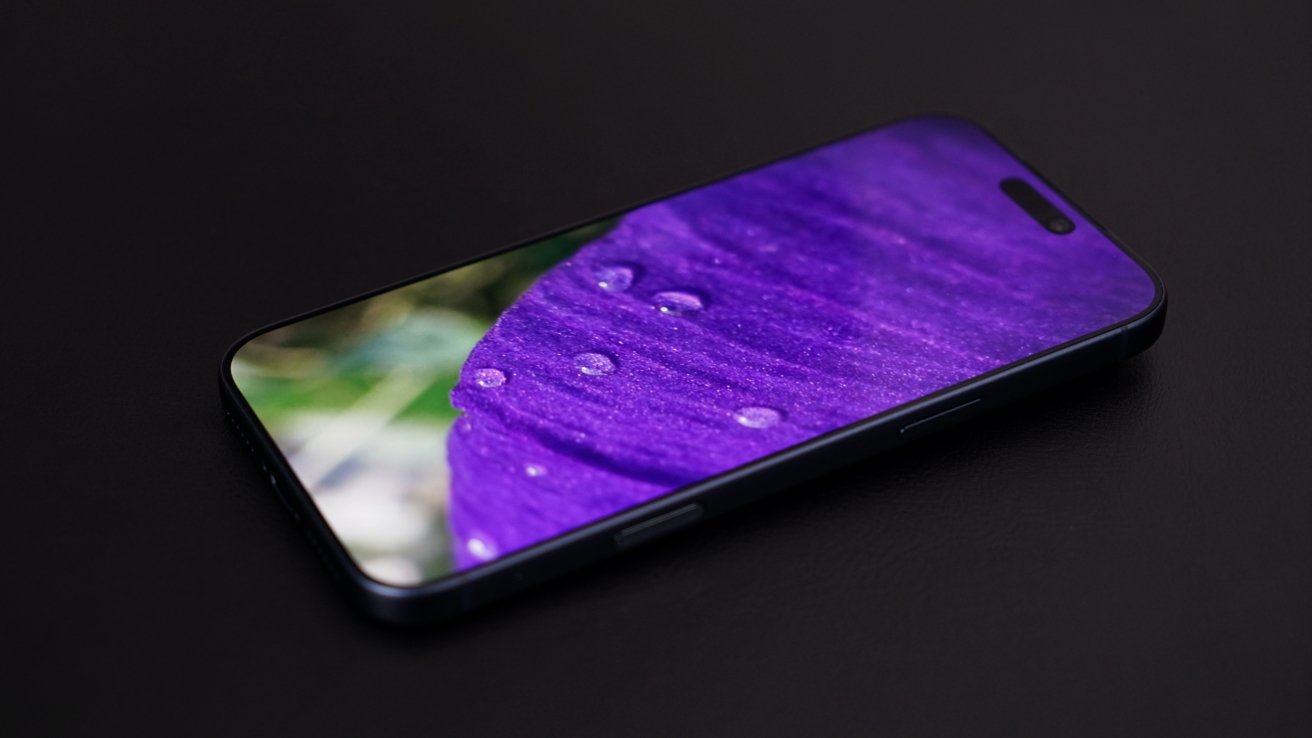
CoE OLED is considered an important upgrade direction for OLED display technology. One of its core features is the elimination of the polarizing layer design in traditional OLED screens. Although the polarizing layer has long played an important role in suppressing screen reflections and blurring, it also affects light transmission efficiency.
By removing this layer of structure, OLED panels can achieve higher brightness with lower energy consumption, while also reducing the thickness of the display module, making the entire screen thinner and lighter.
There have been reports in the market that Apple plans to introduce this technology in the 20th anniversary iPhone released in 2027. However, according to the latest research agency predictions, Apple has currently postponed relevant plans, and the real large-scale adoption of CoE OLED may be postponed to the iPhone Pro series products at the end of 2029.
This timeline appears to be quite conservative. Because research institutions pointed out that Samsung has actually begun to use some form of CoE technology as early as when it launches Galaxy Z Fold3 in 2021. In contrast, if Apple finally fully introduces it in 2029, there will be a time gap of up to eight years with the industry pioneers.
There are currently many speculations about the reasons for the delay.
South Korean industry media reported that Apple has always believed that relevant technologies are not mature enough to support large-scale mass production, so it has always maintained a cautious attitude. Although Apple currently has a more positive view on the practical value of this technology, the cost factor has become a new obstacle.
In recent years, against the background of rising component costs, increased supply chain pressure, and continued rise in terminal selling prices, Apple is apparently more strictly controlling the pace of new technology introduction. Sources said that Apple’s internal evaluation believes that if CoE OLED is fully introduced at the current stage, it will further push up product manufacturing costs, so it decided to postpone the implementation.
At the same time, some people in the industry have speculated that Apple's first foldable screen device iPhone Duo may have adopted the CoE OLED solution. However, as of now, there are no disassembly results to confirm this statement, so the actual situation remains uncertain.
Although the launch time has been delayed, the industry generally believes that Apple will eventually switch to the CoE OLED route.
In addition to higher brightness and lower power consumption, CoE OLED also has the advantages of simpler structure, thinner and lighter panel, and more efficient manufacturing process. For Apple, which has long been pursuing thin and light body design and improved battery life, these features are extremely attractive.
More importantly, when the polarizing layer is removed, the loss of light emitted by the OLED is reduced, and the display can reach the same or even higher brightness levels with lower power consumption. This can not only improve outdoor display effects, but also help reduce the pressure on battery life from the screen.
However, realizing these advantages is not easy. Panel suppliers such as Samsung Display and LG Display need to develop new technical solutions to maintain picture clarity after removing the polarizing layer and avoid optical problems that are prone to traditional OLEDs.
The news of this postponement also echoes many recent revelations about the iPhone 20 Pro series. In the past few months, multiple reports have mentioned that Apple is preparing a new design for the 20th anniversary iPhone, including improvements in display size, resolution, and curved surfaces. But as of now, it’s becoming increasingly uncertain whether CoE OLED will appear on this product.
If the latest prediction is accurate, then Apple users will have to wait several more years before they can truly usher in a new generation of OLED display technology that is brighter and more power-saving. For Apple, finding a balance between display technology upgrades, cost control and supply chain maturity will remain an important issue in future product planning.
Comments