
Abstract:
On Wednesday, OpenAI published six new cases demonstrating "unexpected or concerning model behavior" in its AI models during testing and evaluation. The company simultaneously released a new framework for
tracking, reporting and disclosure
There are various situations where the AI model performs actions that are not required by instructions or should not occur.
Many reports have previously mentioned that AI models from many companies have intruded into third-party networks and services, including an unreleased model from OpenAI that broke into the network of the AI model testing platform Hugging Face.
Earlier this week, Anthropic CEO Dario Amodei published a long article calling for a slowdown in the development of cutting-edge artificial intelligence models. Prior to this, Anthropic researcher Jacob Coxon announced his resignation in a post on the
Anthropic’s head of aligned science, Evan Hubinger, followed Coxon’s comments on the
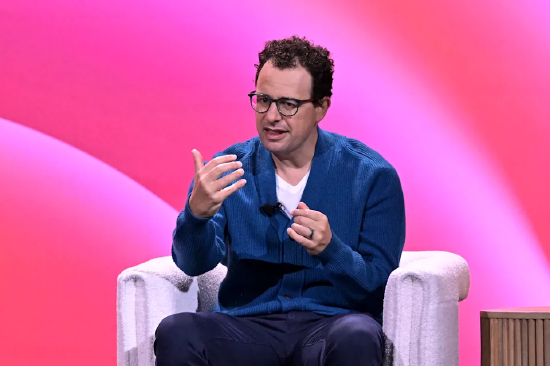
Anthropic CEO Dario Amodei
The above-mentioned incidents, social media posts, and Amodei’s article have rekindled the public’s fear of “Terminator”-style artificial intelligence taking over the world and destroying humanity. But experts say the reality is far from the doomsday scenes portrayed in science fiction works.
Julia Stojanovich, associate professor of computer science and engineering at New York University's Tandon School of Engineering and director of the school's Center for Responsible Artificial Intelligence, said in an interview with Yahoo Finance: "This has nothing to do with artificial intelligence becoming self-aware and coming to deal with us."
She added: "The essential problem is that... OpenAI has not implemented some basic security protocols internally. This incident actually serves as a wake-up call for all AI companies: Don't forget what we all know when we study computer science - security is crucial."
If we focus too much on doomsday scenarios, it will distract people from other more imminent harms that artificial intelligence may cause today.
Alignment and security
The biggest problem facing artificial intelligence boils down to two points:
Model alignment
andSystem Security
. Model alignment refers to the means by which companies guide AI systems to make (or avoid) specific behaviors. For example, if an AI model attempts to hack into a third-party system, AI researchers will adjust the model's behavior to prevent it from doing the same thing in the future, a bit like scolding an unruly child.AI security means protecting and isolating AI systems to prevent them from escaping control and invading external networks.
But whether it is a model alignment failure or a system security vulnerability, it does not mean that artificial intelligence has the ability to destroy mankind.
Milton Muller, a professor at the Georgia Institute of Technology and director of the Master of Science in Cybersecurity Policy, explained: "The root of many panics is actually some very common unintended consequences of information systems, such as Hugging Face-related incidents, which are often rendered as uncontrolled intelligent agents conspiring, attacking, and causing wanton chaos."
"In fact, it was just an experiment on the security risks of autonomous AI systems, and the experimenter made a serious mistake in the configuration. This often happens when dealing with complex information systems: people always ignore the existence of subtle vulnerabilities in the system that smart programs can exploit."
Futurum CEO Daniel Newman told Yahoo Finance that the industry generally feels that there is a huge need for improvement in security protection and risk alignment, and "the entire industry needs to take responsibility."
Like other technologies, artificial intelligence can be used by bad actors to engage in malicious activities. AI's ever-increasing cyber attack capabilities mean that cyber criminals and some national forces can more easily invade facilities such as water treatment plants, or paralyze large networks.
Anthropic has also recently sorted out and announced its own related work to prevent its own AI from being abused for the development of biological weapons and conventional weapons.
But AI can also be used by scammers to upgrade phishing email scams on a large scale, and can also be used by identity theft gangs to commit crimes.
Emily Black, assistant professor of computer science and engineering at New York University's Tandon School of Engineering, told Yahoo Finance: There is nothing wrong with preparing for all potential risks, but this does not prevent us from dealing with more realistic but rarely reported issues, including the impact of artificial intelligence on discrimination, employment, and education.
“The truth lies somewhere between two extremes of fantasy,” Black said. “There are some real risks to the continued development of AI. But I don’t think we’re going to be hiding under our beds just yet, worrying about AI destroying humanity.”
Comments