
Abstract:
Scientists from the Swiss Federal Institute of Technology in Zurich and the Paul Scherrer Institute recently made an important progress. They used superfluid helium close to absolute zero to create a highly controllable beam of muon atoms. They plan to use this special atom to directly test whether gravity has exactly the same effect on second-generation elementary particles as ordinary matter.
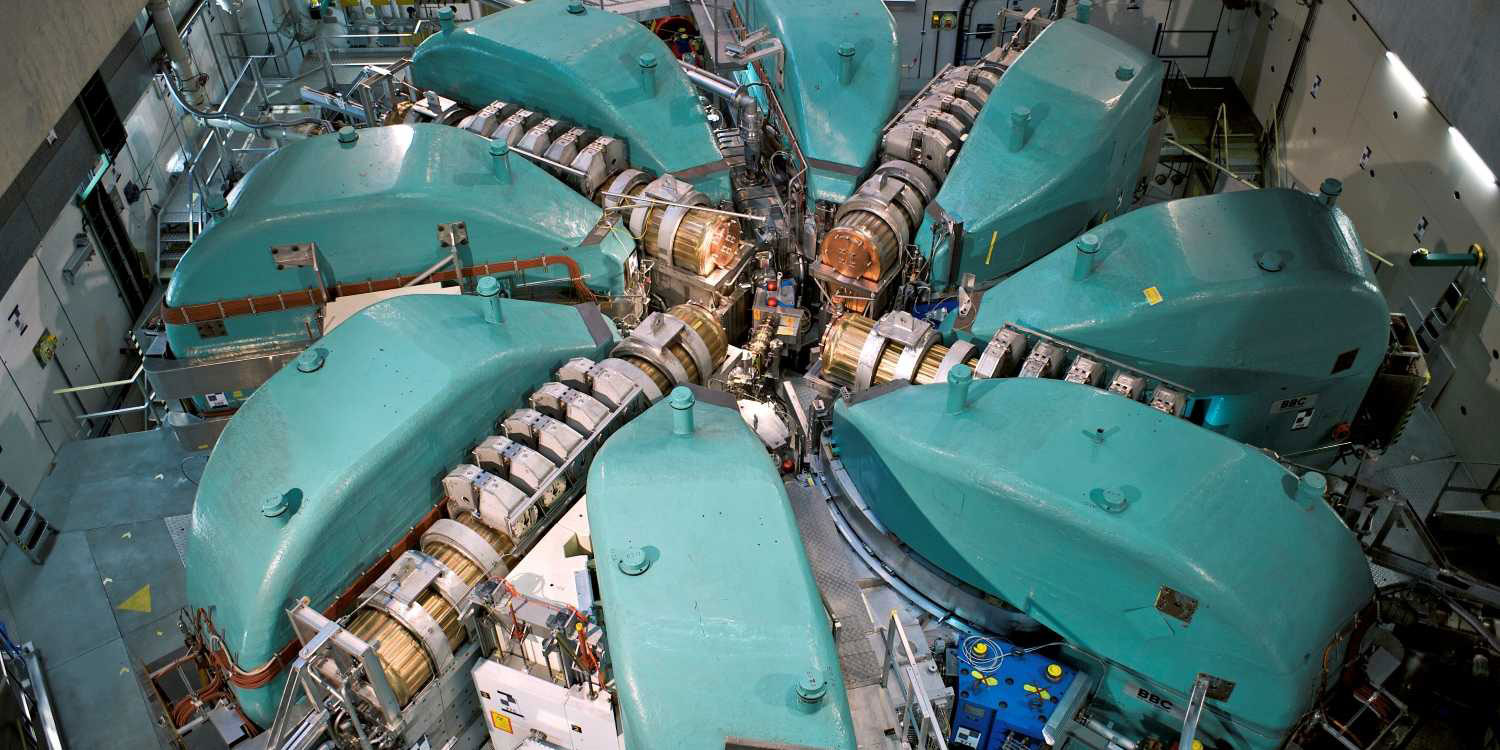
The key to this research is not to prove that there are problems with Einstein's theory, but to try for the first time to extend the object of testing the gravitational equivalence principle to the second generation of elementary particles. If the experiment ultimately finds that murine's motion in Earth's gravitational field is unexplainably different from that of ordinary matter, the results could provide clues to new physics beyond the current standard model, and even involve a hypothesized "fifth fundamental force."
Matter in the everyday world is mainly composed of protons, neutrons and electrons. These particles belong to the so-called first-generation elementary particles. There are also second- and third-generation particles with greater mass in nature, among which muons are the second-generation "relatives" of electrons. The mass of a muon is about 207 times that of an electron, but it is not a stable component of ordinary atoms, but an elementary particle with an extremely short lifespan.
The Standard Model can describe these different generations of particles, but it cannot explain a long-standing fundamental question: why nature requires three generations of elementary particles, and why in addition to the first generation, there are also second and third generation particles with significantly greater masses.
Therefore, scientists hope to learn more about the fundamental properties of these particles by studying the gravitational behavior of muons. A key question is whether Einstein's equivalence principle applies not only to ordinary matter, but also to matter made of second-generation elementary particles.
The so-called equivalence principle is related to a very familiar phenomenon: when external factors such as air resistance are ignored, objects of different masses and compositions will fall freely in the same way in the same gravitational field. Modern physics links this phenomenon to the equivalence between gravitational and inertial mass, which is also one of the important foundations of general relativity.
In the past, humans have conducted a large number of high-precision experiments using ordinary matter, and have also conducted gravity tests on the first generation of antimatter, but the situation is completely different for the second generation of elementary particles. Studying the gravity of muons is difficult because muons only live for about 2.2 microseconds on average before decaying.
The researchers chose a special type of atom called "musin" to solve part of the problem. Muons are composed of a positively charged antimuon and a negatively charged electron. When combined, the two are electrically neutral. Although its structure is similar to that of a hydrogen atom, most of its mass comes from antimuons, which are much heavier than electrons.
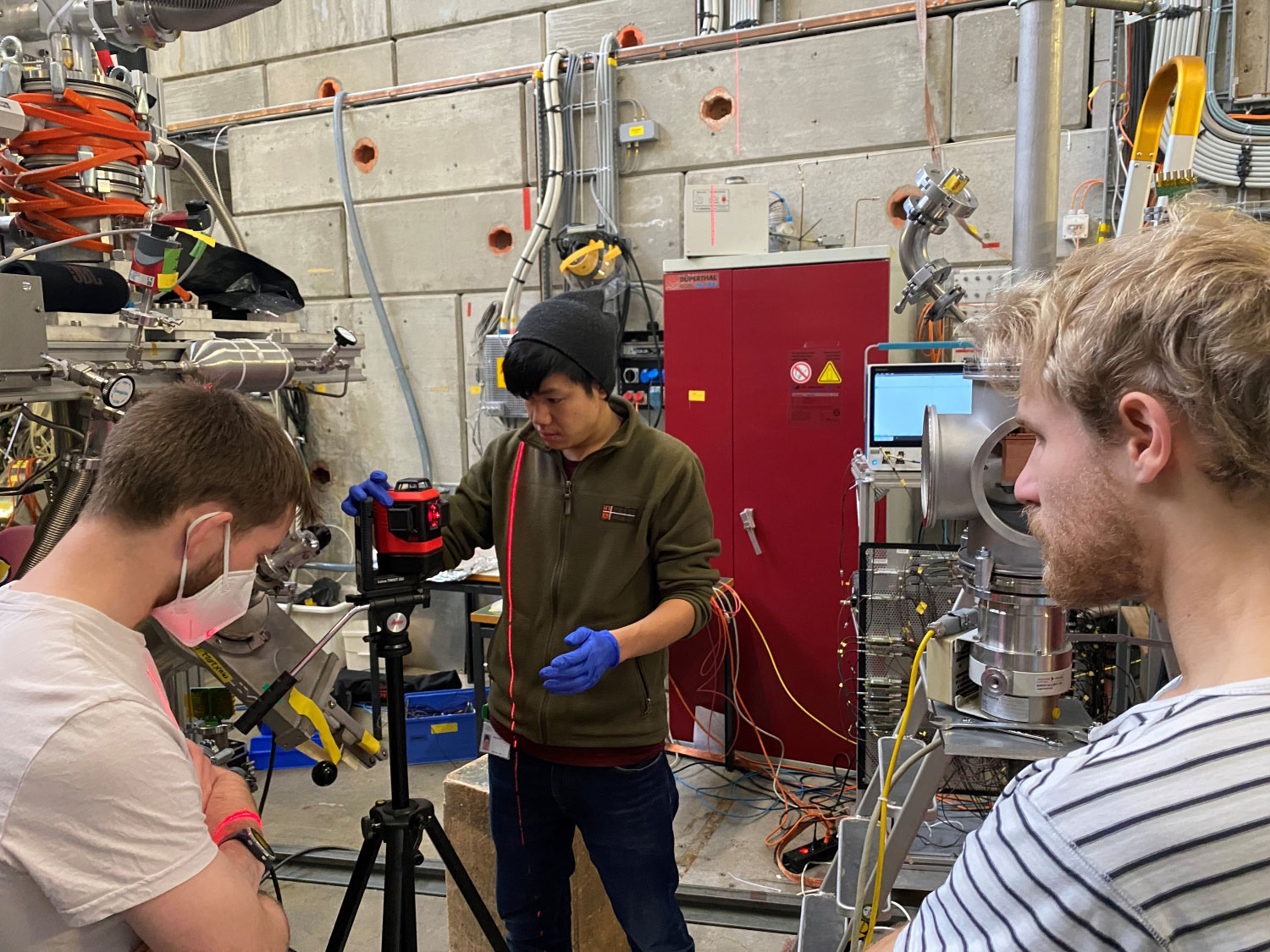
Electric neutrality is an important condition for experiments to be carried out. Gravity itself is very weak. If charged particles are directly involved in experiments, the extremely weak electromagnetic field around them may have an impact far greater than the gravitational effect, completely drowning out the signal that scientists really want to measure.
However, there is still a serious problem with the past methods of producing mucin: the speed and direction of movement of the produced mucin vary greatly. This makes it difficult for scientists to accurately measure its trajectory when it has a lifetime of only 2.2 microseconds, let alone look for extremely small deviations caused by Earth's gravity.
The biggest breakthrough in this research is to solve the problem of controlling the muon beam.
The research team fired antimuons from the Paul Scherrer Institute's particle accelerator into a layer of superfluid helium at a temperature close to absolute zero. Superfluid helium is a special quantum fluid that exhibits very special properties at extremely low temperatures.
After entering superfluid helium, antimuons will rapidly decelerate and can combine with free electrons to form muons. The murine is then subjected to the special chemical potential of superfluid helium. When it reaches the surface of the liquid, the energy stored in this chemical potential is converted into kinetic energy, causing the murine to fly vertically upward from the surface of the liquid.
Researchers therefore vividly call this process "atomic cannon".
Compared with the messy muons produced in the past, the new method can create "cold" mucin beams with more consistent speeds and more parallel motion directions. "Cold" here does not simply mean low temperature, but means that the movement speed distribution of these atoms is more concentrated and can propagate in nearly parallel directions at a relatively consistent speed.
This is crucial for the next gravity experiment. Since muons can only exist for a few microseconds, researchers must allow them to complete the entire process from production, flight to measurement in a very short time. Superfluid helium not only helps produce a more regular beam of muons, it also allows the muons to avoid numerous collisions and scattering before leaving the liquid.
The next step for the researchers is to use an atomic interferometer to make real gravity measurements. Atoms have wave-particle duality and therefore can interfere like light waves. Scientists will run a beam of murine atoms through a precision-designed interference device and then observe whether Earth's gravity causes extremely small shifts in the resulting interference pattern.
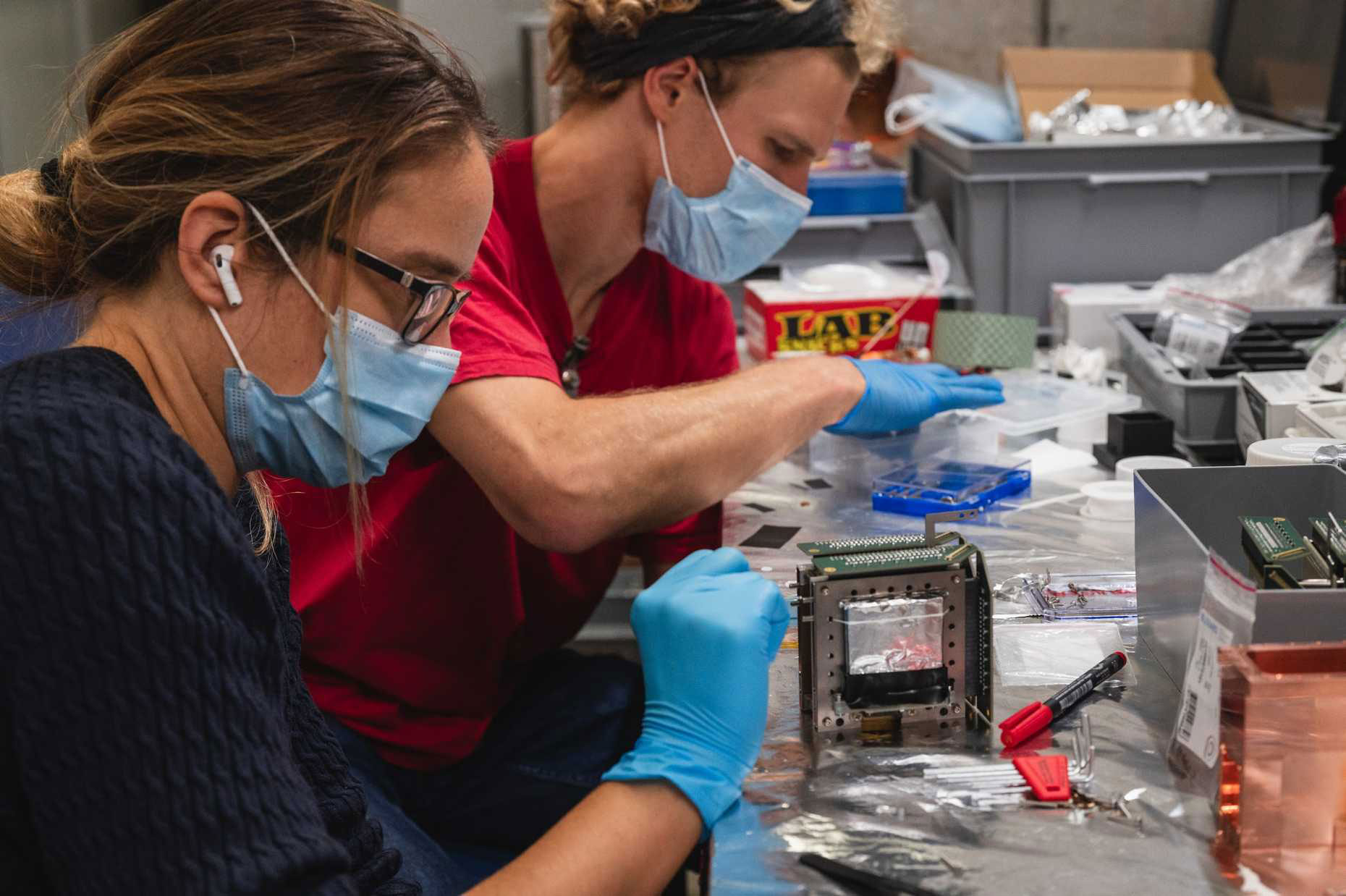
If this deflection can be accurately measured, the movement of muons in the Earth's gravitational field can be calculated, thereby directly testing whether the second-generation particles follow the same free fall laws as ordinary matter.
The research team hopes to first test the entire experimental approach this year using the newly created atomic beam. If all goes well, a real muon gravity experiment is expected to be conducted within the next two to three years.
This technology has other uses as well. Because a higher-intensity, more regular muon beam is now available, researchers can also use it to conduct more precise laser spectroscopy experiments. These measurements are expected to help scientists further determine the muon's mass and other fundamental physical constants.
What is really exciting is the possible "unexpected results" of the experiment.
If murine behaves differently than ordinary matter in a gravitational field, it would mean there is some undiscovered factor in existing physical theory. The researchers believe the anomaly may even point to an as-yet-undiscovered "fifth fundamental force," among other possible theoretical explanations.
At present, physics has confirmed four basic interactions, namely gravity, electromagnetic interaction, strong interaction and weak interaction. Physicists have proposed various theoretical models for the possible existence of a fifth fundamental force in the past, but so far there has been no accepted direct experimental evidence.
However, the research team did not design this experiment to "find the fifth force." The researchers emphasized that the most direct and important goal of the experiment is actually more fundamental: to measure for the first time whether the muons composed of second-generation elementary particles also follow the equivalent relationship between gravitational mass and inertial mass.
Therefore, this research does not currently overturn Einstein's theory, nor does it discover a fifth force. Scientists have just finally built an experimental technique that can actually measure this problem.
If the final result conforms to the predictions of general relativity, it will further prove that the equivalence principle applies not only to the first-generation matter we are familiar with, but also to the second-generation elementary particles; if the results deviate in a reliable way that cannot be explained by known errors, then physicists will have to re-examine the existing theory and look for new physical mechanisms that can explain this anomaly.
In other words, what this so-called "atomic cannon" is really targeting is not Einstein himself, but a fundamental question that has lasted for hundreds of years: whether different types of matter in the universe really feel gravity in exactly the same way.
Comments