
Abstract:
Researchers at the Quantum Technology Center of the National University of Singapore recently announced an important progress in the field of atomic clocks. They used the rare earth element lutetium to create a new type of optical atomic clock, and through precise comparison between two atomic clocks of the same type, the system uncertainty was reduced to 1.2×10⁻¹⁹. The research team believes that this result makes the lutetium atomic clock one of the most accurate timekeeping devices currently available, and is expected to become a candidate technology for redefining the "second" in the International System of Units in the future.
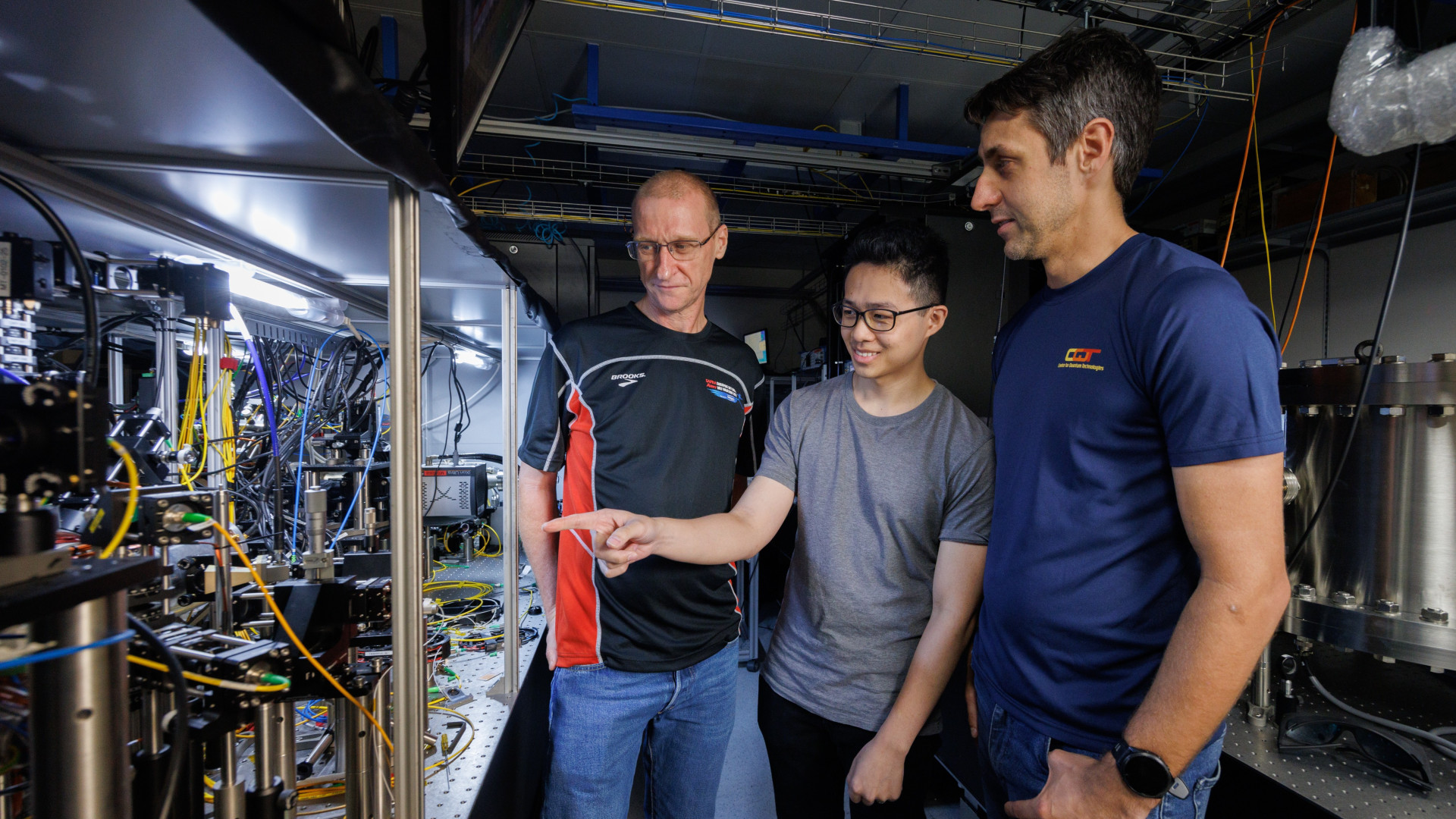
This study comes as the global metrology community is considering whether the basic definition of "second" needs to be redefined. One second in the current International System of Units is defined based on the transition frequency between the two hyperfine energy levels of the ground state of the cesium-133 atom, which is 9192631770 specific microwave transitions. Cesium has been the core material of atomic clocks since the 1960s, but with the rapid development of optical atomic clock technology, the next generation of atomic clocks made using elements such as strontium, ytterbium, and calcium has been able to achieve much higher accuracy than traditional cesium atomic clocks.
The basic principle of optical atomic clocks is to use lasers to precisely control electrons in atoms, causing the electrons to transition between two quantum states, and to measure timing by measuring the frequency of this transition. The quantum transition of electrons can be understood as an extremely stable "pendulum". As long as this swing can be controlled and measured accurately enough, an exceptionally precise time base can be obtained.
Lutetium is of interest to researchers because the element has some properties that make it ideal for building high-precision atomic clocks. Lutetium is a lanthanide element with a large atomic mass and its electronic structure makes it relatively less affected by environmental factors. In particular, it is not sensitive to thermal radiation and magnetic field changes, so it can reduce the systematic errors caused by environmental factors to the timing process.
The researchers said that this characteristic of the lutetium atomic clock means that even if the ambient temperature changes significantly or the magnetic field conditions change, the atomic clock can still maintain relatively stable timing performance. Murray Barrett, the leader of the research team and a physicist at the National University of Singapore, even said that if this atomic clock is brought from an extremely high temperature environment like Death Valley in the United States to an extremely low temperature environment like the Antarctic Plateau, it can still maintain very high stability.
Lutetium also has a very important advantage, that is, its associated atomic transition frequency is very high, about 10,000 times the frequency used by cesium atomic clocks. A higher "tick" frequency means that more measurement cycles can be obtained per unit time, thus providing the basis for extremely high-precision time measurement.
However, lutetium is also one of the rarest rare earth elements on Earth, and it is also a relatively poorly studied element. This means that although in theory it is well suited as an atomic clock material, scientists have not fully understood how lutetium atoms actually behave in a high-precision timekeeping environment.
Murray Barrett's team has been working on lutetium atomic clocks for about 10 years. In the latest experiment, researchers built two lutetium ion atomic clocks and compared them with each other according to strict metrological standards. Through years of accumulated experimental data and in-depth research on the characteristics of lutetium ions themselves, the team finally reduced the system uncertainty to 1.2×10⁻¹⁹.
This number represents the scale of systematic error that an atomic clock may have when measuring its own frequency. To understand how high this accuracy is, think of it as a tiny fraction of the uncertainty per 10¹⁹ units of time. Previously, researchers from the Chinese Academy of Sciences used calcium ion atomic clocks this year to achieve a system uncertainty of 4.4×10⁻¹⁹, so the 1.2×10⁻¹⁹ announced by the Singaporean team further refreshed this indicator.
However, measuring the accuracy of atomic clocks is also an extremely difficult task. After reaching this level, even the differences in the Earth's own gravity can no longer be ignored. According to general relativity, the stronger the force of gravity, the slower time passes. At this level of precision, even a height difference of just a few millimeters between two atomic clocks could produce a time difference large enough to affect the experimental results due to their different distances from the Earth's core.
In other words, when scientists cut one second into trillions or more extremely small time slices, the extremely weak gravitational differences between different locations on the earth's surface may become important variables in the experiment. Therefore, the atomic clock laboratory not only needs to control conditions such as temperature, magnetic field, laser, etc., but also must measure the position and height of the two clocks extremely accurately.
And this incredible sensitivity is precisely one of the most important scientific values of the next generation of atomic clocks. Because time is affected by gravitational fields, if atomic clocks are accurate enough, scientists can even measure extremely small differences in gravity by comparing changes in time at different locations. This capability could be used in the future for precision Earth measurements, such as studying underground structures, geological changes, and subtle changes in the Earth's gravitational field.
More importantly, extremely high-precision atomic clocks can also be used in basic physics research. Scientists hope to use these devices to search for unresolved contradictions between general relativity and quantum mechanics and to explore new physics beyond the Standard Model. For example, if certain parameters thought to be fundamental constants in nature actually change extremely slightly over time or environment, then a sufficiently precise atomic clock might be able to capture this anomaly.
At the same time, new optical atomic clocks are also promoting changes in the international metrology system. As various atomic clocks such as strontium, ytterbium, aluminum ions, calcium ions and lutetium continue to set accuracy records, the international scientific community is studying whether the current definition of "second" based on the microwave transition of cesium atoms should be replaced by optical frequency standards in the future.
Compared with traditional cesium atomic clocks, the operating frequency of optical atomic clocks is several orders of magnitude higher, so in theory it can provide a more precise time reference. If the international metrology community decides to redefine the "second" in the future, these optical atomic clocks will become important candidate technologies.
The Singaporean team believes that the lutetium atomic clock has particular potential because it can not only achieve extremely high accuracy, but is also relatively less sensitive to changes in the external environment, which means that it is possible to create a more stable and practical high-precision timing system in the future.
Of course, 1.2×10⁻¹⁹ is still the system uncertainty obtained under laboratory conditions, and it does not mean that this atomic clock can maintain exactly the same performance in any environment. The researchers also need to conduct more measurements and cross-validation under different conditions to further confirm this record and continue to reduce possible systematic errors.
The research team believes that as the experiment continues, there is room for further improvement in the accuracy of the lutetium atomic clock. Team leader Murray Barrett even believes that judging from the current technical route, it will be difficult to find a solution that can easily surpass this architecture in the future.
This research has been published in the journal Nature. If subsequent experiments can further verify the performance of the lutetium atomic clock, it may not only become an important candidate for the next generation of global time benchmarks, but may also become a new tool for studying gravity, dark matter, and basic physical laws. In other words, this device that seems to be just "keeping time more accurately" is actually pushing humanity's ability to measure the basic laws of the universe to an unprecedented scale.
Comments