
Abstract:
Researchers from the Technical University of Vienna and the German Federal Institute of Physics and Technology published experimental results in Nature, demonstrating the first nuclear clock prototype that can automatically correct the laser frequency using its own nuclear transition signal. It uses the energy level transition of the thorium-229 atomic nucleus as the timing benchmark, and the experimental device has been running stably for more than 24 hours without manual intervention. However, the "one second difference in 30 million years" in the report is an image conversion of the accuracy index. It does not mean that the clock has been measured for tens of millions of years, nor does it mean that this device has reached the highest level currently available.
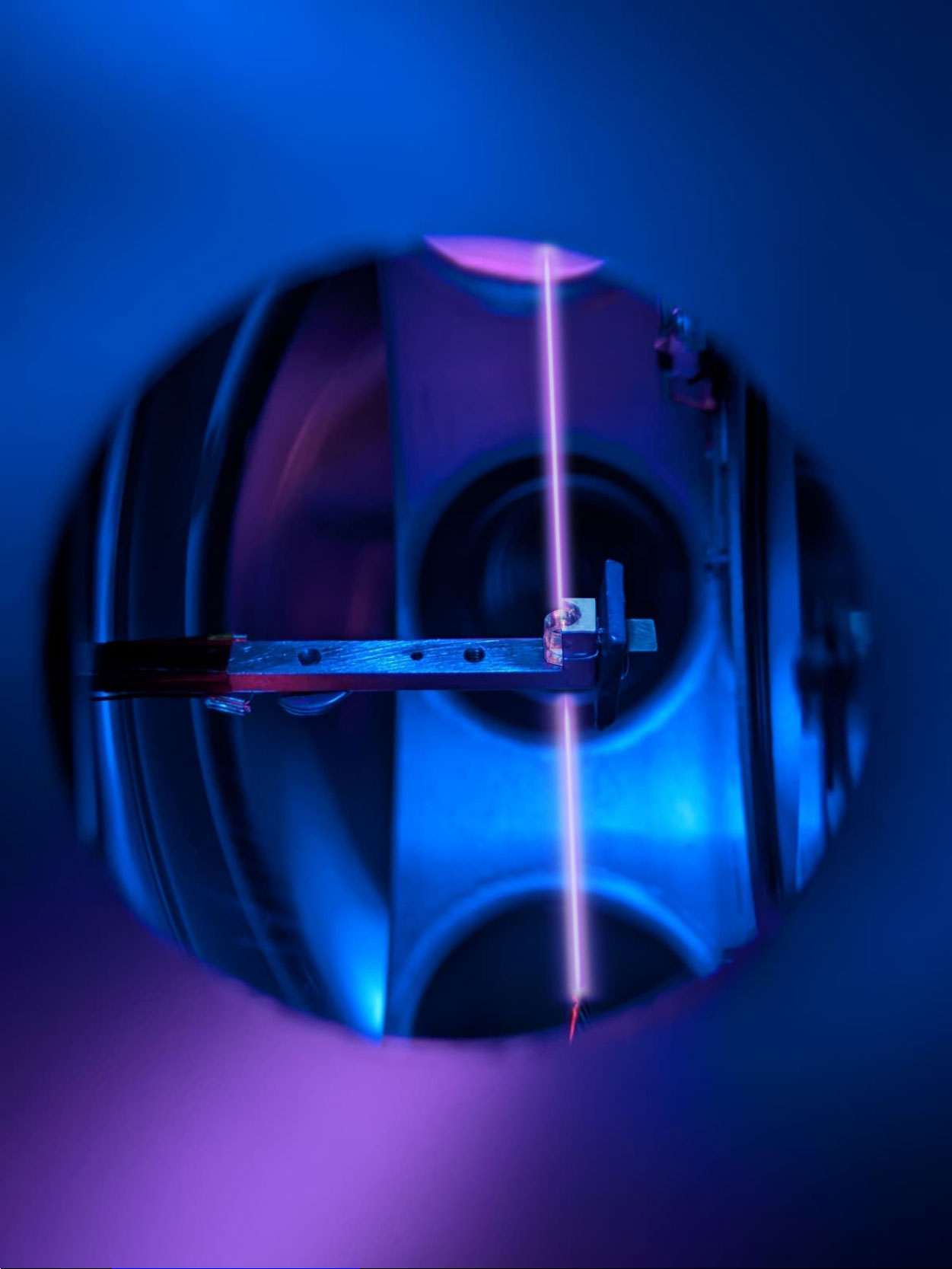
Traditional atomic clocks usually use the energy level transitions of electrons in the outer layer of atoms to keep time; nuclear clocks place the reference signal inside the nucleus. Thorium-229 has a low-energy nuclear transition of about 8.4 electron volts, which can be excited by a vacuum ultraviolet laser with a wavelength of about 148 nanometers. The research team embedded thorium ions into millimeter-sized calcium fluoride crystals, irradiated them with continuous laser light at room temperature, and measured the absorption of the laser light by the crystal to determine whether the frequency deviated from the resonance point, and then used a feedback loop to automatically adjust the laser light. Changes in the nuclear transition absorption signal can be detected in a shorter time, overcoming the previous difficulties of relying on fluorescence readout and slow feedback.
The team said that the potential advantage of this solution is that the atomic nucleus is much smaller than the atom as a whole and is theoretically less susceptible to external disturbances; in the future, nuclear clocks are expected to achieve a more robust frequency benchmark and be used for precise measurement and testing of basic physical laws. However, the measured performance of the current prototype is still far from better than the most advanced optical atomic clocks. The paper reports that the fractional frequency instability in a single continuous operation is in the low 10⁻¹⁴ order, and the frequency reproducibility between operations on different dates is about 5×10⁻¹³. After intuitive conversion of the paper results, the American Physical Society believes that the measured instability of the Vienna Clock is approximately equivalent to an error of one second every 3 million years. The Technical University of Vienna estimates it to be about 30 million years per second using an indicator close to 10⁻¹⁵. The indicators and operating conditions corresponding to the two conversions are not exactly the same, so "one second in 30 million years" should not be regarded as a proven absolute accuracy or directly equivalent to the best atomic clock.
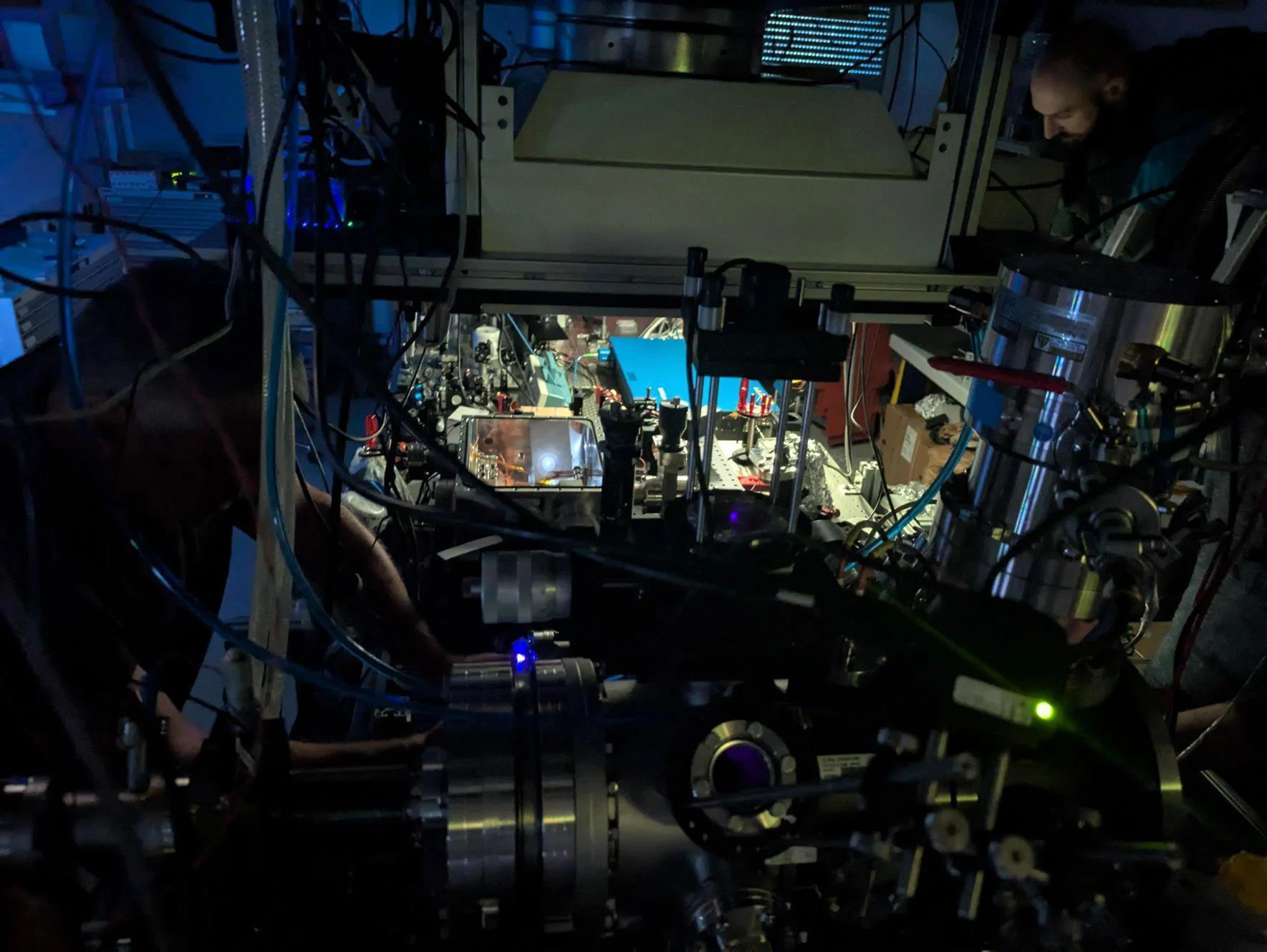
The research team has used this set of nuclear clocks to search for changes in nuclear transition energy that may be caused by ultralight dark matter. No significant signal was found on the observation time scale of 20 seconds to one day, but the limits derived from this can compete with some atomic clock experiments. The same issue of Nature also published another set of thorium-229 nuclear clocks independently developed by a team from Tsinghua University, showing that this direction is moving from nuclear transition spectrum measurement to actual timing devices. The two prototypes are still precision experimental equipment, and subsequent improvements will require stronger vacuum ultraviolet lasers, more stable and uniform crystals, and better frequency reproducibility across batches.
Comments