
Abstract:
A world-class experimental device hidden deep underground and specially designed to search for dark matter has recently recorded an unusual particle event that has attracted scientists' great attention. The research team stated that this signal is difficult to explain by known ordinary matter background processes. Although it is still a long way from officially announcing the discovery of dark matter, it has become one of the most promising candidate signals observed by the experiment so far.

Dark matter is thought to account for about 85% of the total matter in the universe, but because it neither emits light nor interacts significantly with light like ordinary matter, scientists have not yet directly detected its existence. The search for dark matter has been one of the most important research topics in modern physics over the past few decades.
This discovery comes from the LUX-ZEPLIN (LZ) experiment. The project brings together approximately 250 scientists and engineers from 39 institutions around the world. The experimental facility is located nearly 1.5 kilometers underground at the Sanford Underground Research Center in South Dakota, USA. Such a deep underground deployment can effectively shield interference from cosmic rays and create conditions for capturing extremely rare particle events.
The core of the LZ detector is a huge detection device containing about 10 tons of ultra-high purity liquid xenon. Researchers hope to use these liquid xenon atoms to capture the faint signals produced when dark matter particles collide with ordinary matter. According to current mainstream theories, one of the most promising dark matter candidates is a hypothetical particle called a "weakly interacting massive particle (WIMP)", and the LZ is designed around the search for such particles.
The latest analysis shows that researchers have discovered an extremely special particle interaction event in the data. After a long investigation, they found that the signal was difficult to explain by known background noise. In other words, it does not appear to be the result of radioactive contamination, residual effects of cosmic rays, or other known physical processes.
Scientists involved in the study said that in their many years of experience in searching for dark matter, this is one of the most interesting single events they have ever seen. The research team conducted a systematic analysis of various possible explanations, but so far has not found a traditional reason with sufficient probability to reasonably explain the signal.
However, researchers also emphasized that the current evidence is far from sufficient to prove that dark matter has been discovered. Since an abnormal event occurs only once, it may still be an extremely rare random background fluctuation from a statistical point of view. By the standards of the field of particle physics, announcing the discovery of a new particle or new physical phenomenon requires extremely high levels of statistical significance, and current data have not yet reached this threshold.
Even so, this signal still attracted widespread attention. The reason is that the event happened to occur near the region where theory predicts that dark matter is most likely to appear, and at the same time the background interference in this region itself is very low. Therefore, its location has special significance from an experimental design perspective.
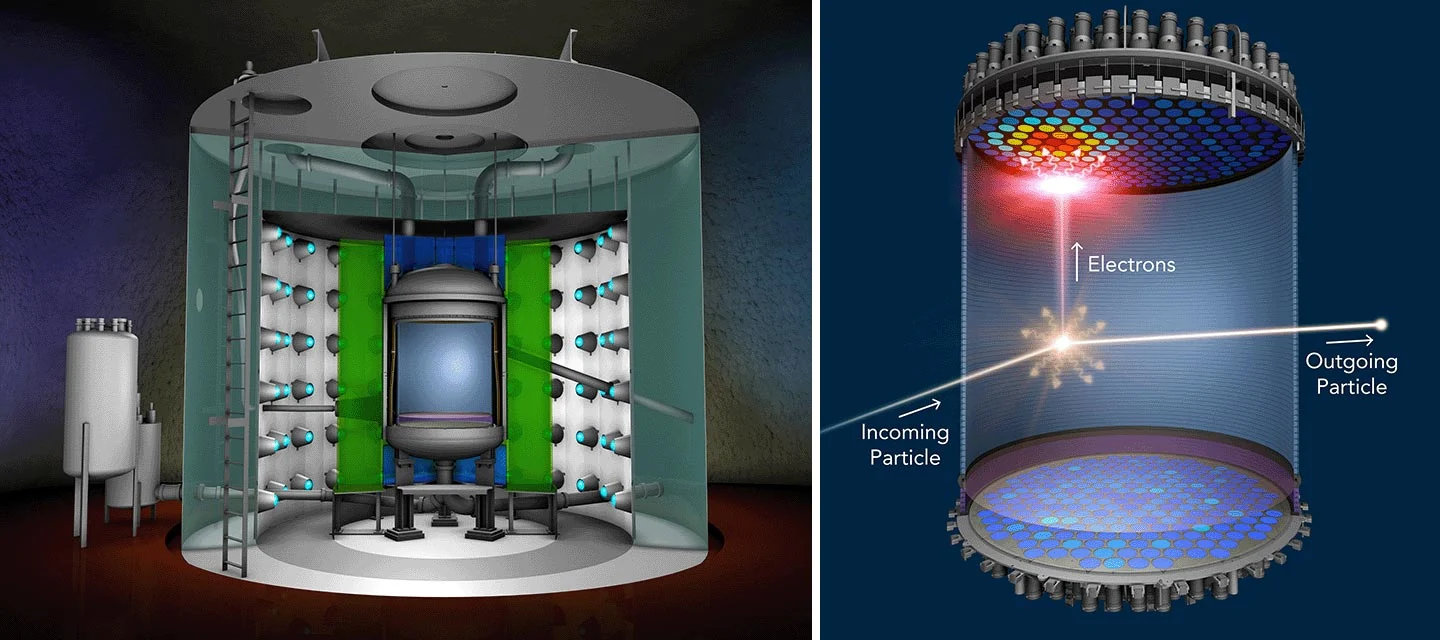
In the future, the LZ experiment will continue to operate. The researchers hope to collect more data to determine whether this abnormal signal is just a chance phenomenon or an early sign of some deeper physical law. If similar events appear again in subsequent data, the evidence for the existence of dark matter will be significantly strengthened; conversely, if similar signals do not appear again, the current results may ultimately prove to be just statistical fluctuations.
For the entire physics community, this discovery, although still in the "clue" stage, once again injects new hope into the search for dark matter. After nearly a century of exploration, humans may still be far away from uncovering the true identity of this mysterious part of the universe, but this abnormal signal from deep underground has allowed scientists to see new possibilities.
Comments