
Abstract:
Two long-unsolved landform mysteries on the surface of Mars’ smaller moon Deimos have received a unified scientific explanation. A new study led by the University of Bern in Switzerland and published in the internationally authoritative academic journal "Nature Astronomy" points out that the huge depressed basin near the south pole of Deimos and its thick loose dust layer all over the world are most likely originated from a single violent tilt impact caused by an asteroid about 320 meters in diameter about 100 million years ago.
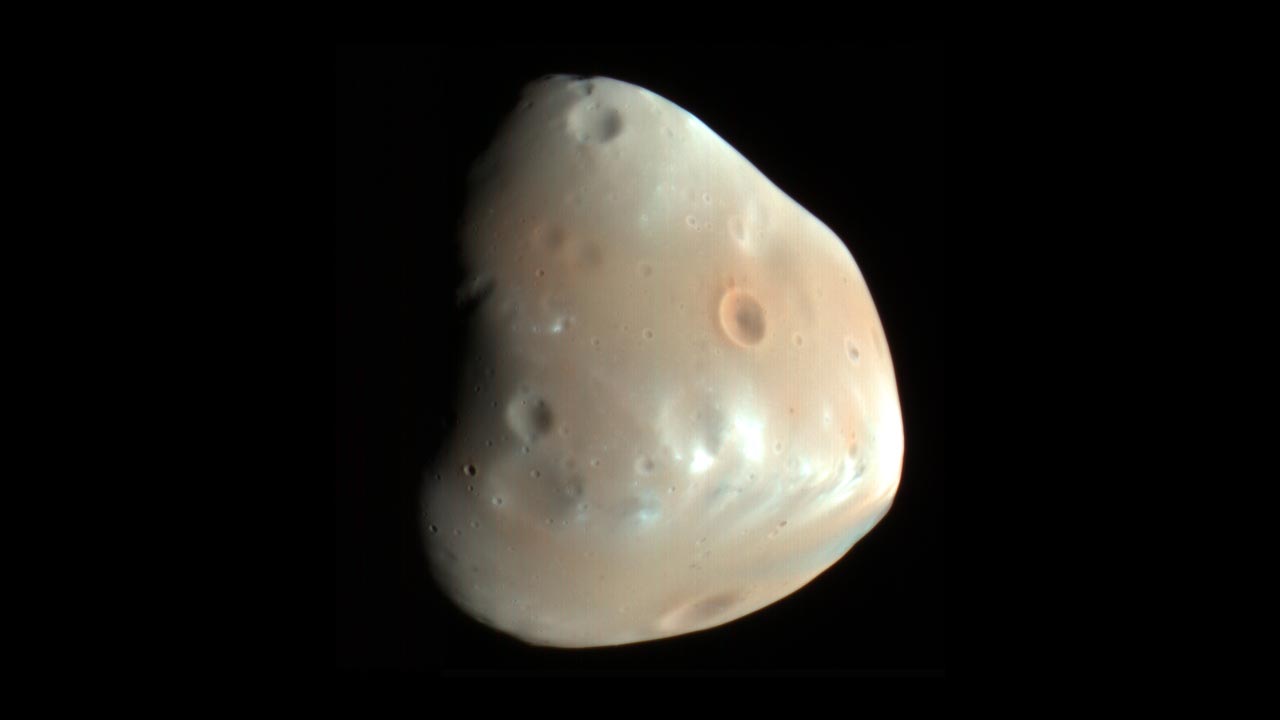
Mars has two irregular-shaped natural satellites, Phobos and Deimos. Since the first high-resolution images returned by NASA's Viking 2 orbiter in 1977, planetary scientists have been puzzled by Deimos's special appearance: completely different from Phobos, which is covered with dense exposed impact craters and has a rough surface, Deimos shows an unusual smoothness, and its surface is tightly covered by a layer of thick and loose debris dust (regolith); at the same time, there is a huge depression structure of astonishing scale near its south pole. For decades, the formation mechanism of these two remarkable features has been a core mystery in the study of the evolution of small celestial bodies in the solar system.
In order to solve this geological mystery, an international scientific research team led by the Department of Space and Planetary Sciences of the University of Bern combined the latest high-precision images obtained by the European Space Agency (ESA) "Hera" Mars flyby mission and used the advanced "Bern Smoothed Particle Hydrodynamics" (SPH) supercomputer code to carry out in-depth modeling. The research team built a three-dimensional digital model of Deimos containing millions of virtual particles. By changing the size, speed, incident angle of the impactor, and assumptions about the satellite's internal physical structure, it took several months to continuously run about 100 sets of high-intensity collision simulations.
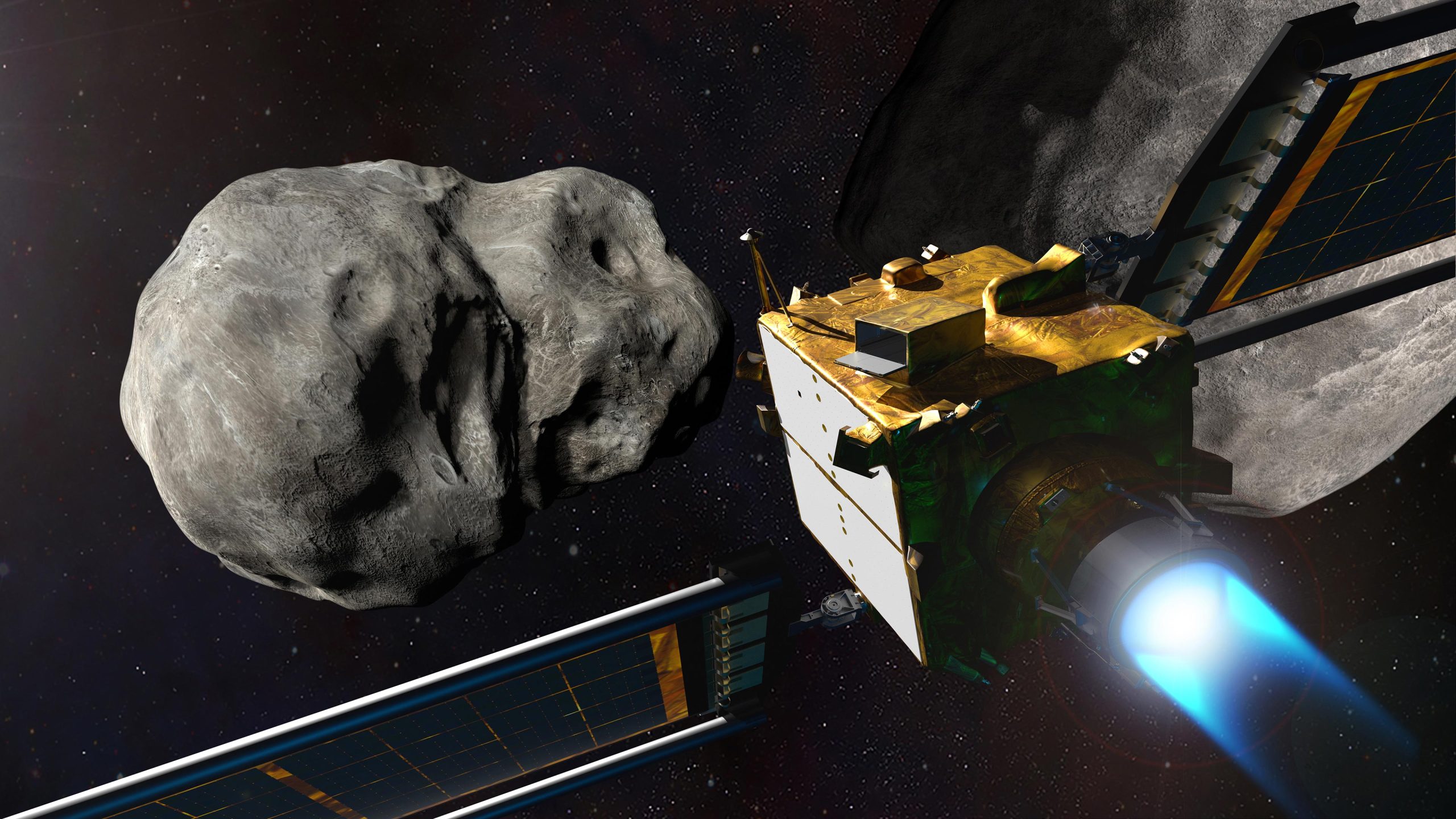
The simulation test finally identified a collision scenario that was most consistent with actual observations: an asteroid with a diameter of approximately 320 meters (approximately 1,049 feet) collided with the south pole region of Deimos at a high speed at an inclination angle of 45 degrees. The energy generated by the collision not only directly smashed the huge polar depression basin clearly visible on the surface, but also set off astronomical levels of eruption debris. Subject to Deimos' extremely weak gravitational field, these huge amounts of rock powder and dust that were knocked into space then slowly fell back under the gravitational pull, settling evenly again and covering the entire satellite's surface like a giant "cosmetic powder layer." In certain areas, the thickness of these fallen dust accumulation layers even exceeds 200 meters, thus deeply burying a large number of earlier ancient impact craters, creating Deimos' unique smooth and young appearance today.
The research also unexpectedly revealed the extremely fragile and porous internal physical nature of Deimos. According to collision dynamics, if Deimos was a hard and dense solid boulder, the shock wave generated by a violent impact of this magnitude should have completely shattered it into pieces. However, the surface material of Deimos is extremely loose and the internal structure is highly porous, like a "rubble-pile" loosely held together by gravity. This loose and porous physical buffering characteristic effectively absorbs and dissipates most of the kinetic energy of impact damage at the moment of impact, allowing it to withstand catastrophic shocks that reshape the global landscape while miraculously maintaining the overall structure from complete disintegration.
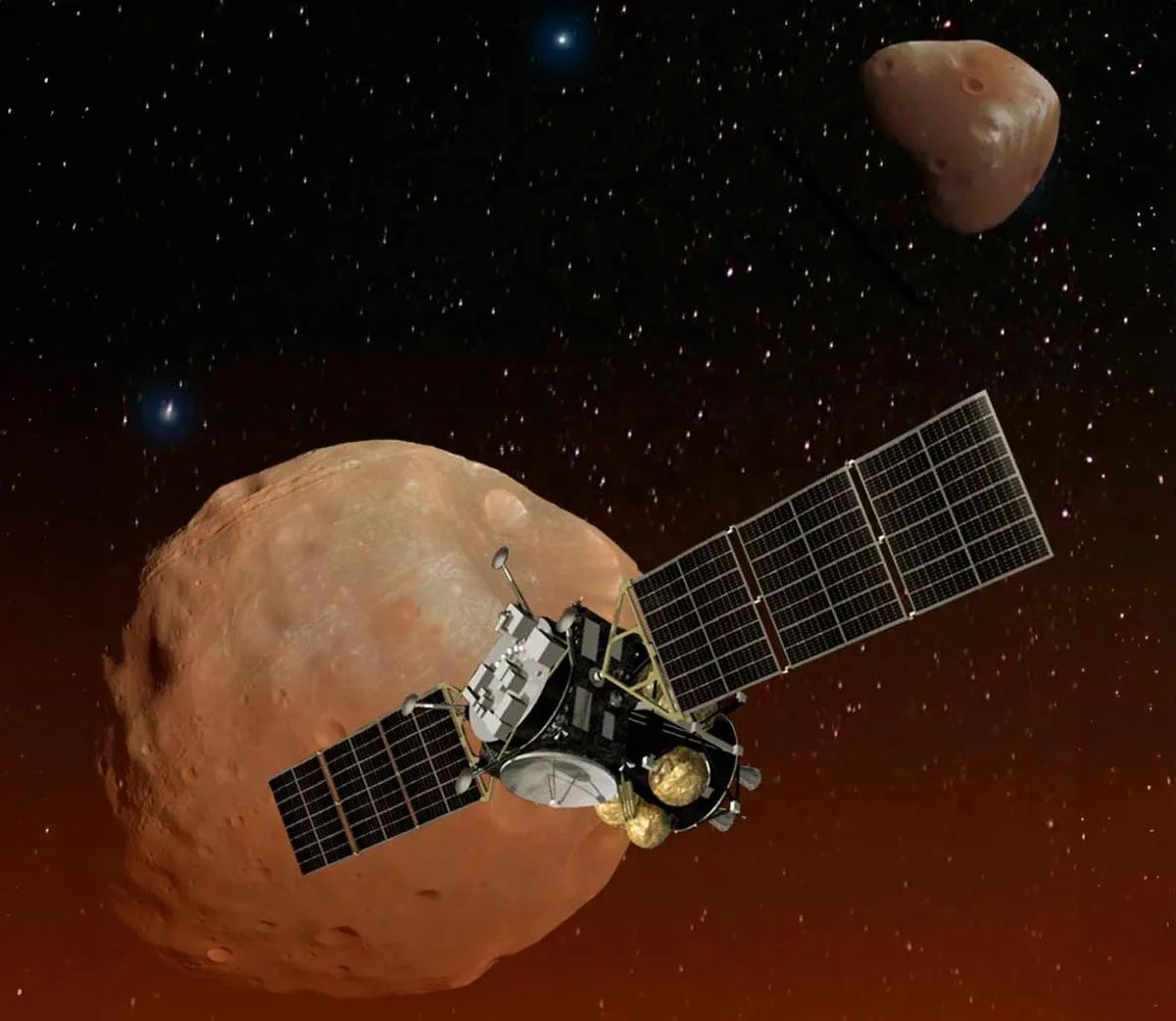
The researchers pointed out that this impact reshaping model not only reasonably explains the multiple appearance characteristics of Deimos with a single event, but also provides key theoretical constraints for testing the origin debate of whether Deimos is an alien asteroid captured by Mars or a condensation of debris ejected from the surface of Mars by an early large impact. As the Japanese-led Mars Exploration Mission (MMX) is expected to arrive in Mars orbit in 2027 for close-range exploration and plans to return samples, humans will be able to use soil and geological radar data obtained on the ground to conduct the ultimate verification of the theoretical prediction that this single impact will reshape the entire planet.
Comments