
Abstract:
When a massive star reaches the end of its life, it often throws a large amount of material into space in the form of a supernova explosion. This material, created by the death of a star, may travel hundreds of light-years to reach nearby bodies including the Earth and the Moon. Now, a new study led by researchers at the University of Hawaii at Manoa proposes that the lunar soil on the surface of the moon may preserve a record of supernova explosions that spans 80 million to 100 million years, or even longer. The researchers have established a set of mathematical models to reinterpret this period of cosmic history from the lunar soil that has been continuously stirred up.
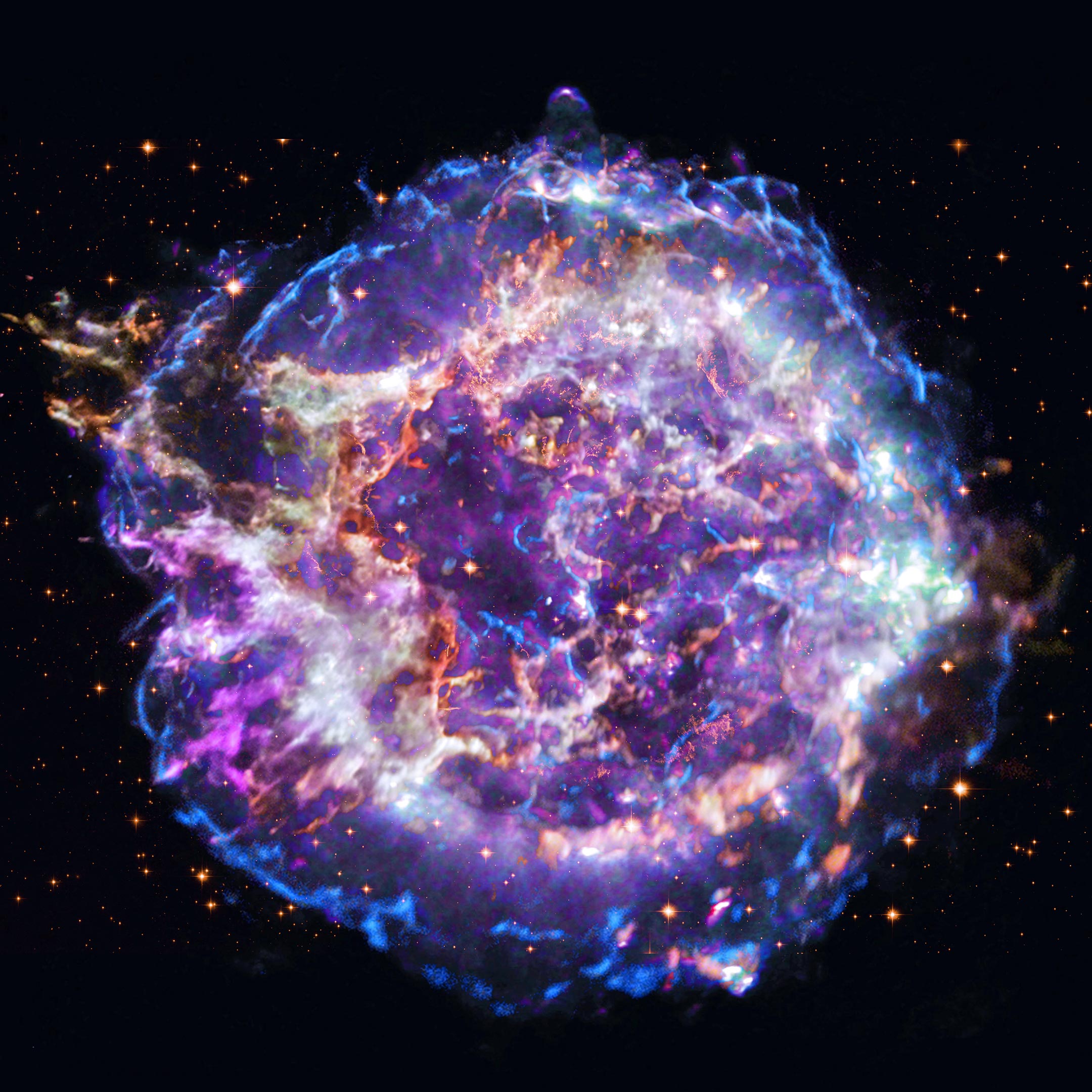
This study was completed by Emily Costello, a researcher at the Institute of Geophysics and Planetology at the University of Hawaii, and her collaborators. The relevant paper was published in "Physical Review Letters". The core of the research is not to simply search for "stardust" in the lunar soil, but to solve a more complex problem: after these materials from the explosion of distant stars arrive at the moon, they do not stay where they originally fell forever. Instead, they are continuously impacted by meteorites and asteroids over tens of millions of years, and are dug out, buried, compacted, and mixed again. Researchers therefore need to build models that can restore this long-standing "chaos" into a readable record of time.
Compared with the Earth, the moon has a very special advantage. Marine sediments on Earth can also preserve radioactive materials from interstellar space, but due to the influence of marine sedimentation, geological activities and other environmental processes, the relevant records that can be traced back are only about 10 million years. The moon has no atmosphere, liquid oceans, and active plate tectonics. Although the materials on the surface are constantly impacted by meteorites, they do not experience erosion and geological cycles similar to those on the Earth. So the lunar regolith could actually act like a long-term cosmic archive, preserving material from distant star explosions for tens of millions of years.
The researchers focused specifically on a process known as "impact plowing." The lunar surface has long been bombarded by impactors of different sizes, ranging from tiny dust particles to large asteroids. Each impact may dig up the surface lunar soil and flip deeper materials upward. After millions or even tens of millions of years of repeated action, the originally relatively clear layered structure gradually became chaotic. Therefore, if scientists drill a lunar soil core on the moon today, even if they find some radioactive isotope from a supernova, they cannot simply assume that its depth corresponds to the time it arrived at the moon.
The Costello team established a unified stochastic model to describe the material transport process in the lunar soil as a long-term competition between burial and excavation. On the one hand, new lunar soil continues to cover and bury previously deposited materials; on the other hand, meteorite impacts will re-excavate underground materials and mix them with lunar soil at other depths. The model also takes into account factors such as impact compaction, excavation, material transport, space weathering, and radioactive decay, and further adds the situation where supernovae deliver interstellar dust to the vicinity of the solar system in the form of pulses.
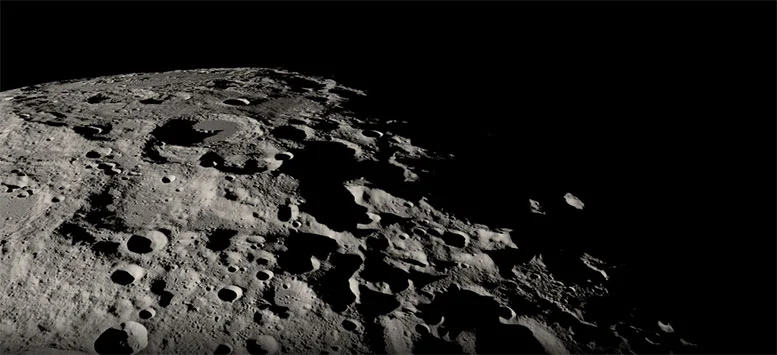
Previous studies from Earth's deep-sea sediments and Apollo program lunar samples have provided important evidence that supernova explosions hundreds of light-years away once delivered radioactive isotopes to the Earth and moon. Scientists have discovered that there were two relatively clear supernova material deposition events about 2.3 million years ago and 7.3 million years ago. After arriving at the moon, the isotope signals left behind by these events were gradually affected by impact plowing and were redispersed to different depths.
The researchers first tested the model using lunar soil cores collected by the Apollo missions. The results show that the model can relatively accurately reproduce the actual distribution of radioactive isotopes such as iron-60 in the lunar soil as it changes with depth. The ages of the relevant isotopes have previously been independently constrained by cosmic ray tracks and other radionuclide benchmarks, thus providing an important basis for validating the model.
After the model was verified, the researchers further input the established timeline of supernova events on Earth into the model to simulate the depth distribution of these materials from stellar explosions after millions of years of impact and plowing in the lunar soil. The research team then expanded the model to more heavy elements with potential research value, including plutonium-244, iodine-129, hafnium-182 and curium-247, etc., to predict what kind of cosmic chemical signals scientists might find after obtaining samples deeper into the moon in the future.
Among them, plutonium-244 has attracted particular attention because of its long half-life, which theoretically may help scientists track more distant stellar explosions. The input of interstellar matter from different sources and different time scales may form different concentration curves in the lunar soil. If deep enough and well-preserved lunar soil cores can be obtained, scientists may have the opportunity to distinguish between a brief and concentrated supernova explosion and a long-term and sustained input of interstellar material.
This also means that the moon may not only preserve the lunar geological history that humans are familiar with, but also preserve records of stellar activities that the region of the solar system has experienced in the past tens of millions or even hundreds of millions of years. In other words, some of the atoms in the lunar soil may have come from long-lost stars, and the explosions of these stars occurred before humans or even much modern life on Earth had appeared.
Researchers believe that future lunar exploration missions will be the key to further verify this idea. Artemis plans to send astronauts to the moon again in the future and is expected to collect deeper and more systematic lunar soil samples than in the Apollo era. If these missions can obtain cores of sufficient depth, researchers can use the proven "impact plowing" model to reversely decode the disrupted isotope distribution in the lunar soil, thereby recovering a longer history of supernova activity.
Costello said that new samples obtained from the moon in the future, if combined with this model, may reveal the history of supernovae in the universe near humans that has never been recorded before. For scientists, what is really valuable is not just discovering a certain element from a star, but using the depth, concentration and radioactive decay laws of these elements to determine when they arrived at the moon, what kind of stellar events they came from, and what kind of galactic environment the solar system has experienced in the past long time.
This research also caused a rather unique change in the value of the moon. Rocks on the Earth are constantly reshaped by weathering, sedimentation, melting and plate movements. Although ocean sediments can preserve some interstellar material, it is difficult to provide a continuous record of more than tens of millions of years. The lunar surface, which seems to be constantly hit by meteorites and is messy, may actually be just a natural archive that has been "disordered". As long as scientists master the correct physical laws, it will be possible to recover time information from this chaos.
If deep lunar sampling is successful in the future, humans may be able to use a lunar soil core to trace the traces left by ancient supernova explosions and further study the changes in the stellar environment experienced by the solar system during its long operation in the Milky Way. For the moon, these materials left behind when distant stars died may have been sleeping there for hundreds of millions of years, and humans have only just begun to master the method of reading this cosmic archive.
Comments