
Abstract:
The B-21 "Raider" strategic stealth bomber developed by the US company Northrop Grumman recently passed an important milestone. A test aircraft flying out of Edwards Air Force Base in California successfully released a conventional weapon in preparation for a planned deployment next year.
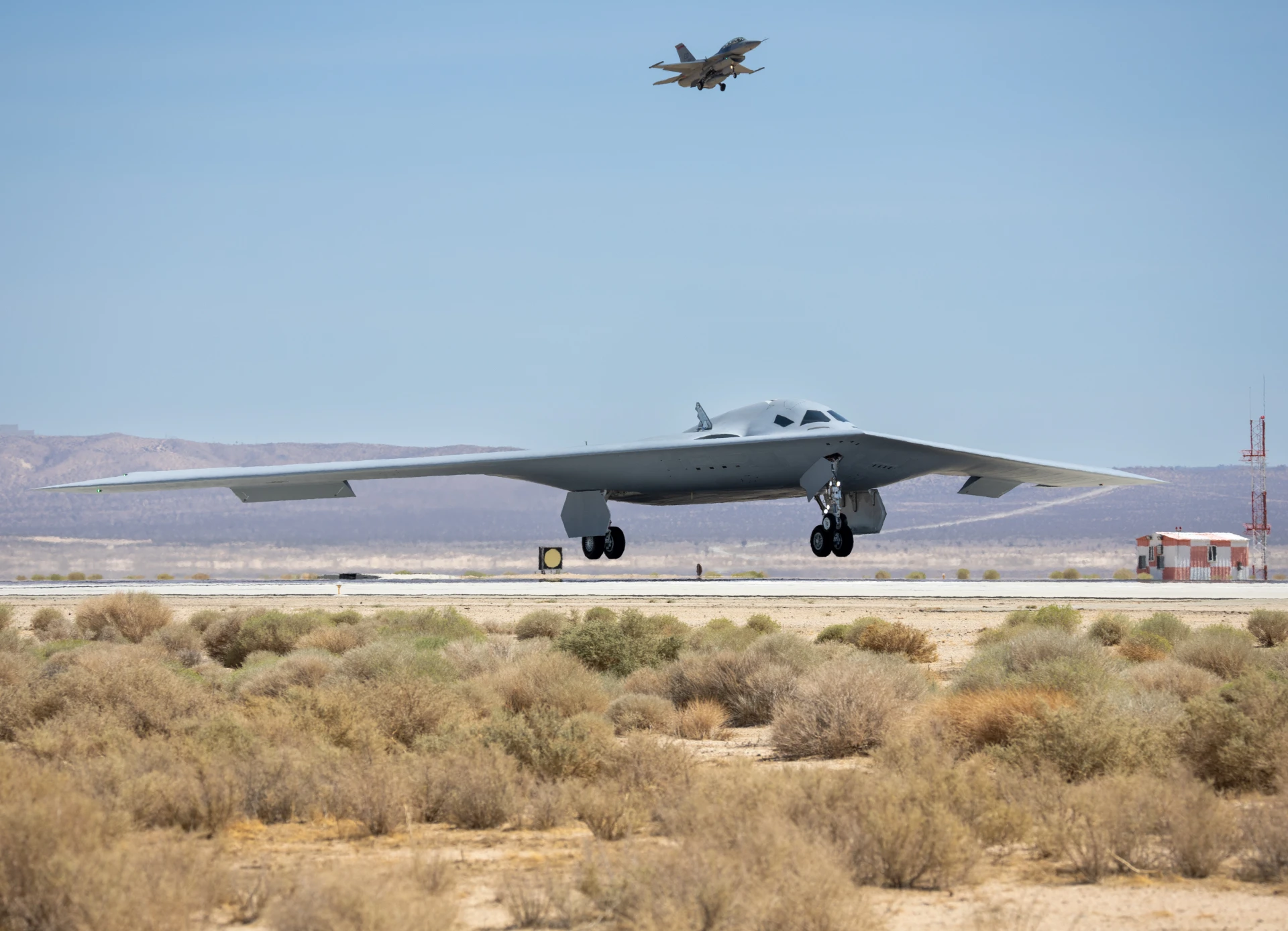
The B-21 project was first proposed in 2014. The goal is to form a fleet of at least 100 aircraft, gradually supplement and eventually replace the B-1B "Lancer" and B-2 "Phantom" bombers before 2040, and serve together with the modernized and upgraded B-52 bombers until the 2050s. One of the aircraft's main tasks is to assume the space-based nuclear deterrent force in the United States' "nuclear triangle" while delivering conventional munitions in non-nuclear conflicts.
The first prototype will complete its first flight in November 2023 and will be officially put into service in 2027. This progress reflects that in the current complex and volatile geopolitical environment, the United States is focusing on accelerating the research, development, manufacturing and deployment of new military systems. A total of 6 test airframes were ordered for the project for ground and flight testing, and digital twin technology was used extensively to model the airframe and its systems before and after assembly.
In a recent flight test, the B-21 actually released a conventional weapon after a digital twin system predicted the weapon's trajectory and accelerated software integration. Previous test flights have focused on validating basic systems, aerial refueling and expanding the bomber's flight performance envelope.
The B-21 was originally planned to be deployed at Ellsworth Air Force Base in South Dakota. Unlike its predecessors during the Cold War, the aircraft was not designed primarily to penetrate Soviet airspace, but to perform ultra-long-distance penetration missions against the modern multi-layered air defense system in the Indo-Pacific region.
As a sixth-generation bomber, the B-21 adopts a wing-body fusion layout and advanced stealth features. It has a crew of two and has built-in future optional manned capabilities. Its wingspan is estimated to be about 46 meters and its maximum take-off weight is about 81,650 kilograms. The aircraft is powered by two non-afterburning turbofan engines manufactured by Pratt & Whitney, with an estimated cruising speed of about Mach 0.8, a range of about 12,000 kilometers without aerial refueling, and an internal bomb load of about 9,100 kilograms. However, official performance figures remain under wraps.
Tom Jones, corporate vice president and president of Northrop Grumman Aerospace Systems, said the B-21 is one step closer to giving the United States "unmatched deterrence." He also said that U.S. Air Force partners have stated that the B-21 Joint Test Force’s continued rapid test pace and progress are the envy of the entire testing community. Northrop Grumman is turning advanced technologies into real capabilities and delivering them with performance and speed.
Comments