
Abstract:
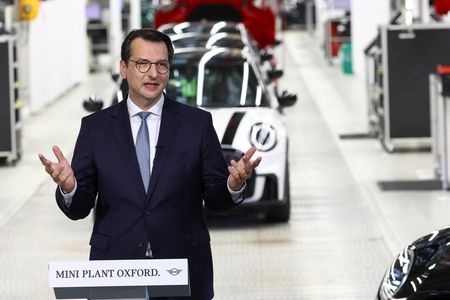
BMW CEO Milan Nedelkovic said in a recent interview that the selling prices of some Chinese cars in Europe are "impossible to understand from a commercial perspective." However, he opposes imposing additional tariffs and advocates resolving differences through voluntary pricing agreements.
Nedelkovic pointed out in an exclusive interview that
the pricing of some Chinese cars in the European market has been so low that it cannot be explained from commercial logic. This situation may encourage protectionist tendencies in Europe. But he also emphasized that additional tariffs would constitute a greater degree of market intervention, so he preferred to reach a voluntary agreement under fair conditions rather than resorting to tariffs.
"No one wants to see the situation escalate," Nedelkovic said. This position is consistent with BMW's consistent opposition to the EU's tariffs on Chinese electric vehicles.
European Commission President Von der Leyen previously called the EU's trade deficit with China "unsustainable" and the EU is evaluating response measures. Some European car company executives and politicians have called for the introduction of localized content rules and the expansion of tariffs to Chinese-made plug-in hybrid models to protect local market share.
The reason why BMW has repeatedly criticized the EU’s tariffs on electric vehicles in China is directly related to its own interests. BMW's pure electric MINI is produced in China and exported to Europe. The European Union will impose countervailing duties on Chinese-made electric vehicles starting from October 2024. BYD, Geely, and SAIC will be levied countervailing duties of 17.0%, 18.8%, and 35.3% respectively. Superimposed on the standard car import tariff of 10%, BMW's China-made MINI electric vehicles face a comprehensive tariff burden of approximately 31%. Since then, BMW has been negotiating with the EU on a price commitment plan to seek tariff exemptions.
Data shows that EU countervailing tariffs have not effectively stopped the growth momentum of Chinese electric vehicles in Europe. After the tariffs took effect in October 2024, exports were briefly suppressed. However, Chinese brands gradually absorbed the impact through localized production and price adjustments, and their market share in Europe continued to rise.
Comments