
Abstract:
The BMW Group will use artificial intelligence to improve operational efficiency. Facing an increasingly severe market environment in the future, this new technology is expected to help companies complete more business with fewer employees. Artificial intelligence will become the core driving force for reducing costs, increasing efficiency, and accelerating the research and development process. The car company plans to further fully implement AI technology within the group to empower vehicle research and development, raw material procurement, marketing and after-sales business.
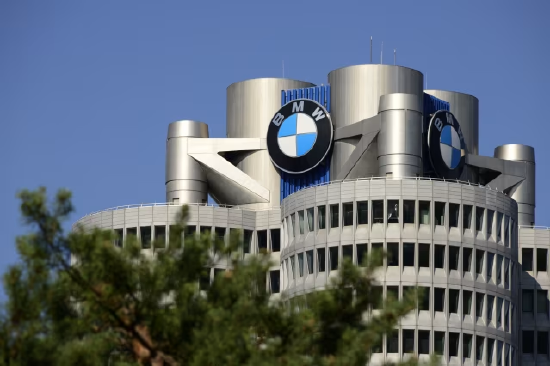
The Group is preparing for an increasingly severe market environment in the future.
BMW unveiled the strategy at an investor event on Wednesday. The company said that the efficient use of artificial intelligence can improve the group's flexibility and execution efficiency, which requires reducing management levels and reorganizing business units.
BMW said that in order to streamline its structure, the number of business departments and management positions will be reduced by 20% in the next few months, and "subordinate organizational levels will also be reduced to the same extent."
A person familiar with the matter previously revealed that executives had reached a large-scale personnel restructuring agreement with labor representatives in July, which will affect up to 8,000 white-collar workers in Germany. BMW will have just under 155,000 employees worldwide at the end of 2025.
"We are optimizing our organizational structure and cost base to cope with the intensifying competition in the industry in the coming years. The personnel restructuring plan is an important starting point to achieve this goal," CEO Milan Nedeljkovic said in a statement at Wednesday's event.
German car companies are making every effort to reduce costs. Intensified competition in China's core markets and shrinking market size have brought tremendous pressure; at the same time, high energy costs, coupled with the Trump administration's tariff policy, are also constantly eroding corporate profits.
BMW said on Wednesday that the group must significantly improve its overall operating speed and efficiency, with the goal of increasing the pre-interest and tax profit margin of its automotive business to the 8%-10% range by the beginning of the next decade.
This profit margin will be only 5.3% in 2025. BMW expects short-term profit margins to be difficult to improve and maintains its target at 3%‑5% in 2028.
Other plans announced on Wednesday include: focusing on the most profitable models in each key market, while creating more customized models suitable for the European, American and Chinese markets; streamlining model derivatives to improve profitability.
In the Chinese market, BMW plans to expand localized production of models for local consumers; imported models will be limited to high-profit versions; and it will also consider exporting more Chinese-made cars to the Southeast Asian market.
BMW added that it may launch a high-end sports utility vehicle specifically for local consumers in the U.S. market. This type of model combines the space and sporty handling performance of a traditional SUV, and has received good response from the market.
BMW's Spartanburg plant in South Carolina builds the X3, X5, X6, X7 and XM series of sport utility vehicles and coupes, most of which are exported. The company said these models are selling well around the world, the factory is currently operating at full capacity, and the company is considering expanding production of the above models in other markets.
In the European market, BMW will be based on the
New Generation (Neue Klasse) platform
Launched a new compact model; this platform is the technical base for the next generation of smart cars with high software computing power.Nedeljkovic added: "Under the increasingly severe external environment, we have formulated self-adjustment measures and will vigorously promote their implementation."
BMW said that a large number of supporting measures are still in the evaluation stage, and relevant decisions are expected to be issued in the spring of 2027.
Comments