
Abstract:
Gavin Newsom, the Democratic governor of California, signed an executive order on Friday local time, saying that the order will "significantly accelerate" the implementation of artificial intelligence safety measures, including the possibility of requiring companies to set "kill switches" for advanced AI models, which is an emergency shutdown mechanism.
Gavin Newsom, who is seen as a potential candidate for the 2028 presidential election, said that the executive order is necessary because the federal government has not done enough in regulating AI.
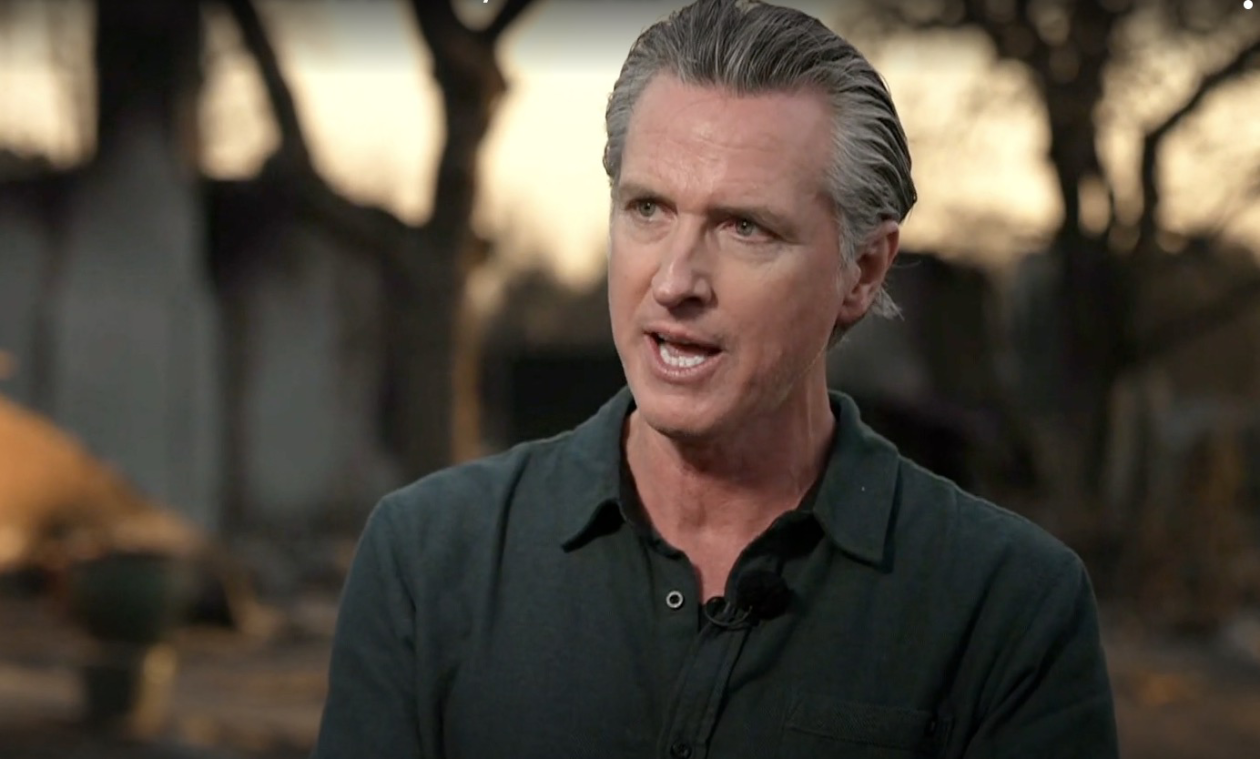
"California will do what it can, but the country needs to act. Washington, D.C., needs to do its part," Gavin Newsom said in a video address on Friday.
The governor’s executive order will convene an expert group to provide guidance within two months to clarify how California should improve AI safety-related laws. Relevant proposals include requiring AI laboratories to undergo regular audits, mandating the reporting of "out-of-control incidents" where AI agents behave abnormally, and promoting the equipping of cutting-edge AI models with kill switches.
Before the issuance of the executive order, many technology industry executives had warned that AI was developing too fast and that the industry should work together to slow down the pace of research and development to ensure that the technology is controllable.
President Trump is opposed to such concerns and does not seem to agree with calls for U.S. companies to slow down the development of AI capabilities.
Despite Trump’s stance, concerns about the risks of AI have given members of both parties in Congress a new sense of urgency.
Louisiana Republican Sen. John Kennedy tried to push legislation through the unanimous consent process on Wednesday that would require companies to build kill switches into AI models, but the proposal was blocked by opposition from Kentucky Republican Sen. Rand Paul. Representatives Ted Lieu, a California Democrat, and Nathaniel Moran, a Texas Republican, have introduced similar bills.
Senate Majority Leader John Thune, a South Dakota Republican, said on Monday that he hopes the AI regulatory bill he co-authored with Minnesota Democratic Senator Amy Klobuchar and Texas Republican Senator Ted Cruz will be submitted for consideration soon. He said he hoped that relevant legislation would adopt the principle of "light supervision".
Earlier this week, more than 100 Democratic members of the House of Representatives jointly sent a letter to House Speaker Mike Johnson, Republican of Louisiana, requesting that the upcoming adjournment be canceled in order to vote on bills related to AI security.
Johnson, who like Trump advocates that AI regulation should be as hands-off as possible, canceled the relevant vote on Thursday and arranged for the House of Representatives to enter a seven-week recess one day in advance. Lawmakers are not expected to resume session until after the November midterm elections.
"Johnson should end his vacation, follow California's example, and pass national legislation. Get it done." Gavin Newsom said on Friday. "This is what leadership requires: establishing a complete security framework as the bottom line. This is the least that everyone expects him and his colleagues to do."
The American public’s concerns about AI are also increasing: A poll released by the Pew Research Center on Thursday showed that the vast majority of American adults, about 71%, believe that this technology will cause job losses in the next 20 years.
Polls show that more than half of the respondents are more worried than excited about the rise of AI in daily life, with only 9% feeling the opposite. Since 2024, concerns about AI among young Americans have increased significantly.
Comments