
Abstract:
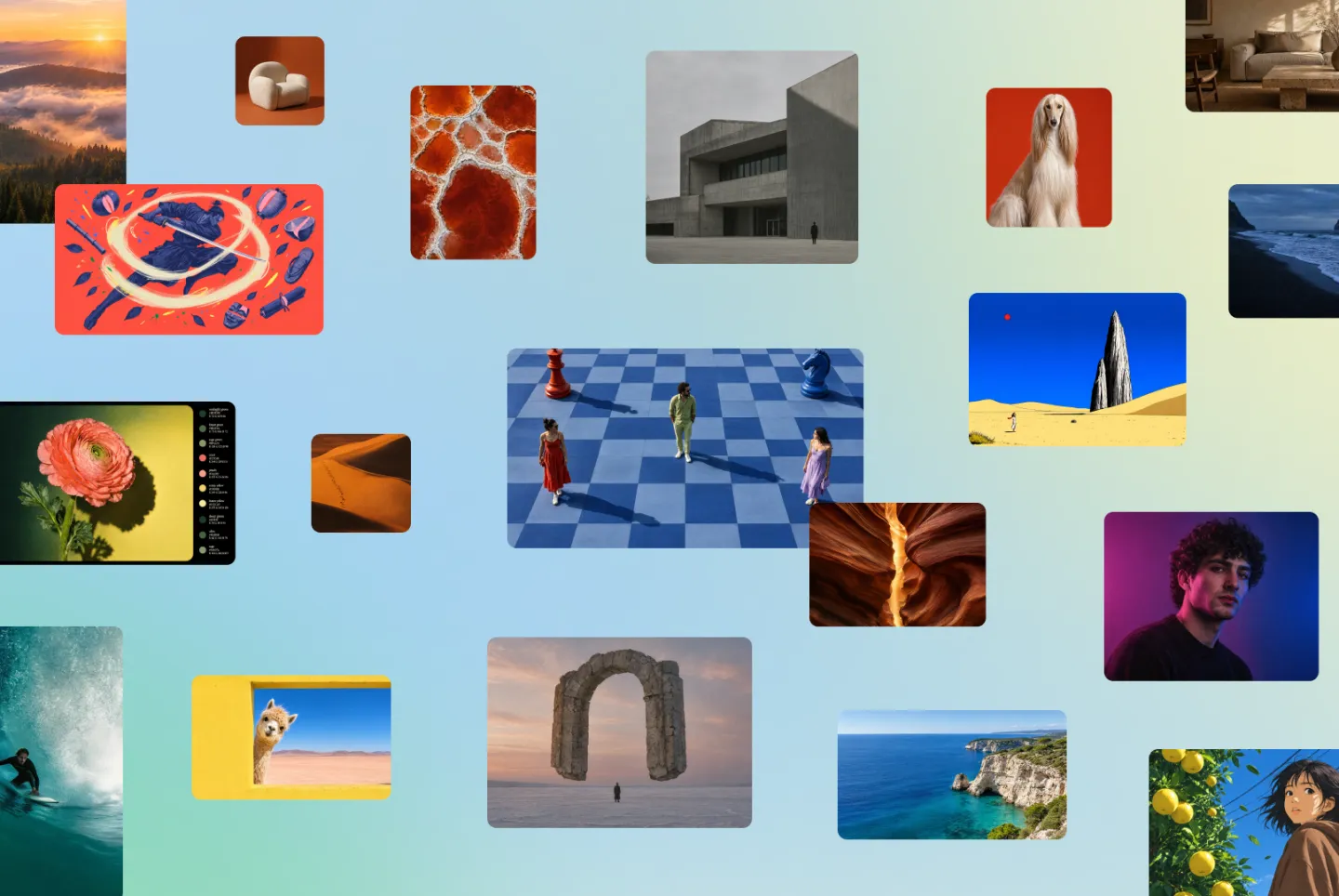
Design platform Canva has released Canva Craft, the first image generation model independently developed by its research team, aiming to compete with similar models from companies such as Google, OpenAI and Meta. Canva says the model operates in two stages. In the first stage, the model interprets the prompt words entered by the user and develops a generation plan, which includes the spatial relationship between elements, relative proportions, visual hierarchy, and information required for text generation. In the second stage, the model generates images according to the plan, supporting up to 2K resolution and providing up to 30 aspect ratios to adapt to different platforms.
Canva said that this method allows the model to accurately represent object details and generate clear and readable text. Additionally, users can make precise edits to images without affecting other parts of the image.
The company noted that unlike image-generating models that are trained using photos, Canva Craft is primarily trained using design work. The training data comes from Canva’s library of templates created by human designers, including posters, social media posts, presentations, infographics, menus, and design works with heavy text layout.
This means that images generated by Canva Craft can be converted into editable designs with independent layers through the company's image-to-design tool Canva Magic. Last year, Canva launched a self-developed design understanding model that can identify design structures and layers.
Canva Craft is now available to all users of the Canva platform, and users can use the model through the Dream Lab tab. The model will also be served via the Canva API.
In addition, Canva plans to provide image generation capabilities for third-party chatbots such as ChatGPT and Gemini through its Model Context Protocol (MCP) integration.
Previously, Canva had been using a variety of external image generation models within the platform, so the new model is expected to help the company save on API call costs.
Canva said that in addition to reducing costs, the self-developed model also allows the platform to better control the quality and speed of image generation.
In 2024, Canva acquired media generation platform Leonardo.ai. The company said researchers from Leonardo were involved in the development of the new image model.
Canva also said that it is developing two lower-cost and more efficient model versions, named Craftfast and Craft-ultrafast, which are expected to be released soon.
Canva is expected to achieve $4 billion in revenue last year. However, the company lowered its growth forecast for 2026. According to outside analyst estimates, the move resulted in a significant drop in its valuation from $42 billion to $35 billion.
Comments