
Abstract:
The popularity of Apple’s first foldable screen iPhone Duo is still fermenting. From the long queues in stores on the launch day, to the shape design of social media platforms, screen creases, battery life evaluation... every detail of this Apple folding screen flagship has been placed in the spotlight. In addition to hardware quality, the eSIM function, as an important configuration of this model, has become the most popular topic for users' inquiries before and after purchasing the phone.
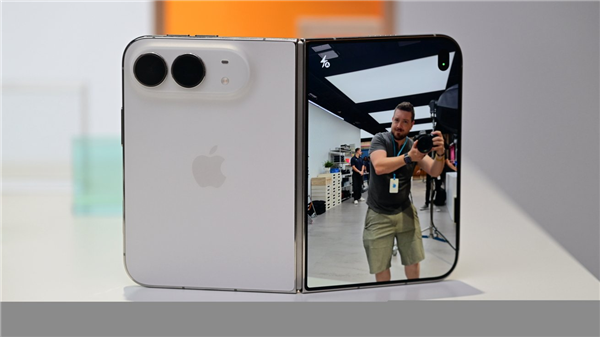
For many people, eSIM means a simpler body and more flexible multi-card management, which is particularly attractive to people who work in remote places and travel across borders. However, most users still only have a vague understanding of how to handle eSIM, whether foreign numbers can be converted locally, how to arrange dual cards across operators, and what the rules are for outbound switching.
At the end of October, reporters from "IT Times" visited a number of Shanghai China Mobile, China Unicom, and Telecom business offices, combined with real user usage scenarios, to dismantle the entire eSIM usage process in the iPhone Duo era and key points to avoid pitfalls.
Conquer the world with one machine?
The National Bank version only supports two cards
On days when he was dragging his suitcase to catch an early flight, it was normal for Jiang Ming (pseudonym) to carry two mobile phones with three SIM cards in his pockets.
As a team manager, he travels with the team all over the world to participate in leagues and friendly matches all year round. There are always two mobile phones in his luggage: one main phone carries domestic work and personal numbers;
As soon as the iPhone Duo was released, Jiang Ming placed an order for one. Although he won't get the new phone until December, he has already planned how to use it: the iPhone Duo's foldable large screen can replace the tablet to check the schedule, tactical information and player data, and the eSIM can streamline the accompanying equipment. Two domestic numbers are converted into eSIM cards. When arriving at the competition venue, he can directly apply for the eSIM package of the local operator, without having to repeatedly switch between physical SIM cards.
But there were a few questions hanging in his mind. When I apply for a local card abroad, do I need to delete my domestic number? After switching to eSIM, will the signal be better than that of a physical card? My number belongs to another province, can I directly convert it to eSIM locally?
With questions from Jiang Ming and many users of the same model, reporters from "IT Times" visited the business halls of three operators in Shanghai and verified the relevant rules one by one. The staff of the three business offices confirmed that the National Bank iPhone Duo supports up to two eSIMs to be written at the same time. This number is the regional limit of the National Bank version. The overseas version of the same hardware can store up to 8 eSIMs. If you have already activated two domestic eSIM cards, you must first remove one when adding a third overseas eSIM card.
"Just remove the data written on the machine, and the number itself will not be canceled. After returning to China, you can go to the business office to rewrite and restore it in person." A staff member of the telecommunications business office told reporters that eSIM and physical cards share the same base station network, and there will be no essential difference in signal strength between the two. However, eSIM does not have the problem of wear and looseness of physical SIM cards, and the stability of the signal is more advantageous for long-term use.
After clarifying these rules, Jiang Ming quickly adjusted his communication plan. He plans to first convert his commonly used work and personal accounts into eSIMs and fix them on his main phone to ensure that he can contact his family and domestic affairs at any time. When traveling overseas for competitions, he would still put his old backup phone in the equipment box and buy a physical SIM card locally to connect with local affairs. In his opinion, although eSIM has not completely enabled him to travel the world with one device, after understanding the rules and using them together, it has been able to help him reduce a lot of his burden.
It is not difficult to transfer cards in different places
You still have to go to the business hall to change your card
Like Jiang Ming, the first thing most users need to clarify after buying a new eSIM-enabled phone like the iPhone Duo is the complete set of rules from management to daily use.
Chen Feng (pseudonym), who works in Shanghai, has been a dual-number user for many years. A telecom number from his hometown in Anhui is bound to various financial and social accounts, and a Shanghai mobile number is used for work connection. After buying an iPhone Duo, he was originally worried that the number in another province would have to be returned to his place of origin in order to be converted to eSIM, but the staff at the business office told him on the spot that as long as he came to the site with his ID card and device, the conversion operation could be completed directly, and the entire process was free of charge.
According to the reporter of "IT Times", the self-operated business halls of the three major operators have gradually supported inter-provincial physical card conversion to eSIM and off-site eSIM replacement services. However, some business halls still have some restrictions. It is recommended that users first confirm whether nearby outlets accept the application through the operator's App or customer service hotline to avoid a wasted trip. Moreover, except for the different physical forms of eSIM and physical cards, the package benefits are the same. That is to say, the package you used in a different place will still be the same after changing to eSIM.
China Mobile salesperson reminded reporters that there are currently more than ten mobile phone models supported by National Bank of China, including iPhone Air and iPhone Duo, as well as multiple models from other mainstream brands. Since card opening, card transfer, and card replacement services require on-site verification of device IMEI and EID information, all services require personal presence and must bring a physical mobile phone device to enter information on-site. Agents are not supported and cannot be processed in advance without bringing the device.
The rules for dual card processing are directly linked to the operating entities. The primary and secondary cards of the same operator can be written to multiple eSIMs at one time at one outlet. Number switching can be operated within the mobile phone system without the need to physically change cards. However, if the two cards belong to different operators, they cannot be processed in one stop at the same outlet, and you need to go to the self-operated outlets of the corresponding operators respectively.
In addition, eSIM and physical cards share the real-name management rule of "one certificate, five numbers". The total number of card numbers under the same operator's name for the same ID card shall not exceed 5. According to public information from the China Industry and Information Technology News Network, the rules follow the real-name management requirements for telephone users of the Ministry of Industry and Information Technology. As an electronic SIM card, eSIM is integrated into the existing real-name management system.
Switching and migration is the most obvious link in the experience difference between eSIM and physical card. The physical card can be physically plugged and unplugged to complete the device migration, and the operation threshold is low; the eSIM is bound to the device. To change the mobile phone, you need to go to the offline business hall to rewrite the configuration file. The eSIM configuration file of the old device will be synchronized and invalid. Currently, online self-service migration is not supported, and others are not allowed to do it on your behalf.
The staff of many business offices visited by this reporter said that these requirements are mainly based on real-name verification and number security considerations, so as to avoid risks such as number theft caused by non-personal operations.
However, online processing has shown signs of loosening. At the MWC26 Shanghai exhibition, industry insiders told the "IT Times" reporter that domestic operators may provide online eSIM business processing services for mobile phones in the second half of this year; before going to press, China Unicom has launched a "eSIM business online processing qualification draw" limited-time event, and qualified users can submit applications online through the China Unicom App.
From offline to online
eSIM is waiting for the next step
eSIM is not a new technology, but its large-scale application in domestic mobile phones is still in the stage of steady advancement.
As early as around 2015, eSIM was the first to be implemented on wearable devices such as smart watches; from 2017 to 2018, telecom operators such as China Unicom successively launched the "One Number and Two Terminals" service for smart watches, allowing wearable devices to make and receive calls independently without being separated from mobile phones. It was not until recent years, as flagship models gradually reduced physical card slots and increased eSIM support, that this technology truly moved from "secondary card" to the main card application scenario of mobile phones.
The "eSIM Industry Development Research Report (2026)" released by the China Academy of Information and Communications Technology shows that as of the first quarter of 2026, the total number of global eSIM connections has exceeded 1.3 billion; the cumulative number of domestic eSIM connections has exceeded 230 million, of which the Internet of Things field has contributed more than 180 million connections, and mobile phone eSIM is still in the initial stage of commercial trials.
Behind the steady increase in penetration rate is the continuous improvement of operators' networks and services. On October 13, 2025, the three major operators (China Mobile, China Unicom, and China Telecom) announced on the same day that the eSIM mobile phone business had received commercial trial approval from the Ministry of Industry and Information Technology. The eSIM mobile phone business was subsequently launched in 31 provinces (autonomous regions and municipalities) across the country.
One year later, there is still room for continuous optimization of the eSIM experience.
The barriers to localized rights and interests, reliance on offline processing, and capacity differences on the device side are all issues that need to be resolved urgently during the development of the industry. In September 2026, the Ministry of Industry and Information Technology issued the "15th Five-Year Plan for the Development of the Information and Communications Industry", which clearly proposed the orderly promotion of new technology applications and new business registrations such as embedded SIM cards (eSIM), pointing out the direction for the further popularization and online evolution of eSIM.
Comments