
Abstract:
The legal dispute between Apple and Epic Games over App Store policies has once again made new progress. On November 13, local time, Epic submitted the latest legal document to the U.S. Supreme Court, asking the court to continue to hold Apple accountable. It believed that although Apple formally complied with the previous court ruling, it actually avoided the goal of the ruling through charging policies and other restrictive measures.
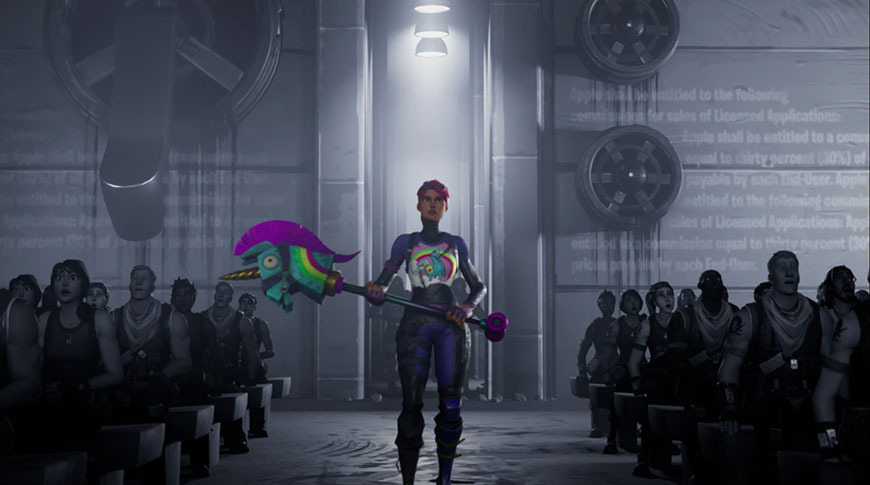
This legal dispute that has lasted for many years originally originated from Epic’s dissatisfaction with Apple’s App Store’s closed payment system and application distribution policy. In 2020, Epic introduced a payment method in "Fortnite" that bypassed Apple's in-app purchase system. Subsequently, Apple removed the game from the App Store, and the two parties officially entered legal proceedings.
In 2021, U.S. Federal District Court Judge Yvonne Gonzalez Rogers, who was responsible for hearing the case, made a ruling. Apple won the vast majority of the ten main claims brought by Epic, but the court also ordered Apple not to continue to prevent developers from providing users with links to external payment channels in their applications, also known as anti-steering.
However, Apple's subsequent implementation plan triggered new controversy. Although Apple allows developers to add external payment links to their apps, it charges commissions on transactions completed through these links, with commission rates reaching up to 27% for some transactions. It also imposes restrictions on how links are displayed and the user jump process.
Epic believes that this approach actually weakens the effect that the court originally hoped to achieve. Although developers have gained the right to guide users to external payment channels, if they still need to charge high commissions to Apple Pay, the economic attractiveness of using third-party payment systems will be significantly reduced.
In April 2025, the district court finally found that Apple violated the previous injunction, ruled that it constituted civil contempt of court, and required Apple to stop charging commissions for transactions completed through external links and remove relevant restrictions. Apple subsequently appealed, but the U.S. Court of Appeals for the Ninth Circuit upheld the contempt finding. Since then, the case has further entered the U.S. Supreme Court.
Apple’s core defense is that the original injunction in 2021 did not explicitly prohibit Apple from charging commissions on external payment transactions, so it cannot be held to be in contempt of court simply because the court believes that Apple’s actions violate the purpose of the judgment. Apple emphasized that the court must strictly rely on the text of the ruling when issuing such penalties, and cannot expand the scope of the original ban after the fact.
Epic takes the opposite position, believing that Apple cannot use details that are not clearly listed in the legal text to circumvent the actual purpose of the court's ruling through technical operations. The core of the dispute between the two parties has gradually changed from whether the App Store allows external payments to whether the court should strictly follow the literal content of the judgment when enforcing the injunction, or whether the parties can judge whether the parties have violated the regulations based on the actual intention of the judgment.
The U.S. Supreme Court is expected to hold oral arguments in this case on January 11, 2027. At that time, the judge will focus on a question with broad implications: If a court order does not expressly prohibit a specific conduct, whether the conduct can still be held in civil contempt because the conduct violates the spirit of the prohibition.
This means that the focus of this Supreme Court hearing is not to directly determine how much commission Apple can charge for external payment transactions, but to determine how much room for interpretation the court has when enforcing the ban. The final outcome of the case may not only affect the dispute between Apple and Epic, but may also have a profound impact on other cases in the United States involving corporate compliance, antitrust, and judicial injunction enforcement.
Comments