
Abstract:
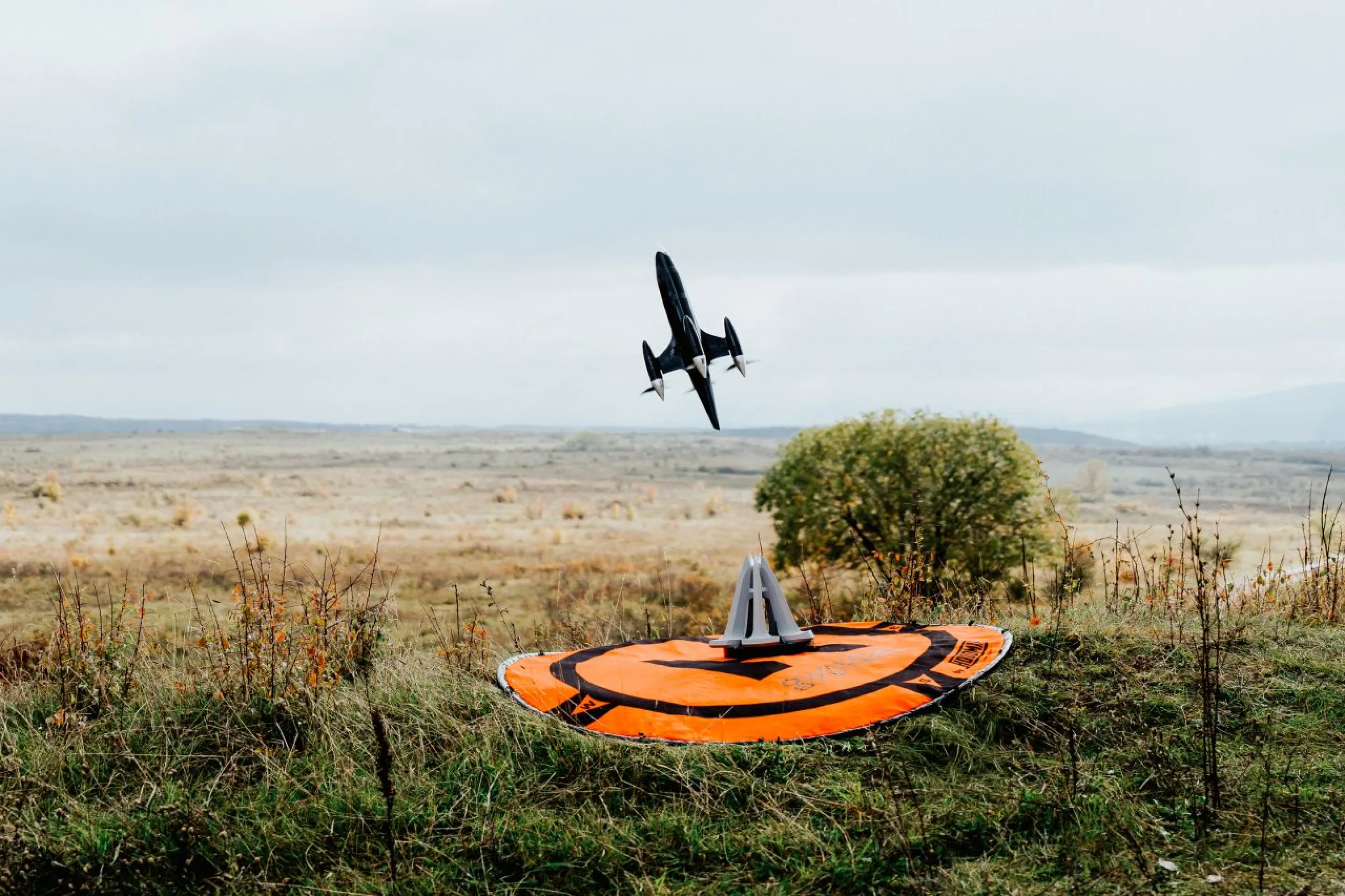
German drone manufacturer Quantum Systems recently announced that its experimental electric drone Apex Recordhunter reached a speed of 777 kilometers per hour, or approximately 482.8 miles per hour, during a test flight. If this achievement is officially certified, it is expected to set a new speed record for electric drones. However, since this test only completed a single-directional flight and has not yet met all the requirements for official record certification, it is still an unofficial result.

Martin Kakul, chief revenue officer of Quantum Systems, announced the news on social media. According to data disclosed by the company, the Apex Recordhunter has a top speed of 419.5 knots, or 777 kilometers per hour. For an aircraft powered entirely by batteries, this speed demonstrates the potential of electric propulsion systems for high-performance flight.
The certification of aviation speed records has strict technical standards. The International Federation of Aeronautics and Astronautics (FAI) requires that when an aircraft applies for relevant speed records, it usually needs to complete two consecutive flights in opposite directions along the measurement route within a specified time to offset the impact of changes in wind speed and wind fields at different altitudes on the measurement results. Apex Recordhunter only completed the flight in one direction this time, so its results cannot be officially certified for the time being. Quantum Systems acknowledges this limitation.
Similar certification details have sparked controversy throughout the history of aviation records. For example, there has long been discussion about whether Soviet cosmonaut Yuri Gagarin fully met the conditions for certification for the first manned space flight set by the International Aeronautical Federation at the time. When Gagarin returned to Earth aboard the Vostok-1 spacecraft, he ejected before the spacecraft landed. The rules at the time required that the pilot must land with the aircraft. Such cases illustrate that creating impressive flight results and obtaining official record certification are two different concepts.
Although it has not yet been officially certified, testing of Apex Recordhunter still has important engineering value. This project is not for the sole purpose of setting a speed record, but to serve the research and development work of Quantum Systems' high-speed interception drone. Through high-speed flight testing, the engineering team can collect aerodynamics, thermodynamics and electrical system operation data of the aircraft at high speeds to provide technical basis for subsequent military applications.
What is particularly interesting about this flight is that the drone is completely powered by batteries, but it has achieved a speed of nearly 800 kilometers per hour. Quantum Systems believes that this test proves that battery electric propulsion technology has the potential to support high-speed flight. For a drone whose main mission is to intercept targets, speed may directly determine whether it can catch up with the incoming target in time.
The speed of the Apex Recordhunter also exceeds the cruising speed of some of Russia’s jet-powered Shahd/Glan series of attack drones. The flight speed of the relevant jet-powered models is about 500 kilometers per hour, which is equivalent to about 270 knots. If future interception drones can achieve a performance level close to that of the Apex Recordhunter in actual combat, they may have an advantage in speed, thereby expanding the interception range of high-speed attack drones.
Among the current aerial threats faced by Ukraine, jet-powered attack drones are becoming one of the targets that the air defense system needs to deal with. Although traditional low-cost interception drones have price advantages, some models do not fly fast enough to catch up with faster jet targets, and defenders often need to rely on expensive air defense missiles. High-speed electric interceptor drones could become a more economical complement if they could balance speed, maneuverability and cost.
In terms of possible combat methods, high-speed interception drones can destroy targets through direct collision, or they can be equipped with proximity fuze warheads that detonate when approaching the target. Compared with solid rocket motor-powered anti-aircraft missiles, electric drones are expected to reduce the cost of some propulsion systems and provide an alternative to respond to large-scale, sustained drone attacks.
However, setting a speed record does not mean that the relevant technology can be directly used in actual combat. There are obvious differences in mission requirements between the experimental aircraft used in the record test and the interceptor drones actually put into the battlefield. Actual combat equipment also needs to consider factors such as endurance time, payload, detection and guidance capabilities, communication anti-interference performance, and mass production costs. How you balance high-speed performance with these real-world needs will determine how useful this technology ultimately is.
The significance of Quantum Systems' test is not only to refresh a speed record that has yet to be certified, but also to explore the performance boundaries of battery-electric aircraft. With the continuous development of high-speed attack drones, how to achieve rapid interception at a relatively low cost is becoming an important issue in modern air defense technology. Whether the engineering data accumulated by Apex Recordhunter can be transformed into reliable, mass-produced military equipment in the future remains to be verified by subsequent research and development and testing.
Comments