
Abstract:
U.S. defense contractor Lockheed Martin recently unveiled the new PAC-3 Edge interceptor missile. This weapon is based on the technology of the active Patriot PAC-3 MSE interceptor. By upgrading the seeker, flight control system and solid rocket motor, it further improves the interception distance, flight altitude, speed and maneuverability, focusing on dealing with hypersonic gliding aircraft and other advanced air and missile threats.
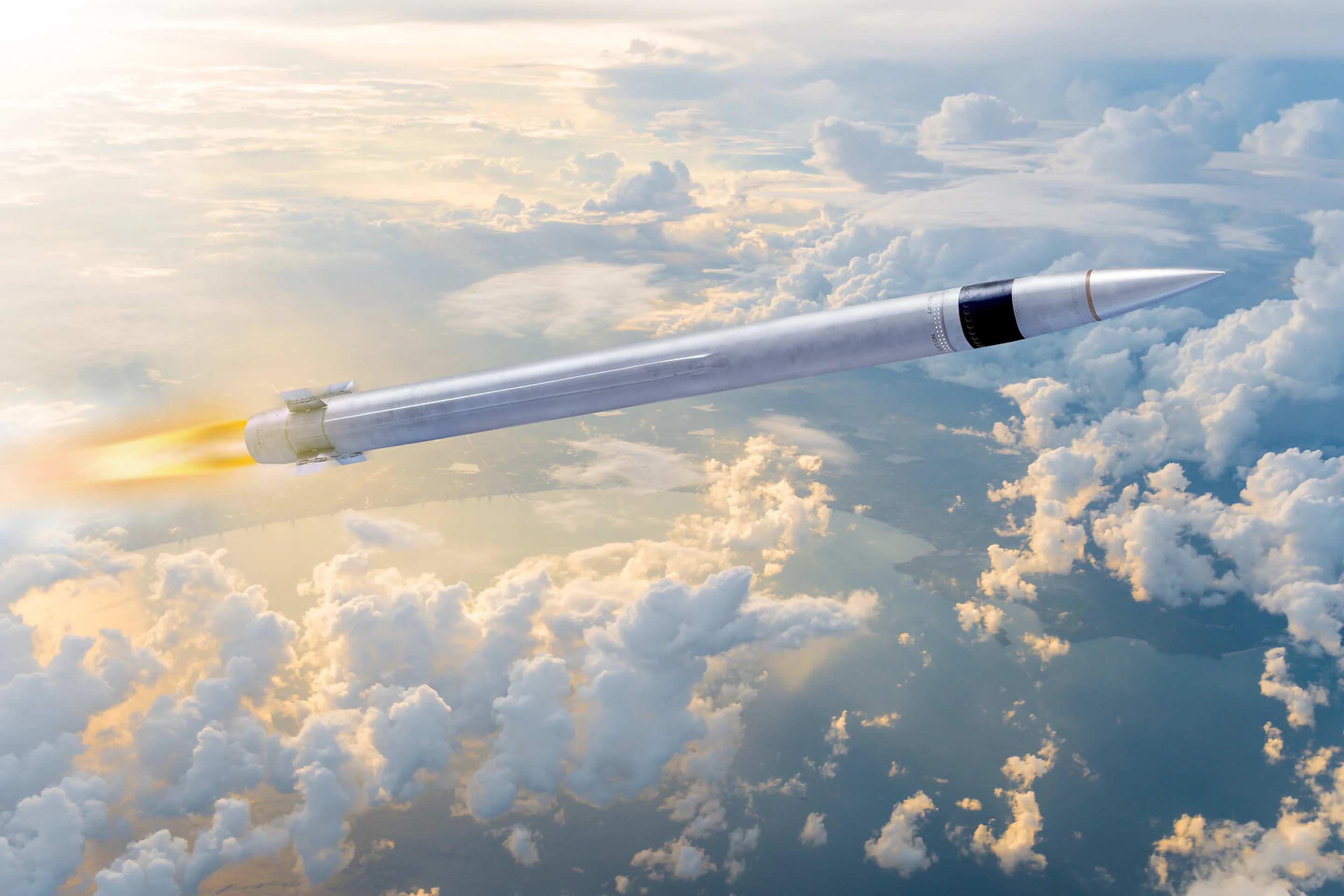
PAC-3 Edge will be officially unveiled on October 9, 2026. It is one of the bidding solutions for the U.S. Army's Future Interceptor project. Lockheed Martin plans to begin relevant testing in 2027 and aims to deploy it around 2031. However, this timetable still depends on subsequent development, test results and the Army’s procurement decisions. At present, PAC-3 Edge is still in the development stage and cannot yet be regarded as an active weapon with actual combat capabilities.
The Patriot air defense system is an important part of the active ground air defense system of the United States and its allies. Its development history can be traced back to the late 1970s and early 1980s. It was initially mainly used to intercept aircraft and cruise missiles, and later gradually enhanced its defense capabilities against targets such as tactical ballistic missiles. During the 1991 Gulf War, the Patriot system became widely known for its role in intercepting Iraqi Scud missiles.
The PAC-3 series developed on this basis focuses more on intercepting high-threat targets such as ballistic missiles. Different from some early air defense missiles that mainly relied on explosion fragments to kill targets, PAC-3 adopts the concept of direct collision kinetic energy interception. The interceptor is controlled by the guidance system to directly impact the target at an extremely high relative speed, using the huge energy generated by the collision to destroy the incoming weapon.
PAC-3 MSE is one of the more powerful models in this series and has become an important equipment for the US Army and some allied air defense systems. PAC-3 Edge is not designed completely from scratch, but is further upgraded based on the technology of PAC-3 MSE. It is hoped that while retaining the accumulation of existing system technology, it will improve its ability to deal with next-generation missile threats.
An important factor driving this upgrade is the challenge posed by hypersonic weapons to traditional air defense and anti-missile systems.
Generally speaking, weapons that fly at speeds exceeding Mach 5 can be classified as hypersonic weapons, but speed itself is not the only criterion for judging the difficulty of interception. Although some ballistic missiles are very fast, their flight trajectories are relatively easy to predict; hypersonic gliding vehicles may maneuver within the atmosphere and change their flight paths, making it more difficult for defense systems to accurately determine their final flight direction.
For the defender, the challenge is not only to discover the target, but also to continuously track it, determine its movement status, calculate the interception window, and allow the interceptor to accelerate and maneuver within a limited time. If the incoming weapon can continuously adjust its trajectory during flight, the interceptor must have sufficient speed and maneuverability to complete the engagement at the right time and location.
The main improvements of PAC-3 Edge are centered around these issues.
First of all, the new seeker is an important technical component of the project. Lockheed Martin stated that the new seeker was designed by the company's internal Strigo Product Center with the goal of improving target tracking accuracy and maneuverability during interception. For high-speed targets, the guidance system must obtain sufficiently accurate target information in a very short time and continuously correct the flight status of the interceptor.
However, Lockheed Martin has not disclosed the specific working parameters of the new seeker, nor has it released its measured interception data on different types of hypersonic targets. Therefore, what can be confirmed at present is the design goal of the system, rather than the actual interception results it has achieved.
The second key improvement is the multi-pulse solid rocket motor provided by Northrop Grumman.
Traditional solid rocket motors usually continue to burn propellant after ignition until the combustion is completed. Multi-pulse engines use a special propellant layout and combustion chamber design to divide the propulsion process into multiple stages, allowing the engine to generate thrust in stages according to predetermined control logic during flight.
The multi-pulse propulsion scheme adopted by PAC-3 Edge can provide power at different stages of the missile's flight, rather than concentrating all propulsion energy in the initial acceleration stage. According to Lockheed Martin, this design helps improve the interceptor's performance at longer ranges and higher altitudes, and preserves more capabilities for terminal maneuvers.
The importance of this technology is that the interceptor doesn't just need to fly to its target as fast as possible. In some cases, it also requires larger directional adjustments later in the flight to cope with target maneuvers. If the propellant is exhausted in the early stages, the interceptor may lack enough energy to adjust even if the guidance system detects that the target has changed direction.
The multi-pulse engine can re-provide thrust at different stages, giving the interceptor more room for power deployment during flight. However, the specific effect still depends on the engine design, target motion status and actual combat conditions. It cannot be concluded that it will be able to intercept all hypersonic weapons simply by using a multi-pulse structure.
In addition to the seeker and engine, the PAC-3 Edge also has an upgraded flight control system. Lockheed Martin said the new design can improve the missile's maneuverability in long-distance and high-altitude environments.
Intercepting high-speed maneuvering targets requires the cooperation of guidance, propulsion and control systems. The seeker is responsible for obtaining target information, the control system adjusts the flight attitude according to the relative movement of the target and the interceptor, and the propulsion system provides the power required to complete acceleration and maneuvering. A deficiency in any link may limit the actual performance of the entire system.
Therefore, the technical value of PAC-3 Edge is not only reflected in a single component, but in improving the comprehensive capabilities of the entire interceptor through multiple upgrades.
Lockheed Martin also emphasized that the new interceptor will be compatible with existing and future Army air and missile defense equipment as much as possible, including the M903 launcher, containerized launch system, HIMARS Flex platform, and the U.S. Army's Integrated Battle Command System (IBCS).
Among them, the role of IBCS is particularly important. Modern air defense and anti-missile systems usually need to connect different radars, sensors, command centers and weapon platforms so that the defense system can comprehensively utilize target information from multiple sources. Through this networked architecture, commanders can more comprehensively grasp air threats and coordinate different weapon systems to complete interception tasks.
If PAC-3 Edge can be successfully integrated into the existing command system, the Army is expected to add a more powerful interception weapon to the existing air defense network without completely rebuilding the infrastructure. For the United States and its allies, which have already invested heavily in building Patriot systems, such compatibility could also reduce some of the switching costs when fielding new weapons.
However, being designed to be compatible with existing equipment does not mean that all systems have been certified. PAC-3 Edge still needs to be tested to confirm that it can reliably cooperate with relevant launchers, command systems and combat processes.
The launch of new interceptors is also related to the United States’ plan to continue increasing its missile defense equipment production capacity in recent years.
As the war in Ukraine and conflicts in the Middle East continue to consume air defense and anti-missile munitions, the demand for advanced interceptors by the United States and its allies has increased significantly. Patriot systems are tasked with intercepting ballistic missiles, cruise missiles and other aerial threats across multiple battlefields, but intense use has also put pressure on ammunition inventories and production capabilities.
In July 2026, the U.S. Army advanced a contract arrangement of up to approximately US$58.6 billion for the PAC-3 MSE production project, covering the fiscal years 2026 to 2032. This figure is the maximum amount of the relevant production contract and does not mean that the entire amount has been paid, nor does it mean that it is the development or purchase price of the PAC-3 Edge itself.
Lockheed Martin also previously reached a seven-year framework arrangement with the U.S. Department of Defense, planning to increase the annual production capacity of the PAC-3 series of interceptors from about 600 to 2,000. The goal of expanding production capacity is to replenish existing inventory more quickly and meet the growing procurement needs of the United States and its partners.
For PAC-3 Edge, production capacity is also an important factor in whether it can form actual combat effectiveness in the future. Even if the new interceptor meets technical expectations, if the production speed is insufficient, it will be difficult to meet the needs of large-scale deployment.
Lockheed Martin stated that the single production cost of PAC-3 Edge is expected to be at a similar level to the existing PAC-3 MSE. If this goal is ultimately achieved, the new interceptor will have the opportunity to improve performance while avoiding a significant increase in cost.
However, current figures on costs and production capacity mainly come from corporate planning and estimates. Actual costs may still change as the design is finalized, testing advances, and the production process is refined.
In addition, the development of PAC-3 Edge also needs to face a broader military technical problem: high-performance interceptors are usually expensive, and the manufacturing cost of some incoming weapons may be much lower than that of defensive weapons. In the face of large-scale, mixed air strikes, defenders not only need to improve the performance of individual interceptors, but also must consider ammunition inventory, replenishment speed and the operating cost of the entire air defense system.
Therefore, the US Army will need to make trade-offs between interception capabilities, procurement costs and production scale in the future. The positioning of PAC-3 Edge is to add a layer of capability against more advanced threats to the existing air defense and anti-missile system, rather than to replace all existing air defense weapons.
According to the currently announced plan, Lockheed Martin will start testing the PAC-3 Edge in 2027 and strive to achieve deployment around 2031. The company hopes to further compress the development cycle, but the final progress still depends on technology verification and the U.S. Army’s project schedule.
At this stage, the biggest attraction of PAC-3 Edge is that it attempts to combine more advanced target detection capabilities, multi-pulse propulsion technology and enhanced flight control systems to improve the performance of interceptors at long distances, high altitudes and complex target movement conditions.
However, it needs to be emphasized that the interception of hypersonic weapons depends not only on the interceptor itself, but also on multiple links such as radar detection, continuous tracking, command decision-making, and firepower coordination. Even if the new missile has stronger maneuverability, it must work in conjunction with the entire air defense and anti-missile network to achieve the desired effect.
Until the relevant tests produce public results, PAC-3 Edge should still be viewed as a research and development project geared toward future threats, rather than a mature solution that has been proven to comprehensively deal with hypersonic weapons. Whether it can ultimately be put into use as scheduled, and how much the actual interception performance can be improved, will still need to be answered by follow-up tests and the evaluation of the US Army.
Comments