
Abstract:
Europe has made important progress in independently developing a new generation of unmanned collaborative combat aircraft. Airbus and Kratos Defense & Security Solutions of the United States announced that the U740-Valkyrie unmanned fighter jet jointly developed by the two parties completed its first flight in Northern Europe on October 12, 2026.
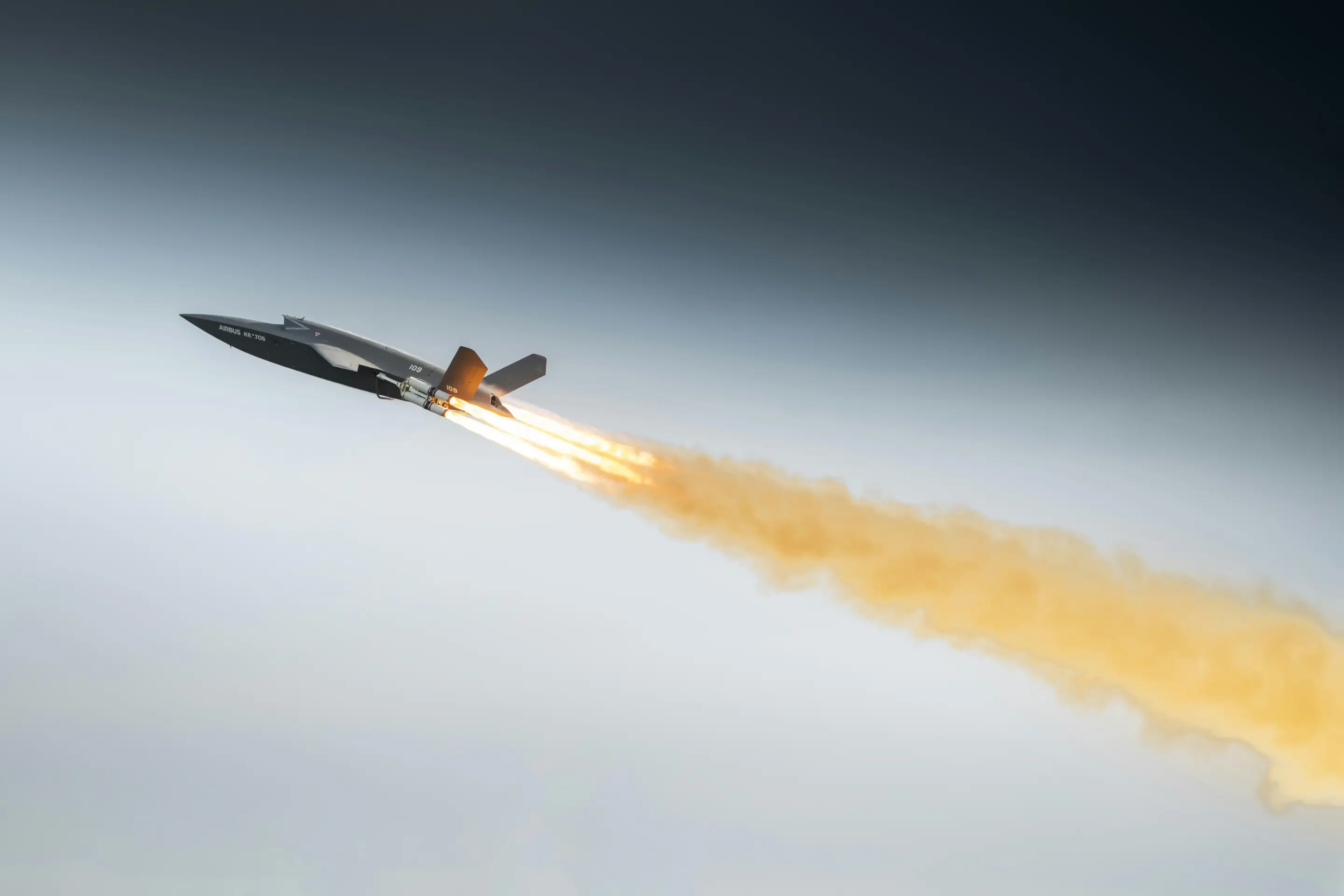
This test verified the rocket-assisted take-off, flight maneuvers at different altitudes and speeds, and the ability to adjust mission instructions during flight. The two companies hope to provide combat-capable unmanned collaborative combat aircraft to the armed forces of Germany and other European countries by 2029.
U740-Valkyrie belongs to the "Collaborative Combat Aircraft (CCA)" that has attracted much attention from the military in recent years, and is also often called the "Loyal Wingman". This type of unmanned aircraft is not simply used for reconnaissance or independent missions, but is designed to be a collaborative combat partner of manned fighter jets. It can perform tasks together with fighter jets, undertake some high-risk operations, and expand the combat range and mission capabilities of manned aircraft.
As the air combat environment becomes increasingly complex, the air forces of various countries are exploring how to increase the number of deployable aircraft through unmanned combat platforms while reducing the risk of pilots being directly exposed to dangerous environments. Compared with traditional manned fighter jets, unmanned collaborative combat aircraft are expected to reduce the personnel cost of some tasks and play a role in reconnaissance, electronic warfare, target identification and strike missions. In the future, they may also be uniformly commanded by pilots of manned fighter jets to form a formation in which manned aircraft and unmanned aerial vehicles work together.
A major feature of this first flight is that it uses rocket-assisted take-off and does not rely on traditional runways. The aircraft quickly took off under the action of the booster device, then entered normal flight status and completed test actions at different altitudes and speeds. Airbus said the test flight achieved its intended goals, proving that the platform has the foundation for further complex flight tests.
The U740-Valkyrie has a body length of about 9.1 meters, a wingspan of about 8.2 meters, a maximum take-off weight of about 3 tons, a range of more than 5,000 kilometers, and a practical ceiling of about 45,000 feet (about 13,700 meters). The aircraft has an internal weapons bay and external payloads can be installed under the wings, capable of carrying air-to-air or air-to-ground weapons. According to the public design, it can perform tasks independently or accept the command of manned fighter jets.
The basic body of this drone comes from the XQ-58A Valkyrie developed by Kratos in the United States. The platform was originally designed with relatively low cost, strong mission flexibility and less reliance on traditional airport facilities. Airbus did not develop a brand-new aircraft from scratch. Instead, it added a European autonomously controlled mission system based on a mature American airframe to shorten the development cycle and meet the requirements of Germany and other European countries for national defense technology autonomy.
This is especially important for Germany. In recent years, European countries have become increasingly concerned about the dependence of key military equipment on foreign suppliers, hoping to have independent control over mission software, data and combat systems even if they use aircraft manufactured overseas. The U740 project attempts to use off-the-shelf airframes to shorten development time while keeping mission planning, software control and autonomous coordination capabilities in European hands.
To achieve this goal, Airbus is integrating a mission system called MARS (Multi-platform Autonomous Reconfigurable and Secure) into the U740. The system, which the company calls the aircraft's "European brain", is responsible for mission management, autonomous flight mission execution and coordination between multiple drones. Airbus said MARS will use artificial intelligence-enhanced software to support autonomous missions, but key decisions must still be under human supervision to ensure operations comply with established rules of engagement and relevant legal and ethical requirements.
However, this first flight has not yet fully verified all the capabilities of the MARS system. The test flight mainly proves that the aircraft itself can complete basic actions such as takeoff, maneuvering and in-flight mission adjustment. Subsequent tests will gradually introduce MARS and further verify the capability of autonomous mission execution, formation coordination, and cooperation with manned fighter jets.
According to the plans of Airbus and Kratos, the next phase of testing will focus on mission system integration, and then promote coordinated flight with the European fighter jet. The company hopes to make the U740 ready for combat by 2029, but from the first flight to the actual formation of combat capabilities, it still needs to complete system integration, flight testing, weapon adaptation, personnel training and ground support system construction.
This means that the first flight of the U740 is an important engineering milestone, but it does not mean that Europe already has a mature unmanned wingman combat system. For a drone to truly become a cooperative partner of manned fighter jets, it must also prove that it can communicate reliably in a complex electromagnetic environment, understand and execute mission instructions, and respond in accordance with predetermined rules when abnormal situations occur.
In addition, the tasks that the German Air Force ultimately hopes to undertake by its unmanned cooperative combat aircraft are still being further clarified. Different missions have different requirements for the aircraft's range, stealth performance, weapon load, degree of autonomy and cost. If it is mainly used to accompany manned fighter jets to perform missions, the focus will be on collaborative control and task complementarity; if it is necessary to independently carry out strike missions deep into enemy areas, more emphasis must be placed on survivability, long-range mission planning and autonomous combat capabilities. Germany's final demand will directly affect the subsequent configuration and procurement scale of U740.
Competition is also taking shape in the European unmanned fighter market. In addition to the U740 of Airbus and Kratos, other companies and teams are also proposing relevant plans to the German and European markets, including plans based on the development of the Australian MQ-28 Ghost Bat, and unmanned combat aircraft projects promoted by local German companies. Competition between different options will not only involve flight performance, but also cost, delivery time, technical autonomy and future upgrade capabilities.
For Europe, the value of the U740 is that it provides a relatively fast technical route: first use an airframe that has been flight-proven, and then gradually add European autonomously controlled mission systems to avoid the time and cost pressure caused by developing the entire aircraft from scratch. But this also means that Europe’s degree of technological autonomy still depends on its ability to truly control the software, integrate its own weapons and sensors, and independently maintain and upgrade the system throughout the aircraft’s service life.
As coordinated operations between manned fighter jets and unmanned combat aircraft gradually become the development direction of the air forces of various countries, the first European flight of the U740-Valkyrie shows that this concept is moving from technical planning to actual testing. Next, what really determines the success or failure of the project will be whether the MARS mission system can be successfully integrated, whether the drone can effectively cooperate with the European fighter jets, and whether the entire system can meet operational requirements by 2029 as planned.
Comments