
Abstract:
The U.S. Navy and the British Royal Navy recently completed a landmark underwater weapons test. The Royal Navy's unmanned underwater vehicle "XV Excalibur" successfully launched a U.S. Mk 48 heavy-duty torpedo training bomb. This is the first time among allies that a British autonomous unmanned submarine has launched a US heavy torpedo test, showing that the United States and the UK are further promoting the integration of unmanned underwater platforms and traditional submarine weapon systems.
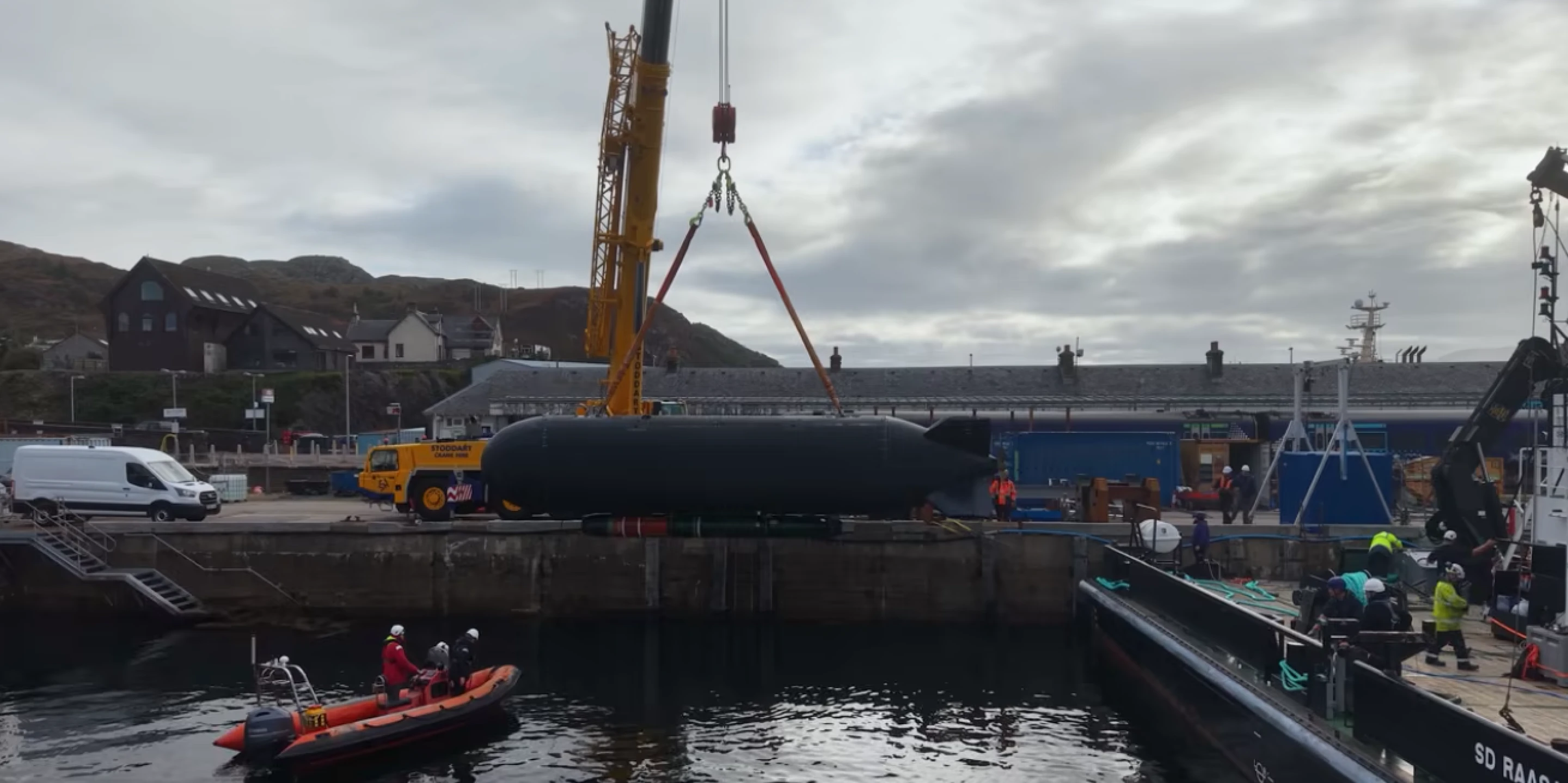
The test was conducted at the British Underwater Test and Evaluation Center (BUTEC) in Scotland. One of the core goals was to verify whether the unmanned submarine can use heavy weapons from another country's navy. The test platform was the British Royal Navy's XLUUV (Extra Large Unmanned Underwater Vehicle) XV Excalibur, and the launch was a US Navy Mk 48 heavy-duty torpedo training bomb.
This test is part of Pillar II of the AUKUS security cooperation framework between Australia, the UK and the US. The first pillar of AUKUS mainly focuses on helping Australia obtain and eventually build conventionally armed nuclear-powered attack submarines, while the second pillar focuses on joint research and development and equipment interoperability of emerging military technologies such as artificial intelligence, quantum technology, and advanced autonomous systems.
Under the second pillar framework, the United States and the United Kingdom are promoting unmanned submarines to acquire combat capabilities that are closer and closer to manned attack nuclear submarines, while allowing the two navies to more easily exchange and use weapon systems between different platforms. This test is a direct reflection of this goal.
The Mk 48 torpedo itself is a typical heavy submarine weapon formed during the Cold War. This model entered service in 1972 and was originally used to attack high-speed, deep-diving attack submarines equipped by the Soviet Navy, including the Alpha-class submarines with titanium alloy pressure-resistant hulls.
Mk 48 weighs about 1.7 tons and is equipped with a PBXN-103 high-explosive warhead weighing 645 pounds and about 292 kilograms. Its maximum speed can reach 55 knots, which is about 102 kilometers per hour, its maximum range can reach 32 nautical miles, about 60 kilometers, and it can perform missions at a depth of about 800 meters.
Compared with the Mk 48, which was born in the Cold War era, the XV Excalibur represents the development direction of unmanned underwater warfare in the 21st century. This is an XLUUV ultra-large unmanned underwater vehicle, with a total length of about 12 meters and a displacement of about 19 tons. The design concept is to allow an autonomous unmanned platform to perform tasks collaboratively with manned ships and submarines.
This test is therefore not only a demonstration of "unmanned submarine launching torpedoes", but more importantly, it verifies whether software, data interfaces, weapon systems and mission architecture can be quickly integrated between equipment from different countries. For the future unmanned underwater combat system, this cross-platform and cross-country interoperability capability may become an important component.
The US Navy revealed that the entire process took only 7 months from project approval to completion of testing. For traditional military projects, such development and testing speed is quite fast, and also reflects that the second pillar of AUKUS has increasingly emphasized rapid development and rapid verification of new military technologies in recent years.
U.S. Chief of Naval Operations Admiral Daryl Caudle said that this successful test is an important breakthrough in the field of undersea warfare for allied nations. The ability of the U.S. heavyweight torpedo to be launched by the British Royal Navy's autonomous unmanned underwater vehicle proves that the two countries are moving towards true weapons interoperability.
As weapons, mission loads and combat architectures can be more freely combined among allied platforms, the US, UK and AUKUS systems can use unmanned platforms to expand the scale of underwater operations in the future while reducing the reliance on manned submarines for some tasks. The test of XV Excalibur launching Mk 48 also means that unmanned submarines are gradually transforming from auxiliary equipment mainly focused on reconnaissance, detection and mine countermeasures to a frontline combat platform that can directly undertake weapons delivery tasks.
Comments