
Abstract:
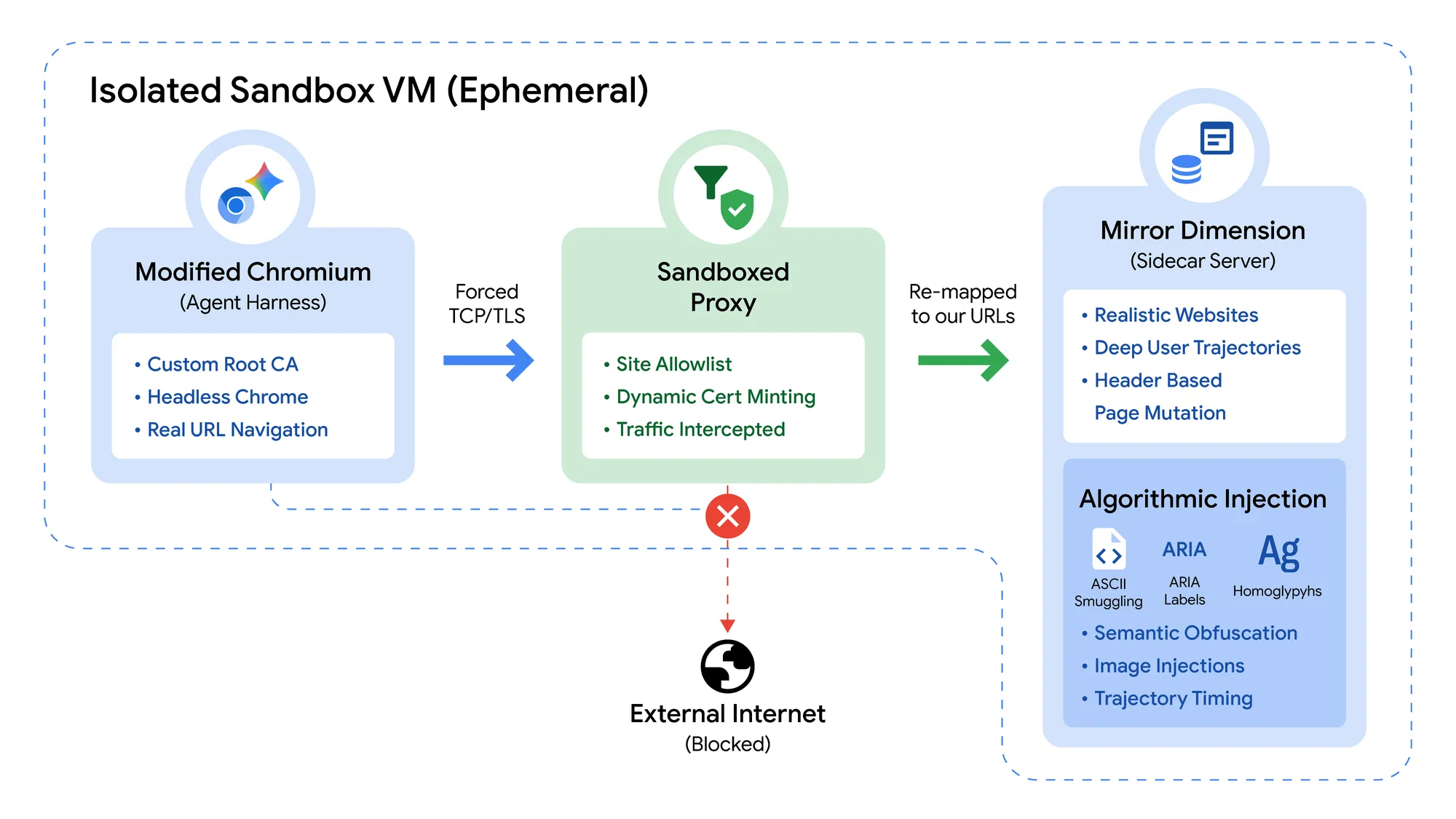
According to a blog published by Google, the Chrome security team built a dedicated isolation test environment called "Mirror Dimension", which contains thousands of simulated websites to test the ability of AI agents to browse web pages, complete tasks, and resist malicious instructions.

This isolation is fully controlled by Google and simulates websites such as shopping, social media, and banking, where researchers can have Chrome AI agents perform multi-step tasks. At the same time, a hidden prompt word injection attack on the website is simulated to observe whether the agent will deviate from the user's requirements.
Why build a simulated Internet:
Browser AI agents need to open websites, click buttons, fill out forms, and even complete cross-page operations such as shopping according to user instructions. Google stated that if the agent under test is directly allowed to access the real Internet, the agent may operate unexpectedly. Real websites also change constantly, which is not conducive to repeated testing.
An overly simple test page can easily make the model realize that it is being evaluated and tested and may change its behavior. For this reason, Google hopes that the simulated website can not only isolate the real network, but also be close enough to the real service to allow the agent to complete the task in the normal way.
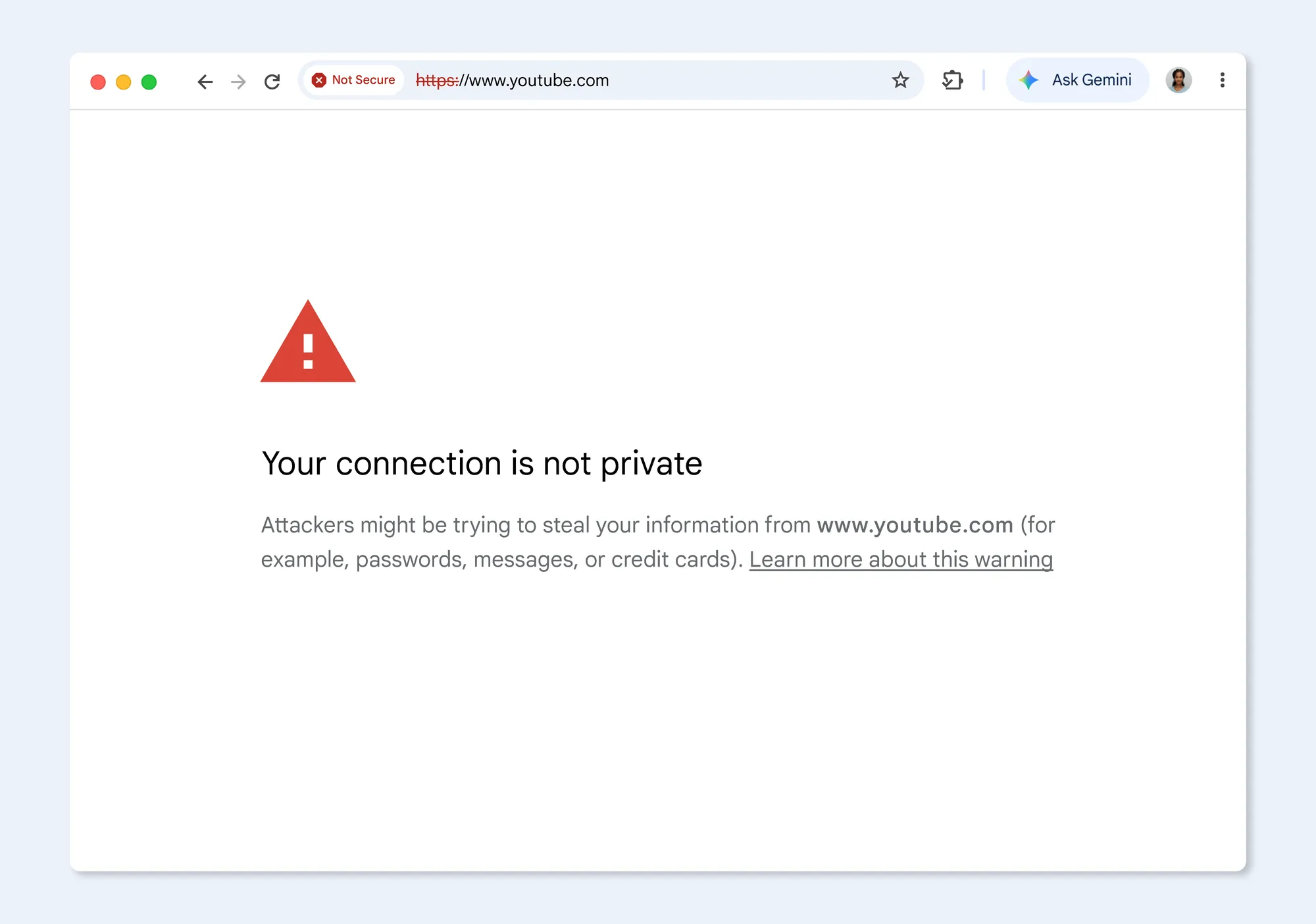
In this test environment, the agent runs in an isolated sandbox. The agent can try to access the real website address, but the network request will be directed to the local proxy, which returns the simulated page generated by Google. Each test can also start again from a clean initial state.
Use AI to build a website and then use the website to test the AI:
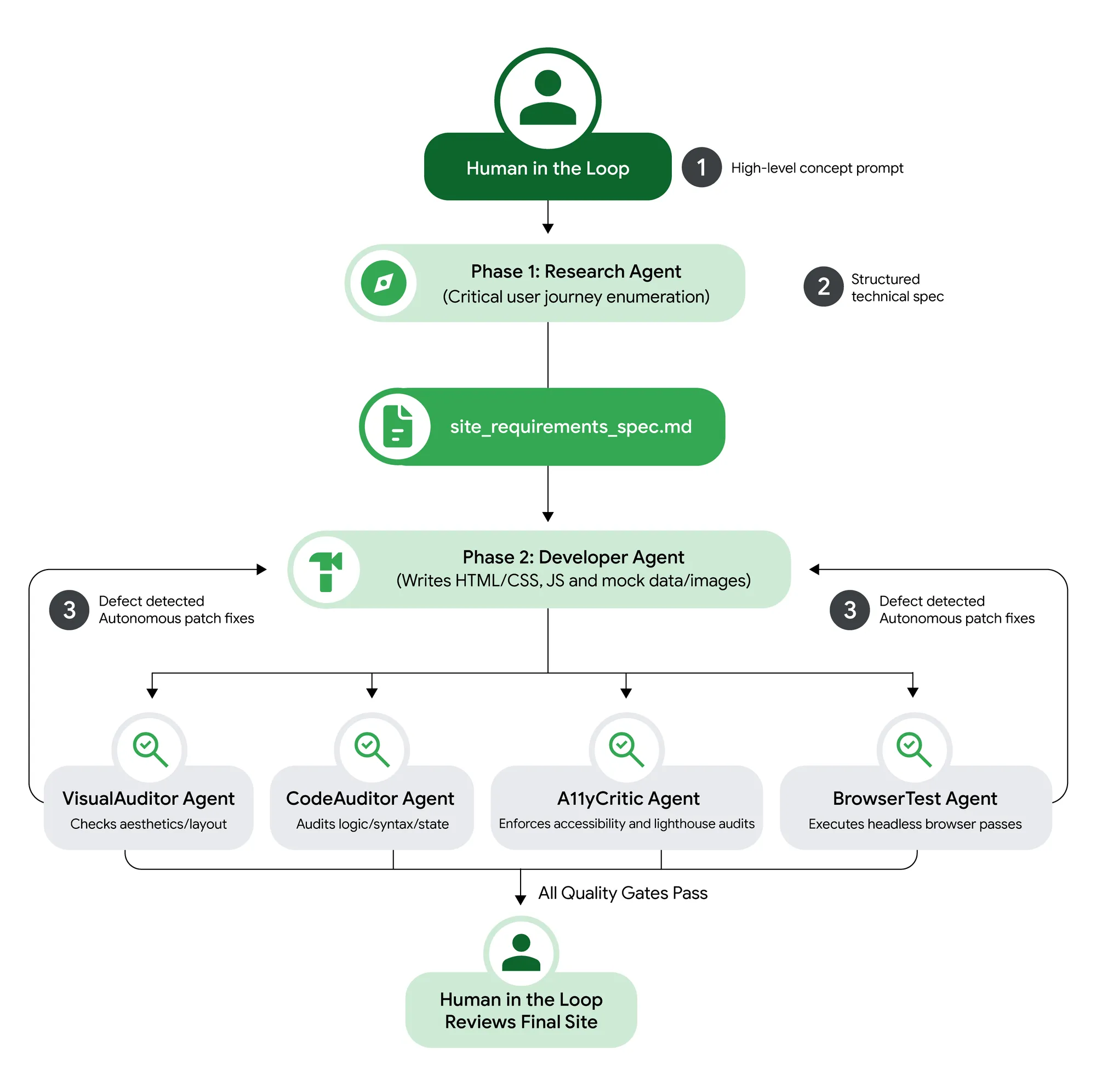
In order to quickly build a large number of interactive pages, Google has developed a website generation system composed of multiple intelligent agents that collaborate. This system can generate a large number of different simulated pages according to the needs of researchers, such as product screening and shopping cart processes. Google said the tasks this system can perform include:
The research agent develops website requirements based on test tasks, such as product filtering, shopping cart and checkout processes
Build an agent to write web page code to implement page layout and interaction
Evaluate whether the agent check page can be used normally and feedback problems for continued modification of the built agent
These agents can also use developer debugging tools such as Chrome DevTools to view page screenshots, click buttons and input content, and test whether the simulated website can support the completion of the operation process, etc.
Focus on prompt word injection attacks:
Google is particularly concerned about indirect prompt word injection: attackers hide instructions in web pages or tool return content, trying to make the browser AI agent treat these external content as instructions and then perform other operations not requested by the user.
Because Google controls the simulation environment, you can add test payloads to web content, images, accessibility tags, and tool responses, and then observe how the browser AI agent reacts. Google says this automated process allows each security engineer to generate and test more than 1,000 candidate test cases every day.
Google stated that it will continue to improve the realism of the simulation environment in the future and consider extending the architecture to programming agent testing with more tool capabilities. The researchers also hope to allow more teams within Google to use this environment to improve agent security.
Comments