
Abstract:
Google officially launched an AI shopping tool called Universal Cart (Universal Shopping Cart), trying to use artificial intelligence to change the way consumers shop online. On October 15, local time, Google announced that this feature has begun to be launched in the US market, with the first batch covering Google search and Gemini applications. Users can centrally save products from different retailers into the same shopping cart, and AI will assist in tracking price changes, monitoring inventory, looking for promotional offers, and recommending more appropriate payment methods based on the bank card's reward policy.
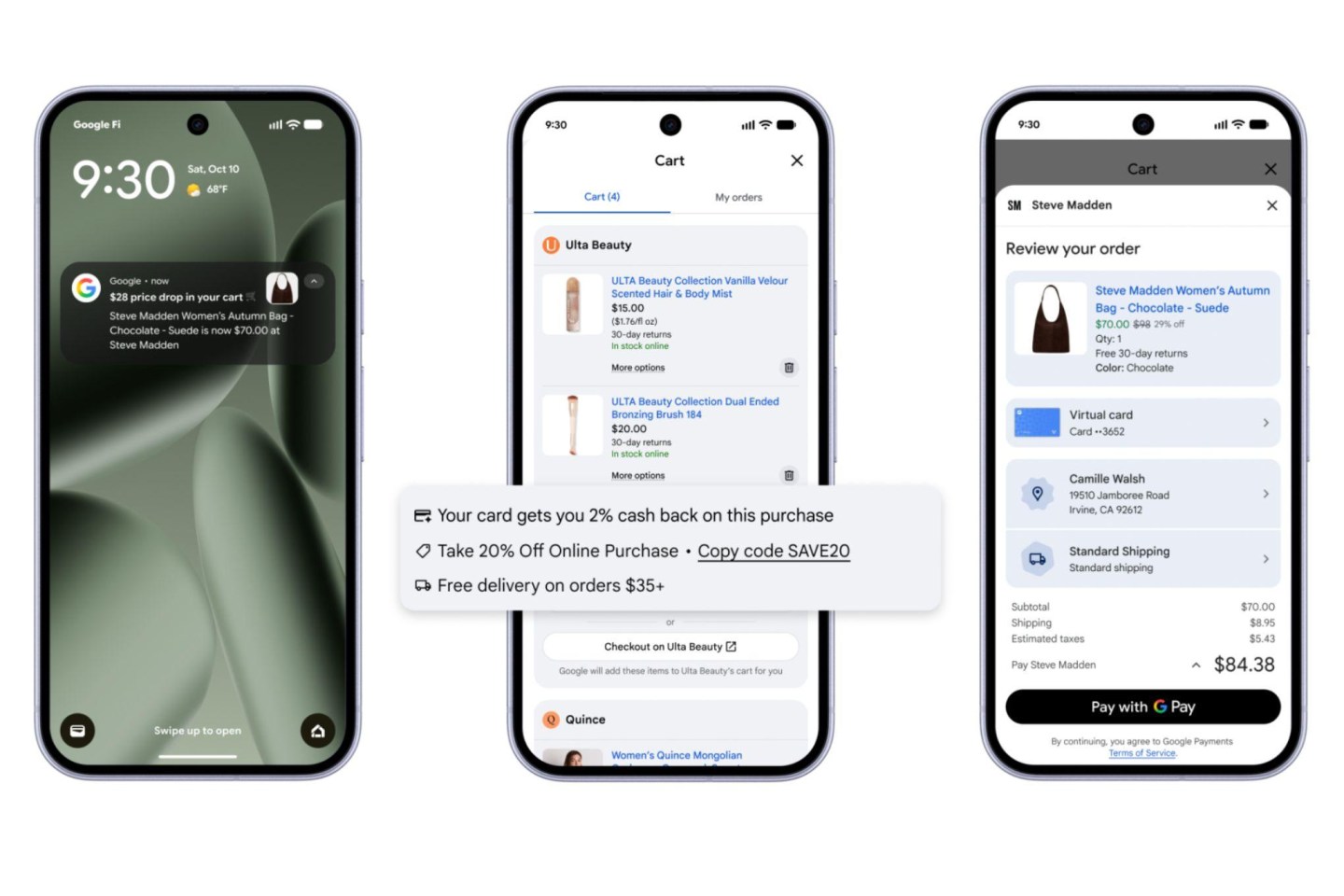
This feature was first announced at the Google I/O Developer Conference in May 2026. Unlike the shopping cart of traditional e-commerce platforms, Universal Cart is not limited to a certain store, but attempts to become a center for users to uniformly manage shopping plans within the Google ecosystem. Consumers can search for items on Google or talk to AI through Gemini to discover and select products, then save them to the same shopping cart without having to repeatedly switch between different websites and browser tabs.
A common problem that Google hopes to solve is that consumers often need to spend several days or even longer to complete a complex shopping decision. For example, a user might first find a laptop in a search engine, then look for accessories in another store, and then compare prices and promotions on different websites. Since products are scattered across different platforms, consumers not only need to record product information themselves, but also repeatedly check whether inventory and prices have changed. Universal Cart attempts to integrate these fragmented shopping activities and reduce the time required for users to manage shopping plans.
Price tracking is a core feature of Universal Cart. After the user adds the item to the shopping cart, Google can send notifications when the price of the item drops and remind the user when the out-of-stock item is back in stock. In this way, consumers do not need to open multiple retailer websites every day to check prices, but they can also know in a timely manner whether there is a more suitable time to buy the products they are interested in.
The system can also look for promotional codes related to shopping items and display the discovered offers next to the items. For consumers who are used to waiting for sales and comparing final sales prices in different stores, this will hopefully reduce the time needed to find coupons. However, the discounts discovered by AI do not mean that every coupon is definitely applicable to the user's order. The actual discount still depends on the merchant's usage conditions, product category and activity period.
Universal Cart also tries to help users solve product compatibility issues in cross-platform shopping. When Google previously introduced this feature, it used the example of assembling a personal computer: consumers may choose processors and motherboards from different stores separately, without realizing that the two use different socket specifications and cannot be used together normally. AI can combine the product information in the shopping cart to identify potential incompatibility issues and issue reminders before users place an order.

This ability reflects Google's positioning of the AI shopping assistant: it should not just be a digital list that saves product links, but should also be able to understand what consumers are buying and proactively discover problems that may affect the final purchase result. However, the accuracy of compatibility judgment still depends on whether the product information is complete, whether the model is correctly identified, and whether the system has sufficiently reliable technical specifications. For products of high value or involving complex technical parameters, consumers still need to check the official information provided by the manufacturer.
The payment link is another important design of Universal Cart. For merchants that participate in Google-related checkout services, users can use saved payment methods to complete transactions through Google Wallet; for merchants that do not support direct checkout within Google, the system can transfer the items in the shopping cart to the merchant's own website, where users can complete the payment.
However, although Universal Cart can bring together products from different merchants, it does not mean that users can combine products from all stores into one transaction and complete all orders at the same time with one payment. Different merchants still have their own checkout processes, ordering and delivery arrangements, and the actual purchase method depends on whether the merchant supports the checkout service provided by Google.
Google also plans to integrate Universal Cart with users' saved credit card information and their rewards benefits. The system can analyze the cash back, points or other benefits offered by different bank cards and help users determine which card may be more cost-effective when purchasing a certain item. For example, if one card offers extra cash back on specific spending categories and another card offers general points, the system can help users compare payment options based on related benefits.
This feature extends shopping decisions from product price comparison to actual payment costs. Choosing the right payment method can also sometimes lead to additional savings for consumers who frequently use multiple credit cards, loyalty programs or retailer loyalty programs. However, the final income still depends on the bank card terms, consumption category identification and whether there are any restrictions on related rewards.
In terms of service coverage, Universal Cart is currently launched to US users first, and initially supports Google search and Gemini applications. Google also plans to extend it to YouTube and Gmail, so that consumers can discover products from watching videos or reading emails in the future, and then save related products to a unified shopping cart. However, Google has not announced the specific launch time of these two integrated functions.
It is worth noting that Universal Cart is not Google’s first attempt to introduce AI into the shopping process. Previously, Google has provided product discovery and purchase-related functions in the AI mode in search and the Gemini application, and continues to build business infrastructure to support AI shopping agents. The universal shopping cart further connects product discovery, purchase plan management, price monitoring and payment options, trying to involve AI in more aspects of online shopping.
This development is also related to the Universal Commerce Protocol (UCP, Universal Commerce Protocol) that Google is promoting. The protocol aims to provide a common interaction method for AI shopping agents, retailers and payment services, making it easier for different systems to exchange product, shopping cart and transaction-related information. Google hopes to reduce the integration costs between different merchants and AI platforms through standardized technical interfaces and establish a foundation for a wider range of smart shopping services.
At the same time, competition in the AI shopping market is intensifying. Technology companies such as OpenAI and Meta are also developing AI tools that can assist users in finding products, comparing options and even making purchases. The e-commerce technology company Shopify has begun to promote more AI agents to access product information on its platform and explore ways for these agents to participate in shopping and transactions.
For these companies, online shopping is an important opportunity for generative AI to move into daily consumption scenarios. Unlike chatbots that simply answer questions, shopping assistants can directly participate in users' actual decisions and have the opportunity to influence product discovery, brand selection and final transactions. As long as users are willing to let AI take on more work, related services may become a new entrance connecting consumers and businesses.
But this change could also alter the relationship between consumers and retailers. If users mainly use AI assistants to discover products, compare prices and complete payments, then the functions of product display, brand promotion and customer relationship maintenance originally undertaken by the merchant website may be affected. Retailers need to consider how to use AI platforms to expand sales opportunities while continuing to control customer relationships and ensure that their products can be accurately displayed in different AI shopping systems.
For Google, the value of Universal Cart is not only to make shopping more convenient for users, but also to further consolidate the position of Google search and Gemini in consumer decision-making. When users integrate shopping plans, product collections and price tracking into Google's services, Google has the opportunity to play a greater role in the entire process from product discovery to final payment.
However, Universal Cart still has obvious geographical and merchant restrictions. The United States is the first market launched this time. Whether specific products can be checked out directly through Google depends on whether retailers participate and whether the products meet relevant requirements. Google has not announced a clear launch time for this feature in European markets such as Hungary, so it cannot be assumed that European users are currently able to obtain complete services.
Overall, Universal Cart represents an important step for Google in the field of AI shopping. It no longer just lets AI answer "what should I buy?", but tries to let AI help users continuously manage shopping lists, monitor prices and inventory, find discounts, and provide payment suggestions when purchasing. If these functions can operate reliably, future online shopping may shift from manual searches and comparisons between consumers on multiple websites to AI-assisted management of the entire shopping process.
However, whether AI shopping assistants can truly change consumption habits still depends on the accuracy of price information, merchant participation, convenience of the payment process, and users' trust in personal shopping data and payment information. Universal Cart has begun to be launched in the United States, but whether it can develop into a mainstream entrance to cross-platform shopping remains to be tested by subsequent market performance.
Comments