
Abstract:
Robbie Stein, Google's vice president of search products, recently confirmed that Google will remove the "Google Search" button that has been used on the homepage for nearly 30 years. This change means that users will no longer see this iconic click button when searching on the Google homepage in the future. Relevant adjustments have been pushed to users around the world starting from the desktop homepage.
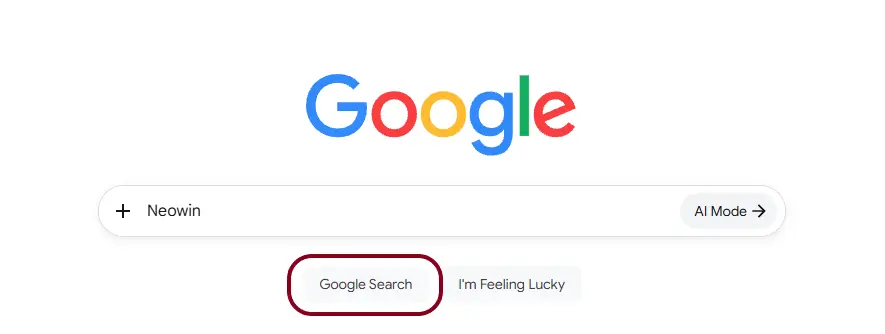
Stein said that the removal of the search button is to adapt to changes in the way users use search. Google has noticed that more and more users are asking multiple questions in a row and returning to previous searches to continue exploring the same topic, rather than treating each search as a separate query. The new homepage therefore puts more emphasis on continuity and a sense of conversation, trying to make the search experience closer to communicating with an artificial intelligence chatbot.
One of the highlights of this revision is the new foldable sidebar on the desktop homepage, which is used to display and quickly return to recent AI search records. Users can pick up right where they left off without having to restart a conversation each time. Google hopes to encourage users to view search as an ongoing conversation rather than a one-time keyword query.
The new homepage also further highlights AI tools. The page provides options for creating images, analyzing uploaded files, and brainstorming with Gemini, showing that Google is putting AI models at the center of the search experience. In fact, AI mode has previously replaced the traditional search button in the mobile interface, and this desktop revision is just a continuation of this trend.
This change has also drawn attention to website traffic. Some websites, including Neoven, pointed out that functions such as AI overview often allow users to obtain answers directly on the search results page, forming a "zero-click" search, thereby reducing visits to the original website. As AI capabilities take a more prominent position in searches, the traffic pressure faced by small publishers and content websites may further increase.
However, for ordinary users, removing the search button may not cause significant inconvenience. Many users are accustomed to pressing the Enter key directly after entering keywords, or clicking on the auto-complete suggestions to initiate a search, instead of moving the mouse to click the "Google Search" button. Therefore, this change is more of a symbolic change at the interface level. Behind it is the continuous transformation of Google search from traditional keyword retrieval to an AI-driven conversational experience.
Comments