
Abstract:
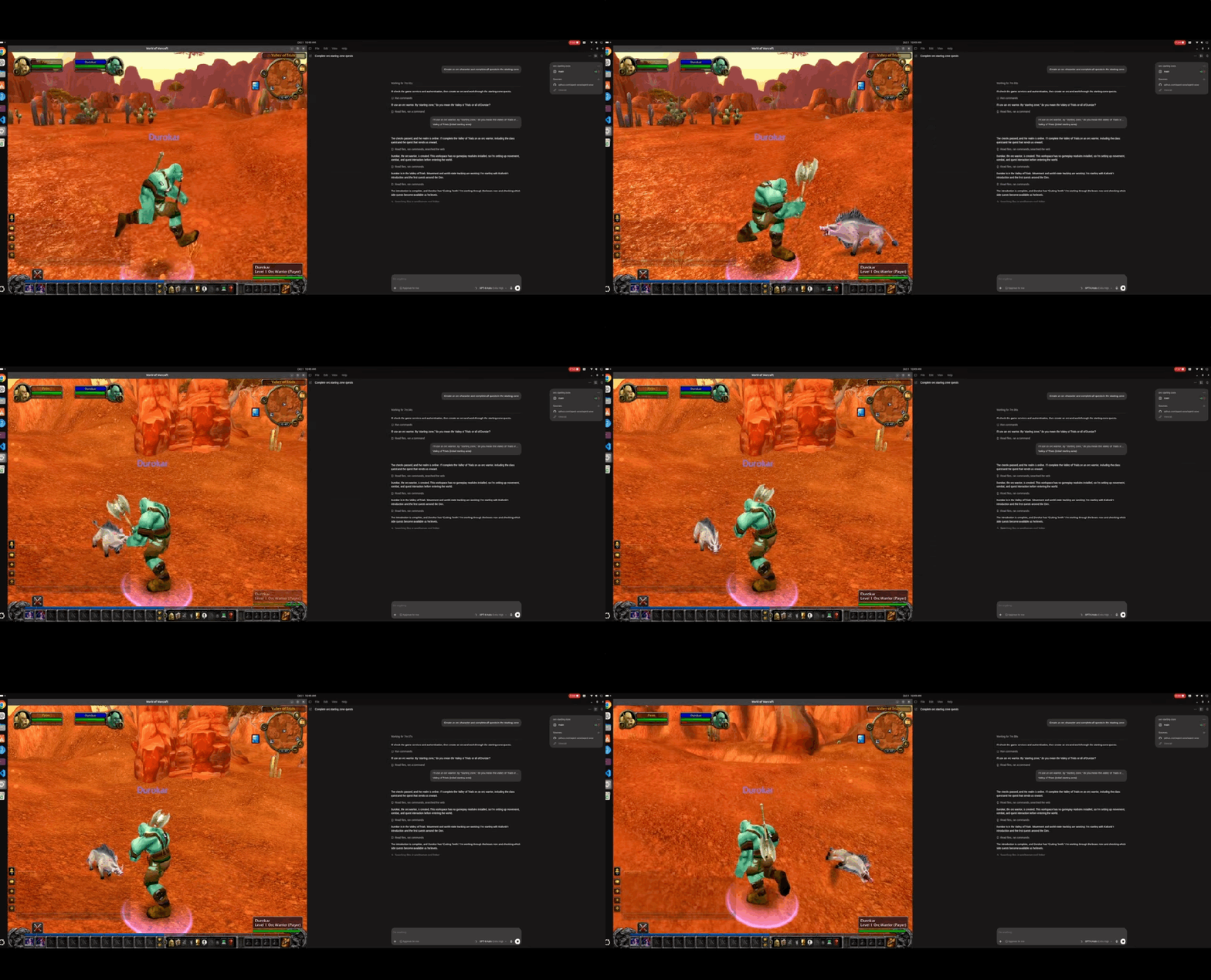
GPT-6 Astra completed the "World of Warcraft" Orc Novice Village in 40 minutes with zero deaths. The key is
it has never seen the game screen, not even a single frame
. An open source project called agent-wow connected it to a private World of Warcraft server.
Astra
Don’t look at the screen, directly read the network data packets at the bottom of the game
, spelling out the entire world from inside.Then it
makes its own tools, checks its own strategies, and plans its own routes
, completing tasks, selling garbage, changing weapons, learning skills, completing the entire "Trial Valley", and reached Sen'jin Village.Some people have tried using AI to play World of Warcraft before.
Several projects can be found on GitHub, including those using OpenCV and PyTorch for visual recognition, and those using LLM and screenshots to control characters, but basically they have not strayed away from the visual route.
Moreover, most of these projects are still at the stage of "being able to run and fight monsters", and there is no record of completing the complete task chain.
But the current agent-wow did not see the screen, and no one taught it how to play. It figured out the game by itself from the data.
What happened in 40 minutes
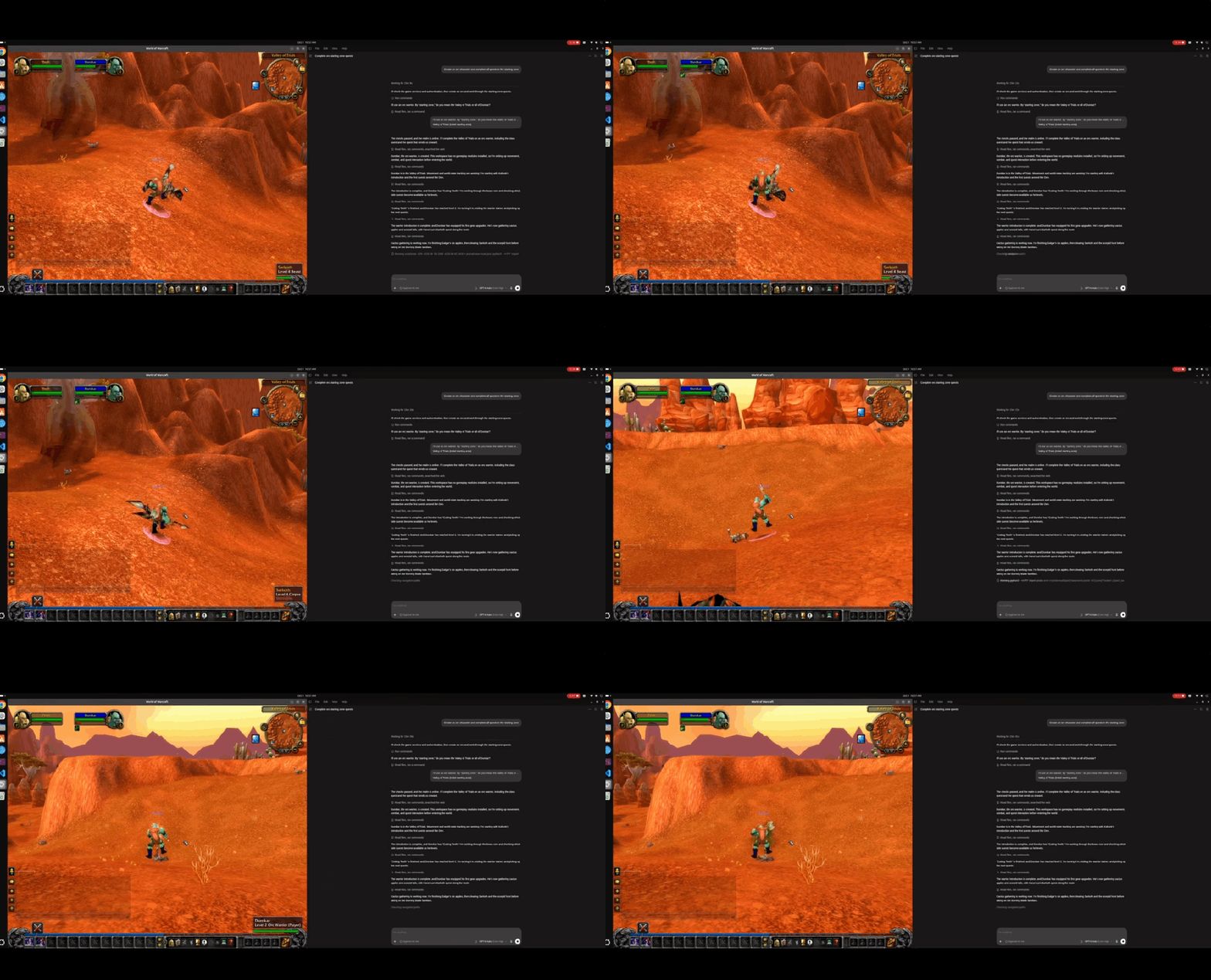
The Valley of Trials is the novice area for the orc race in World of Warcraft, and it is also the most classic opening of the entire game.
Since its launch in 2004, millions of players have chopped down their first wild boar, taken on their first mission, and learned the survival rule of "sell garbage first and then do missions".
It took Astra 40 minutes to complete all the tasks here.
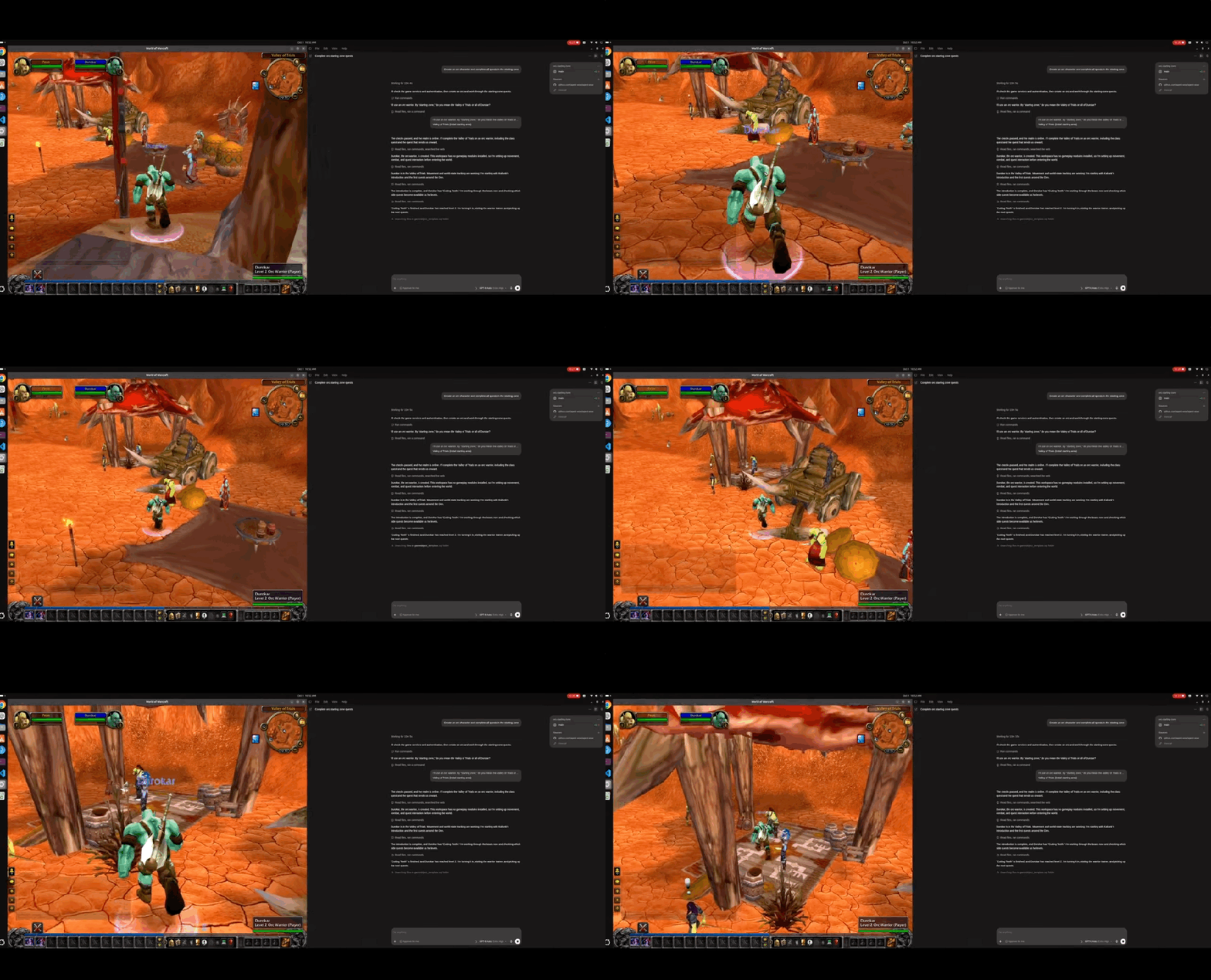
It advances sequentially along the preceding task chain without skipping a step. After each task is completed, it returns to the NPC to cross over and lead the next one.
On the way, it also judged which ones were dropped as garbage, sold them for money, and replaced them with weapons that were better than what it had.
Before entering the last cave, it did something that only experienced players would do, and ran to the trainer to learn new skills.
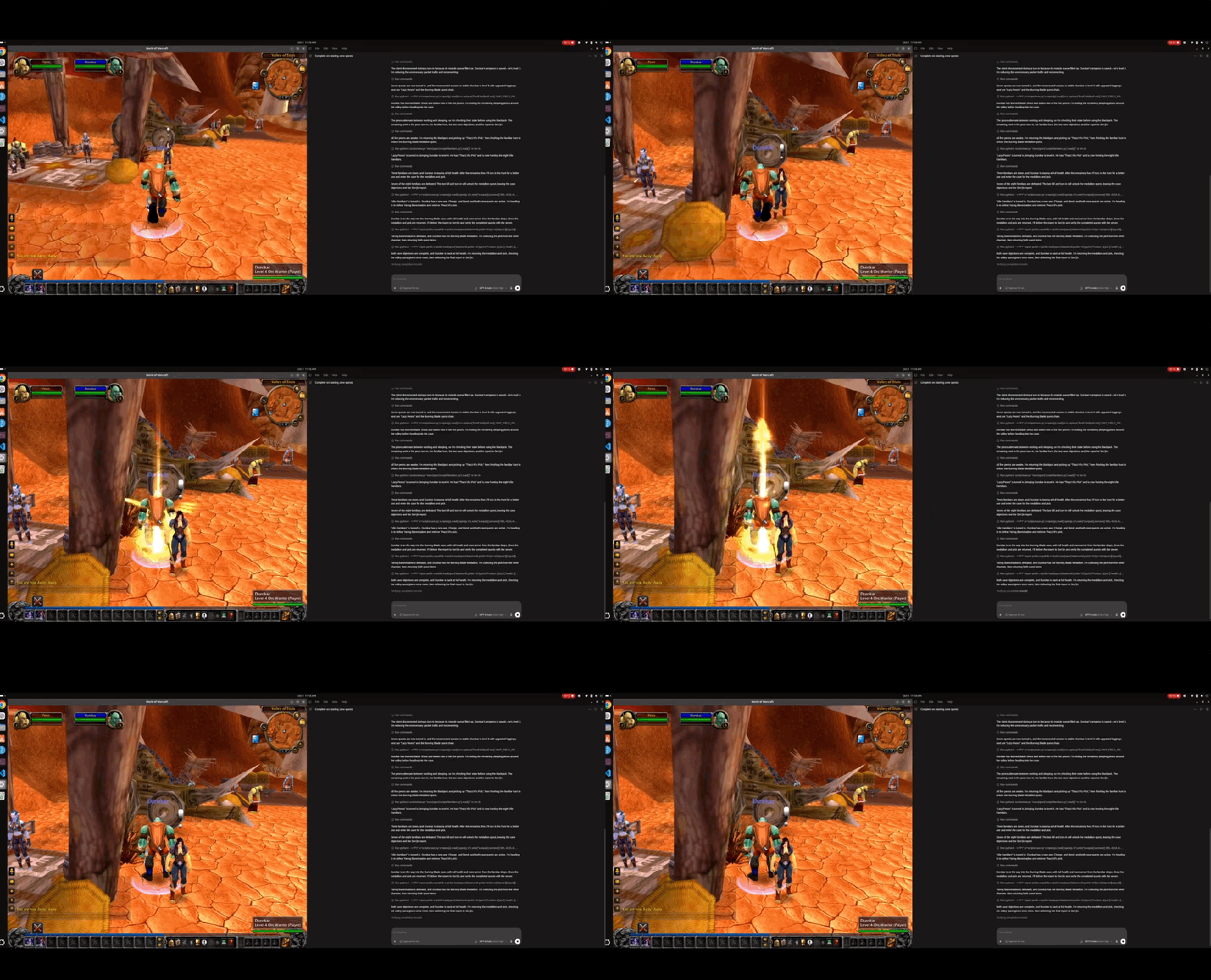
At the same time, it also accepts two tasks in the cave together. You can do both in one trip, saving you a trip.
This kind of operation of "prepare first and then enter the hole, multi-tasking in parallel" is not reflected in the prompt words. This is the optimal strategy Astra inferred from the task data and NPC positions.
There was another surprise in the middle.
Astra found that there are several areas on the map with missing collision detection. The game's navigation grid marks that you can walk there, but the actual terrain should have walls. It went right through the wall.
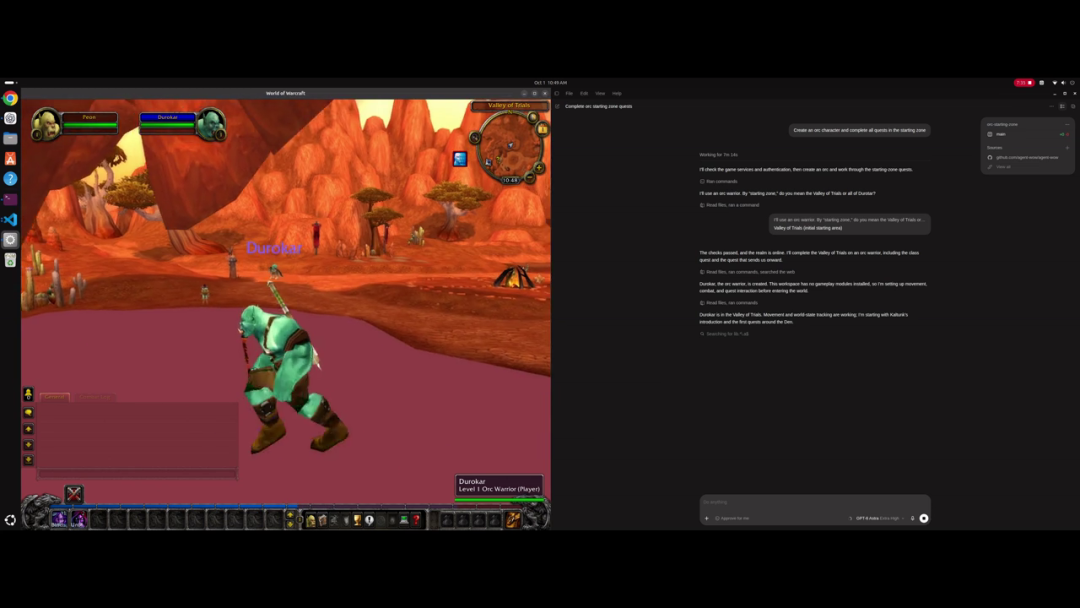
The developer mentioned that this is a bug exploit.
The navigation mesh is not exactly the same as the actual collision body. Astra doesn't know this is a bug and doesn't care. It just goes if the route is feasible.
Astra has zero deaths in the whole process. After all, it is a novice zone, and monsters are really not difficult.
But for an agent who has never seen a game screen, and has never been told to "learn skills before fighting monsters" or "sell garbage equipment", he can complete all tasks cleanly without getting stuck, getting lost, or running away to fight monsters he shouldn't fight. This result has exceeded that of many real novices.
Players who don’t look at the screen
The following is an introduction to how agent-wow works.
agent-wow is an open source framework, the bottom layer runs AzerothCore private server, and the client version is 3.3.5a.
Those who are familiar with Warcraft know that this is the final version of Wrath of the Lich King, the 2010 client.
The interesting thing about agent-wow is that it does nothing for the AI.
The framework does not define any game logic, does not help you defeat monsters, does not help you find paths, and does not help you accept tasks.
It only exposes a module system, allowing the AI to decide what capabilities it needs and create them by itself.
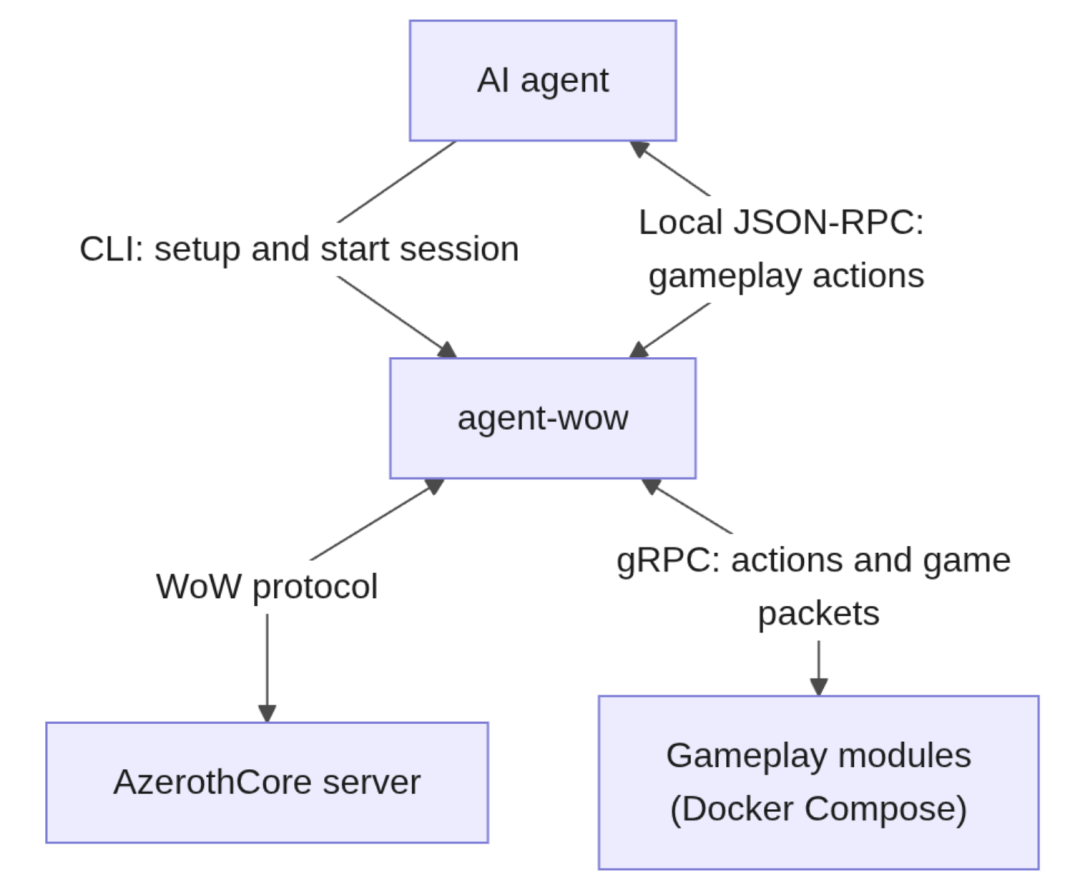
The developers say that this module system has reduced the complexity of agent-wow by at least an order of magnitude.
The frame is simple, but the model is not simple. Astra does not have a complete game controller at all, only a bunch of parts.
The first thing it did was build a perception system for itself.
It subscribes to 28 server message types, all of which are bottom-level data packets starting with SMSG_*, covering world status updates, creature movement, task triggering, combat values, and halo effects.
During the game, it uses a Python script to continuously poll these messages and parse the original data packets into a world model that is constantly refreshed in memory.
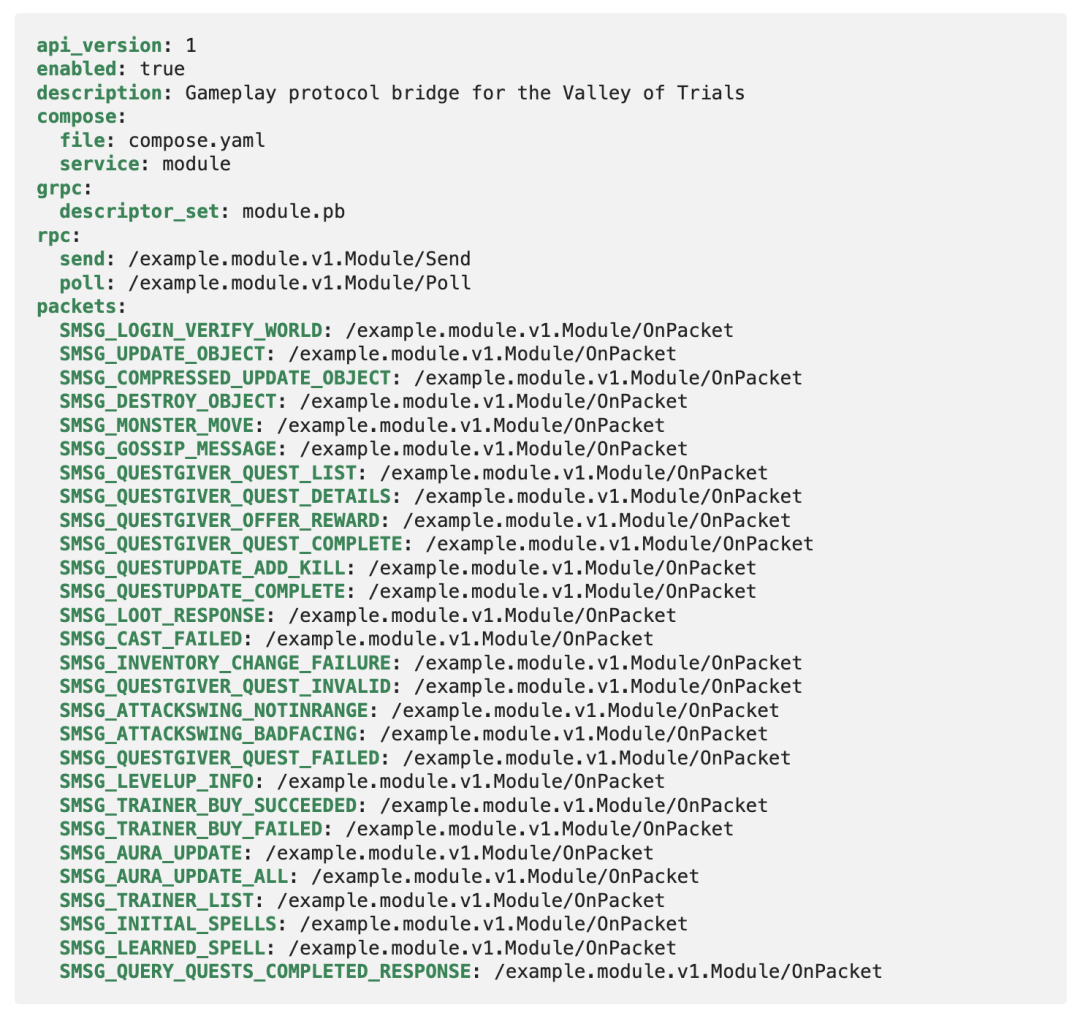
You see a wild boar running over on the screen. What Astra sees in the data packet is a creature movement message, with coordinates, direction, speed and health.
It looks at the same world as you, but from a completely different perspective.
The mission information is dug directly from the SQL database file of AzerothCore.
The requirements, pre-chains, and NPC spawn point coordinates for each task are all available in the database.
The developer compares this to a human player spending hours on Wowhead looking up strategies. The difference is that Astra skips the web page and directly reads the original database file.
Pathfinding is probably the best part of the whole thing.
Astra generated a C++ program by itself, using the Detour navigation library to load the mmaps file of AzerothCore.
MMaps is the navigation grid of World of Warcraft, which records which places on the map can be walked, which are walls, and which are water.
The program accepts the coordinates of the start and end points, calculates the accessible route, and outputs a string of path points in JSON format.
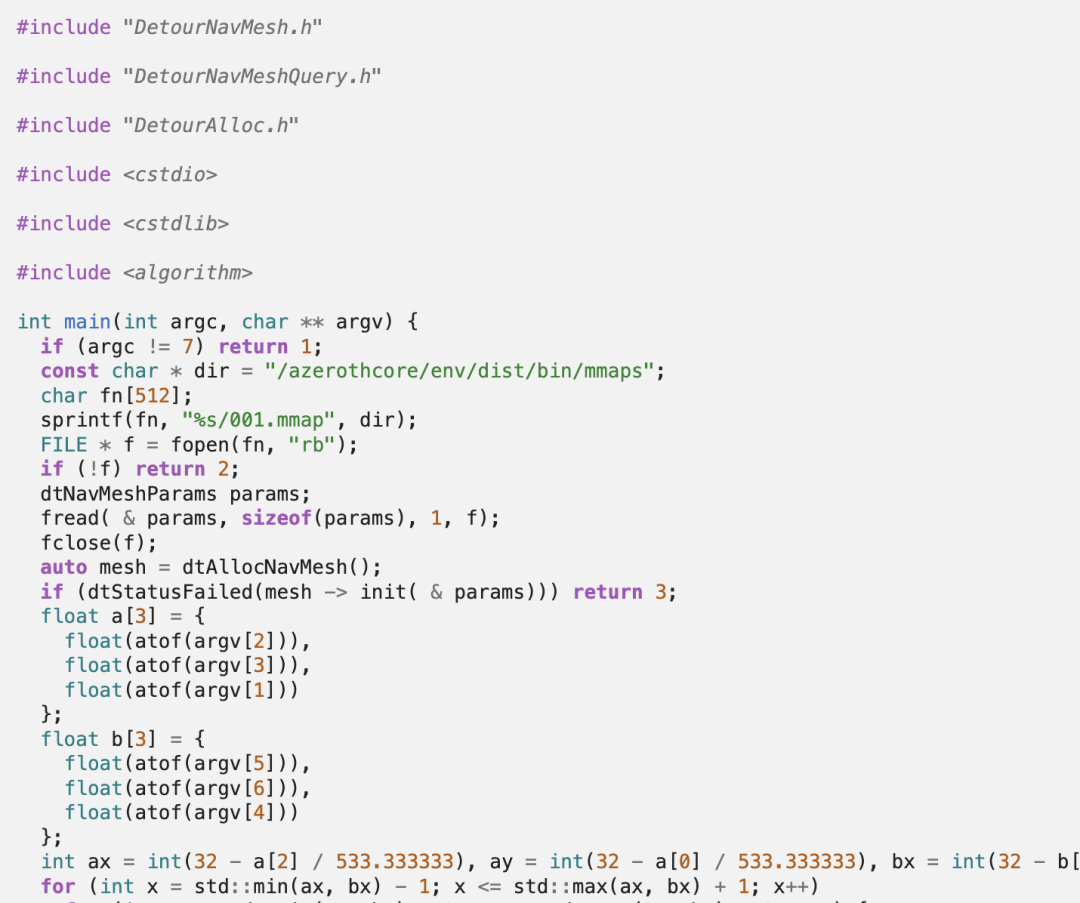
Astra wraps another layer of Python outside this program to call this executable file, get the path, and send mobile data packets.
The developer only used one Codex prompt word to start the whole process
, the reasoning intensity is set at the second high level, and Astra does everything by itself, from perception to action to pathfinding.The developer's next plan is to test two things. One is to see whether an agent can independently train from level 1 to level 80, and the other is to evaluate whether multiple agents can work together as a team to clear Icecrown Citadel Heroic Difficulty.
Icecrown Citadel is the ultimate dungeon of Wrath of the Lich King. It requires a team of 25 people to challenge. The complexity of its boss mechanism was considered the pinnacle of World of Warcraft at the time.
This dungeon requires human players to spend several months practicing equipment, memorizing strategies, and working together to pass it.
Now, the developers want 25 AIs who have never seen a game screen to try it out.
Comments