
Abstract:
A new study by researchers at The Ohio State University in the United States shows that monkeys, long thought to rely mainly on their upper limbs to move among tree canopies, also have excellent vertical tree climbing abilities. This discovery challenges the traditional view that only ape-like flexible ankles can efficiently climb trees, and also provides new clues to explore the movement methods of the most recent common ancestor of humans and chimpanzees.
Humans and chimpanzees diverged from a common ancestor about 6 million to 7 million years ago. The scientific community has been trying to restore the body shape and lifestyle of this most recent common ancestor: whether it moved more among horizontal branches at high altitudes, climbed up the trunk from the ground, or had both abilities. This question not only concerns the evolution of primate locomotion, but also helps explain how humans' iconic bipedal walking emerged.
In the past, chimpanzees were often seen as examples of vertical climbers. Their ankle joints can bend upward about 45 degrees when climbing trees, compared with about 20 degrees in most human ankle joints. Because monkeys generally do not have the highly flexible ankle structures of chimpanzees, researchers once tended to believe that they mainly rely on their arms and upper limbs to move in trees and have a weak ability to climb trees vertically.
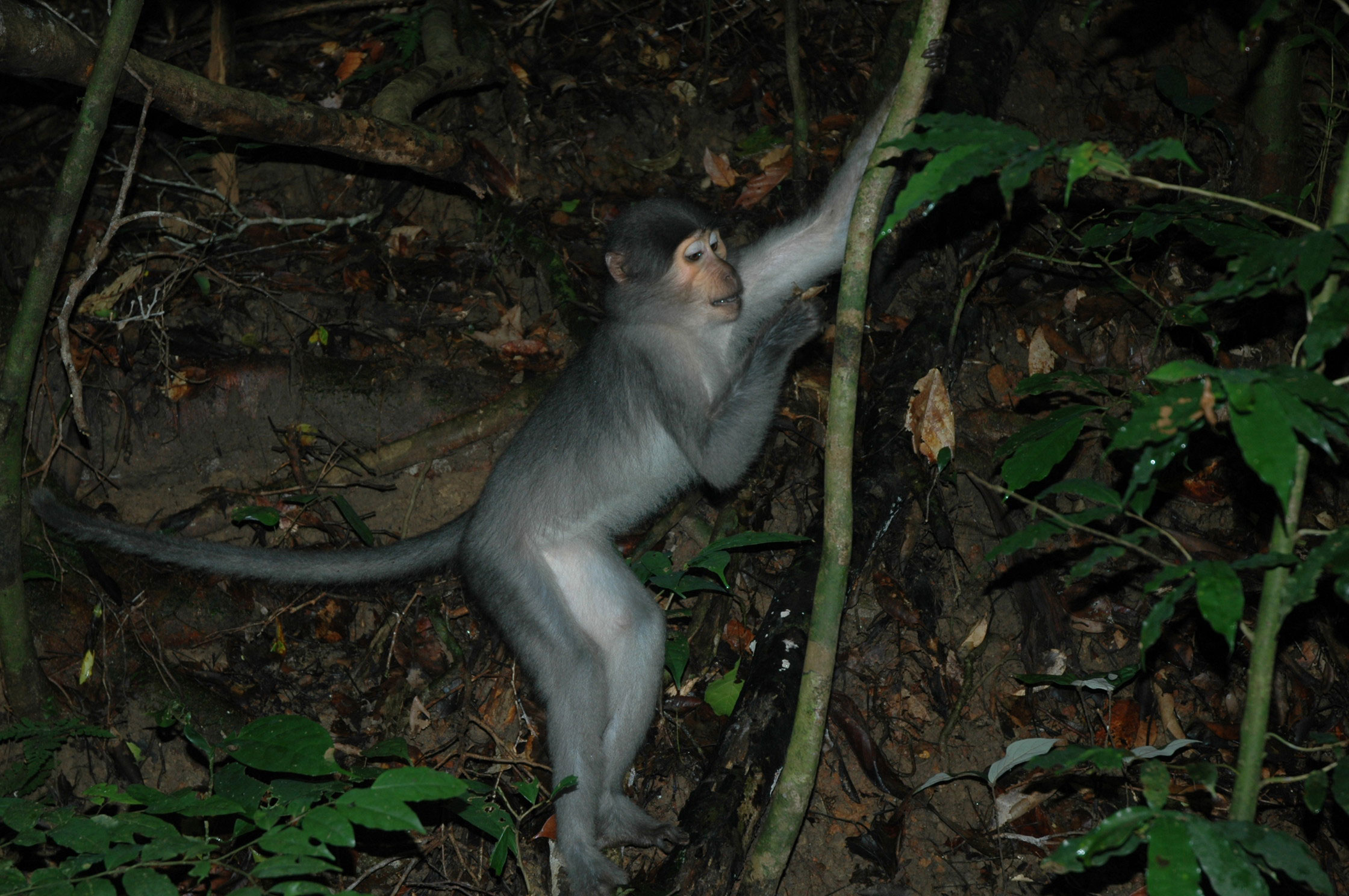
However, new evidence suggests that differences in foot structure do not necessarily mean there is a clear divide in climbing ability. The research team conducted video recordings and movement measurements of wild sooty mangabeys at the Taï Forest Monkey Project field station in Côte d'Ivoire. It was found that although the ankle joint of this monkey is not as flexible as that of chimpanzees, the bones in its mid-foot can bend sufficiently to allow it to climb vertically along narrow tree trunks to avoid risks, find food, or rest and sleep in trees.
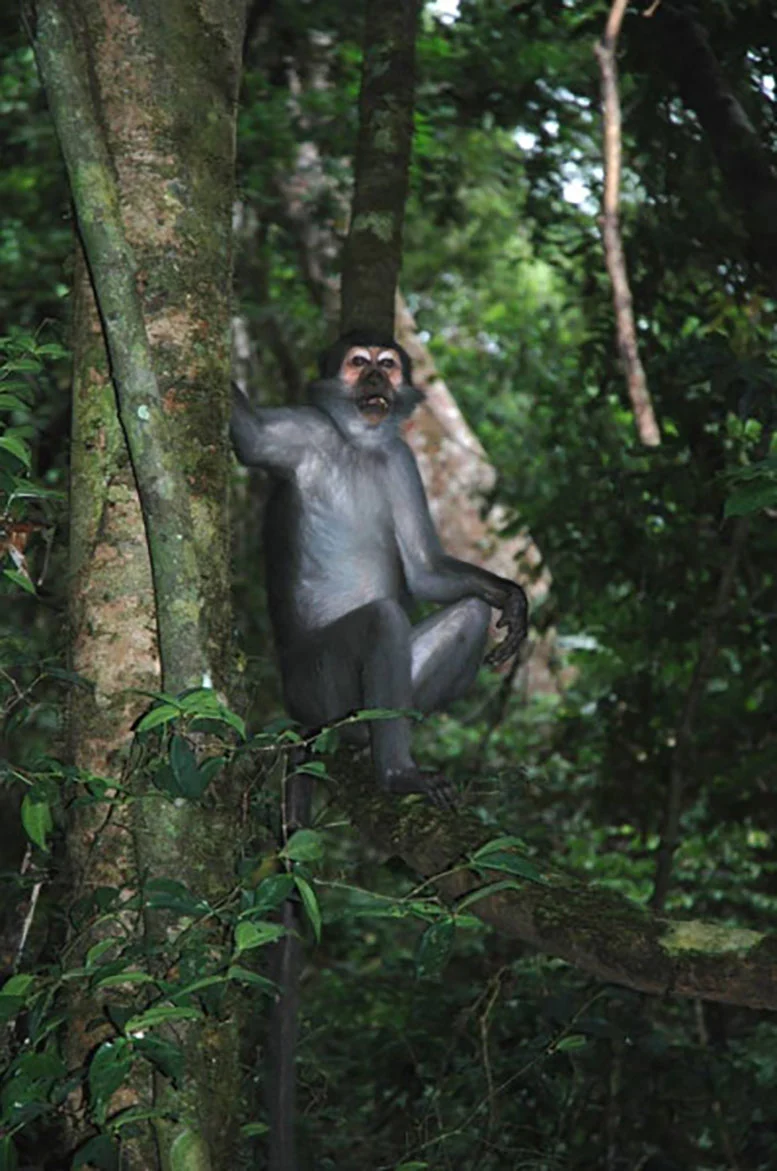
Research measurements show that when the sooty mangabey climbs vertically, the middle part of its foot can bend at 46 degrees, which is even slightly higher than the bending range of the chimpanzee's ankle, which is about 45 degrees. Luke Fanning, the first author of the study and an assistant professor of anthropology at The Ohio State University, said that researchers often infer the behavior of ancient primates based on fossils. Some people believe that monkeys cannot climb trees vertically as efficiently as great apes. However, this study shows that the two can achieve similar functional effects, so just because an animal does not have "chimpanzee-like feet" does not rule out the possibility of vertical climbing.
Relevant papers have been published in the Proceedings of the National Academy of Sciences. The paper points out that even if an early human ancestor had a foot shape closer to that of monkeys, it might still have the same tree-climbing ability as great apes. This complicates the debate surrounding the foot characteristics of the most recent common ancestor: some hypotheses suggest that it should have had a chimpanzee-like foot, while others favor a more monkey-like configuration.
W. Scott McGraw, senior author of the study and professor of anthropology at Ohio State University, said that on the one hand, the new discovery brings clearer evidence to the research, but on the other hand, it also makes the overall picture more uncertain. In the past, it was generally believed that to complete the difficult movement of vertical climbing, one must have highly evolved ape-like feet; however, various species of monkeys living in the forests of West Africa have proven that they can still perform this biomechanically challenging behavior even without this foot form.
The research team believes that high-definition images are an important foundation for this work. By analyzing the video, researchers can more accurately identify the forces and motion states of each joint during monkey climbing, instead of relying solely on observational impressions or speculation. McGraw pointed out that these images provide an early kinematic record of a monkey locomotor behavior that has long been ignored or underestimated in the past.
The study also noted that modern humans have not completely lost the ability to climb trees. Some contemporary hunter-gatherer and forager groups were also adept at vertical climbing, although their ability may have relied more on the flexibility of muscles, tendons, and ligaments than on the specialized structure of the foot bones.
Researchers emphasize that although the most prominent feature of modern humans is habitual bipedal walking, climbing is still part of the human behavioral spectrum. Arboreal life had a profound impact on primate body structure, including the hands and feet, wrist and ankle joints, and the replacement of claws with fingernails. In the future, if we want to further determine whether the most recent common ancestor of humans and chimpanzees was more like monkeys or great apes, we still need to discover and study more fossil evidence.
Comments