
Abstract:
In an interview on Tuesday night local time, Nvidia CEO Jensen Huang criticized Anthropic’s AI security antitrust exemption proposal, which is designed to collaboratively slow down the development of cutting-edge AI models, and refuted arguments that artificial intelligence may exterminate humanity within a decade.
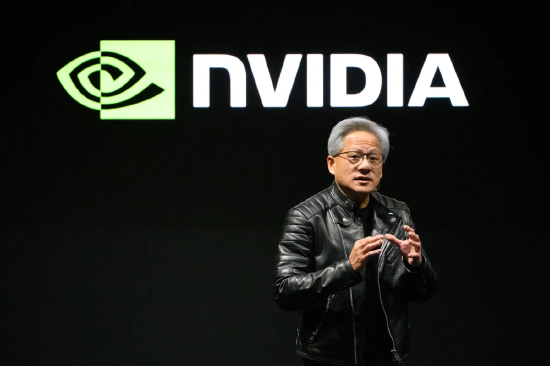
Huang Renxun made the above remarks in an interview with Jim Cramer, a well-known American financial anchor. Previously, Anthropic CEO Dario Amodei published an article last Saturday, triggering a heated discussion around artificial intelligence safety. Amodei proposed that leading AI laboratories should work together to "control the pace of cutting-edge technology development," which means intentionally slowing down the development of advanced models to allow companies more time for testing and safety protection. Amodei said the work may require government coordination or exemptions from relevant antitrust regulations.
Huang Renxun agrees that AI companies must pay attention to security issues, but he believes that companies should solve these problems on their own.
Huang Renxun said: "Some people think that we need to introduce new laws, new antitrust regulations or new regulatory regulations to allow these companies to do basic engineering and standardize research and development before releasing products. This is completely unnecessary. We already have sufficient legal and regulatory provisions to ensure the reliability and functionality of products."
In the article, Amodei proposed a three-step plan to slow down the pace of model development: The first step is to dispatch third-party security assessors to each AI laboratory. The second and third steps are respectively democratic, global collaboration around safety standards and “setting limits on the speed of unfettered AI development.” "Some collaborative methods that can effectively regulate the pace of technological development have legal obstacles and require government support."
Legal issues arise because leading AI labs are competitors and the models they launch are competing products. The Sherman Antitrust Act of the United States in principle prohibits competitors from reaching agreements that unreasonably restrict competition, and certain collaborative behaviors (including agreements to limit product output) may be illegal. If competing AI development companies jointly agree on the development or release speed of new models, potential legal risks will arise.
Huang Renxun said that model developers have the ability to ensure the safety of products before they are released.
"Security is an engineering issue, and testing is also an engineering issue." Huang Renxun said, "We should build products and fully test them. If the product has not yet reached release standards, then postpone the launch and continue testing and optimization until the product matures." NVIDIA is an important supplier of Anthropic and OpenAI, and NVIDIA itself has also developed the Nemotron series of open source weight models.
The AI craze has made Nvidia the world's largest chip manufacturer and the company with the highest market value. Relevant proposals to slow down the development of high-performance models may pose risks to Nvidia's future growth.
Huang Renxun told Cramer: "AI safety is a real problem. Creating products that can be used safely around the world cannot be underestimated. Companies should innovate as quickly as possible, but they must not launch products with security risks just for the sake of innovation."
Huang also pushed back against warnings that increasingly powerful artificial intelligence models will pose an existential threat to humanity.
He said: "Humanity will not go extinct in 2030. There are so many people in the world who will develop artificial intelligence correctly. We will establish various safety protection measures and invent various technologies for safety and security."
Related articles:
Huang Renxun called for relaxing external supervision of AI, saying that the industry has the ability to independently ensure security
Comments