
Abstract:
According to reports,
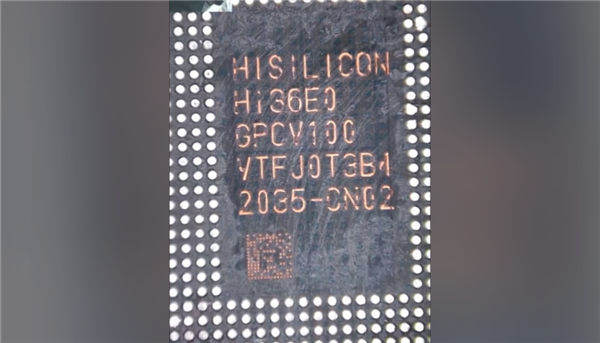
The latest report from US investment research institution Bernstein pointed out that Huawei's Kirin 9050 Pro chip has narrowed the technology gap between mobile chips and Apple to about three years, compared with about four years in the previous generation.
The chip is manufactured based on SMIC's N+2 or N+3 process, with a process level equivalent to 7nm.It does not use an EUV lithography machine, but improves performance through DUV multiple exposure and logic folding technology.
The Bernstein report shows that
Kirin 9050 Pro surpassed Apple's 3nm chip A17 Pro released in 2023 in the Geekbench 6 multi-core test.
Its multi-core performance is about 20% higher than the previous generation Kirin 9030 Pro.Architectural innovation is the core of this breakthrough. Kirin 9050 Pro uses logic folding technology under Huawei's Tao's Law framework to vertically stack logic units and achieve dense interconnection to shorten signal transmission distance.
This technology increases the transistor density from approximately 155 million to approximately 238 million per square millimeter, an increase of more than 50%.
This density level is close to TSMC’s original 3nm process.
While performance is improved, power consumption control is equally excellent. Under performance alignment conditions, NPU power consumption dropped by 66%, GPU power consumption dropped by 58%, and CPU performance core power consumption dropped by 41%.
Graphics and AI performance have improved significantly. Compared with Kirin 9030 Pro, GPU performance is improved by 39%, and NPU throughput is increased by approximately 150%. The chip is also better than its predecessor in terms of heat control.
Bernstein called this progress an "underestimated breakthrough" and believed that architectural improvements rather than process shrinkage were the key driving force for Huawei to close the gap.
The report also pointed out that yield and heat dissipation are still engineering challenges that need to be solved continuously in large-scale mass production of 3D stacking technology.
Comments