
Abstract:
A latest research report shows that researchers used IBM's latest quantum processor to complete an extremely complex computing task. The entire process took only 19 seconds. The research team estimates that if the exact same task was handed over to the world's top supercomputers (such as the Frontier supercomputer in the United States), it would take about 110 years to complete. This is considered an important milestone in verifying quantum advantage.
This experiment was led by theoretical physicist Tigran Sedrakyan of BlueQubit, an American quantum computing software company. The team chose IBM's latest Nighthawk r2 processor, which has 120 quantum bits (qubits) and is currently commercially accessible through IBM's cloud platform.
During the experiment, the researchers enabled 61 qubits and conducted a random circuit sampling test of up to 40 cycles. This is a benchmark test specifically designed to measure the capabilities of quantum computers. It requires the quantum system to perform random and complex operations. Due to the exponential increase in the amount of operations, it is extremely difficult for traditional computers to reproduce the same results.
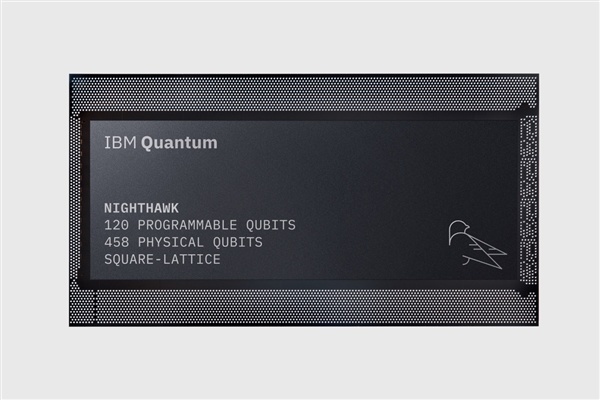
Test data shows that Nighthawk r2 generated 1 million computing samples in these 19 seconds.
Random circuit sampling has been regarded by the industry as a standard test to verify quantum advantage for many years. In 2019, Google also announced that its 53-qubit Sycamore processor took 200 seconds to complete a computing task. At that time, it was estimated that traditional supercomputing would take 10,000 years to complete the calculation.
Sedrakyan and the research team emphasized that this is the first time that the scientific community has demonstrated quantum advantage through this type of benchmark test on a commercially accessible quantum processor, and it also shows that ordinary users who are not top quantum experts can also access such huge computing power.
It should be noted that this report has not yet been peer-reviewed. It was first published on the academic pre-written platform arXiv on September 23. The researchers also pointed out that the 110-year figure is an estimate based on a specific traditional simulation algorithm. If traditional computing technology and algorithms are improved in the future, the time gap may be shortened.

Comments