
Abstract:
According to a report by the National Public Radio (NPR) on October 26, hurricane forecasters are increasingly relying on artificial intelligence to make predictions, saying that this technology is rapidly changing the entire field. When the first hurricane of the Atlantic hurricane season formed this month, an artificial intelligence model's track predictions surpassed those of traditional models.
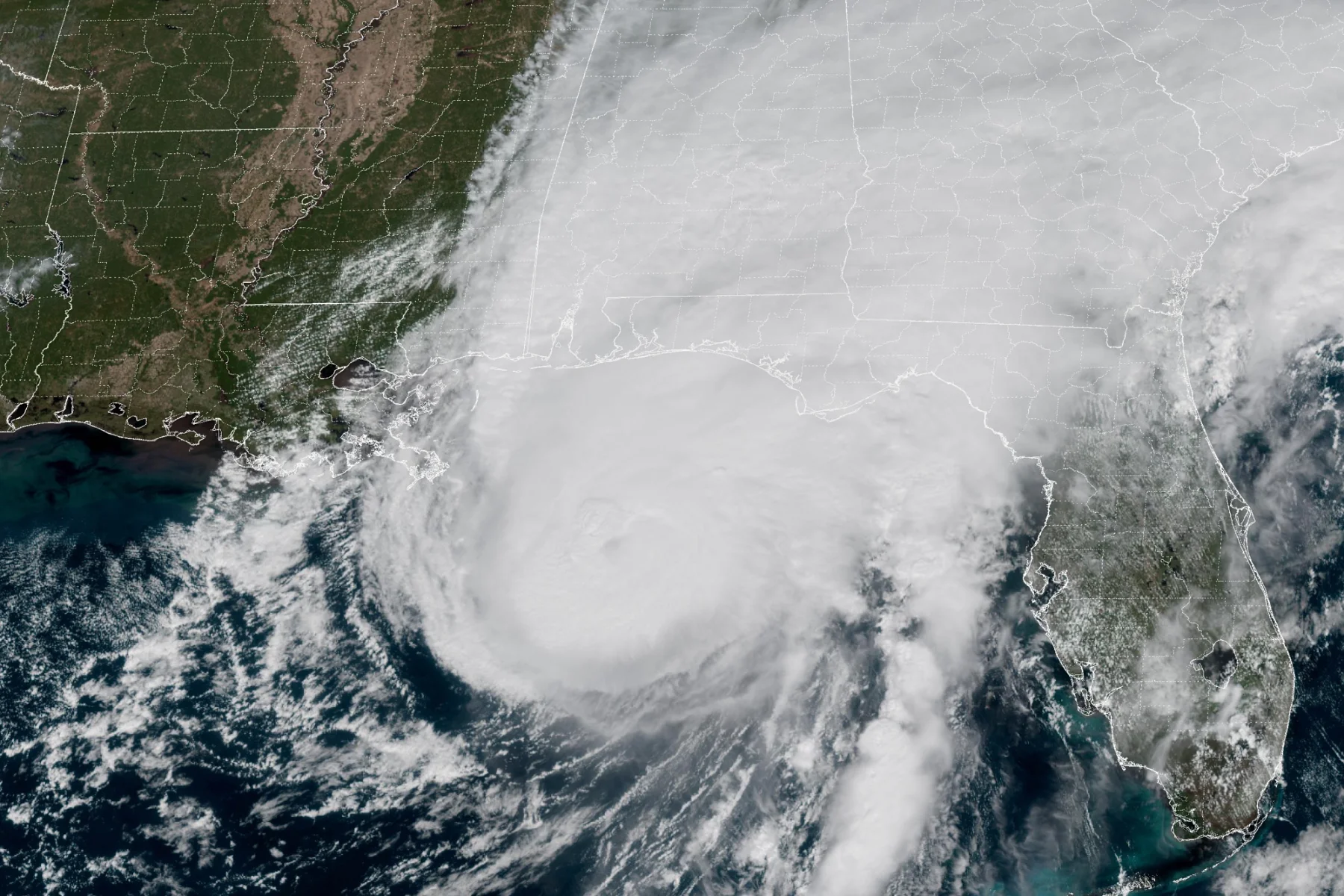
In early October, Hurricane Isaias made landfall near Destin, Florida, USA with Category 2 hurricane intensity. Conventional forecast models initially predicted it would continue westward toward southeastern Louisiana. And Google DeepMind's artificial intelligence model was right from the beginning: the hurricane would hit the western part of the Florida Panhandle.
"Google DeepMind, in particular, has really proven itself over the past few years to be the gold standard model." said Michael Lowry, a senior meteorologist and hurricane expert in Miami who has advised the Federal Emergency Management Agency and the National Hurricane Center. "That model is the best computer model we've ever seen, by a long shot. That's it."
The U.S. National Hurricane Center has incorporated Google DeepMind models into official forecasts for the first time since last year. By the end of the 2025 Atlantic hurricane season, it will already be one of the best models for predicting the track and intensity of storms, said University of Miami hurricane researcher Brian McNoldy. Often new models require years of polishing after introduction. "This is something we're not used to - a new model that just arrived quickly became the best model," McNoldy said. "It was ranked No. 1 almost as soon as it debuted, which is quite an achievement."
Traditional hurricane models based on physical laws rely on real-time atmospheric data measured by satellites and aircraft, such as temperature, humidity, air pressure and wind shear, and then use complex equations to predict the possible path and intensity of the storm. The AI model works very differently: It relies more on history, identifying patterns by analyzing thousands of past hurricanes and accompanying atmospheric data.
“The AI model actually knows nothing about the atmosphere other than the current picture.” Lowry said, “Other than that, it does not rely on the governing equations of atmospheric motion, that is, the laws of physics, to make predictions.” Lowry pointed out that most of the people who design and develop these models are not even meteorologists: “They are software engineers who are developing neural networks.” The so-called “neural network” is a set of computer algorithms that imitate the human brain and are trained to find patterns in massive amounts of data.
Thus, these models look like a "black box". "We don't know why they get it right and we don't know why they get it wrong," Lowry said. For meteorologists, relying on a system they don't fully understand can be unsettling, especially during storms when millions of people may be relying on its forecasts. "It makes us a little uncomfortable because we want to know why you got the right answer," McNoldy said. "And I feel like we don't know — at least I don't know."
However, not all AI models perform well. Lowry said there are a large number of untested weather forecasting AI models on the market. The two that have so far proven to be the most accurate, albeit with their own flaws, are models developed by Google DeepMind and the UK-based European Center for Medium-Range Weather Forecasts.
In predicting the path of Isaias, Google DeepMind's AI model beat traditional physical models, but it did not do a good job in predicting the intensity of the storm. Photos taken by The Associated Press on October 10 show people retrieving items from a collapsed houseboat in Destin after Hurricane Isaias.
Forecasters at the National Hurricane Center use multiple proven models, both artificial intelligence and traditional, when producing official forecasts. "Each storm presents different forecasting challenges," said Michael Brennan, director of the National Hurricane Center. "That's why we take an ensemble approach, using a mix of the best models." And it's still up to people to interpret the results of those models and decide what to tell the public. During an active hurricane, the National Hurricane Center issues updates every six hours. The models themselves sometimes change dramatically between updates, and forecasters must translate these wobbly predictions into clear guidance that people can act on.
“One of the big values that human forecasters provide is continuity,” Brennan said. “We use our expertise and understanding to translate hurricane forecasts into disaster information, and that’s what people really need to pay attention to.”
Scientists expect the technology to advance rapidly. Brennan said the Google DeepMind model still needs improvement. It outperformed other models in tracking Isaias' path but was inferior to the National Hurricane Center's mixed forecast in judging the storm's intensity. Brennan's team regularly provides feedback to Google DeepMind to help improve the model. Google did not respond to NPR's questions on the matter.
The "future of forecasts is always changing," Brennan said, and "it's never been one thing that's driving these advances." Not long ago, he noted, forecasters couldn't predict how strong a storm would be within two days; that has changed due to advances in forecast models and better data collected by satellites and aircraft. "In terms of intensity forecasts, the error is about half what it was during Katrina," Brennan said.
Meteorologist Laurie believes that what is exciting about AI is the speed of improvement. AI models can be updated in just months or even weeks, while traditional models can be updated at most once a year. “The advances they made in technology and hurricane predictions in one year were things that took us 10 or even more than ten years to achieve in the past,” Lowry said.
But even though AI is coming rapidly, Lowry said he is not worried that artificial intelligence will replace humans. "For me, I don't have some sort of existential crisis because of AI," Lowry said. "If anything, I think it's a boon to our industry."
Comments