
Abstract:
Nikon recently disqualified the first-place entry from its Small World in Motion microphotography competition because the entry did not comply with the contest’s rules regarding the use of generative artificial intelligence. As the authenticity of the work was increasingly questioned, Nikon launched a review of the participating videos and ultimately decided to revoke its title and adjust the competition rankings.
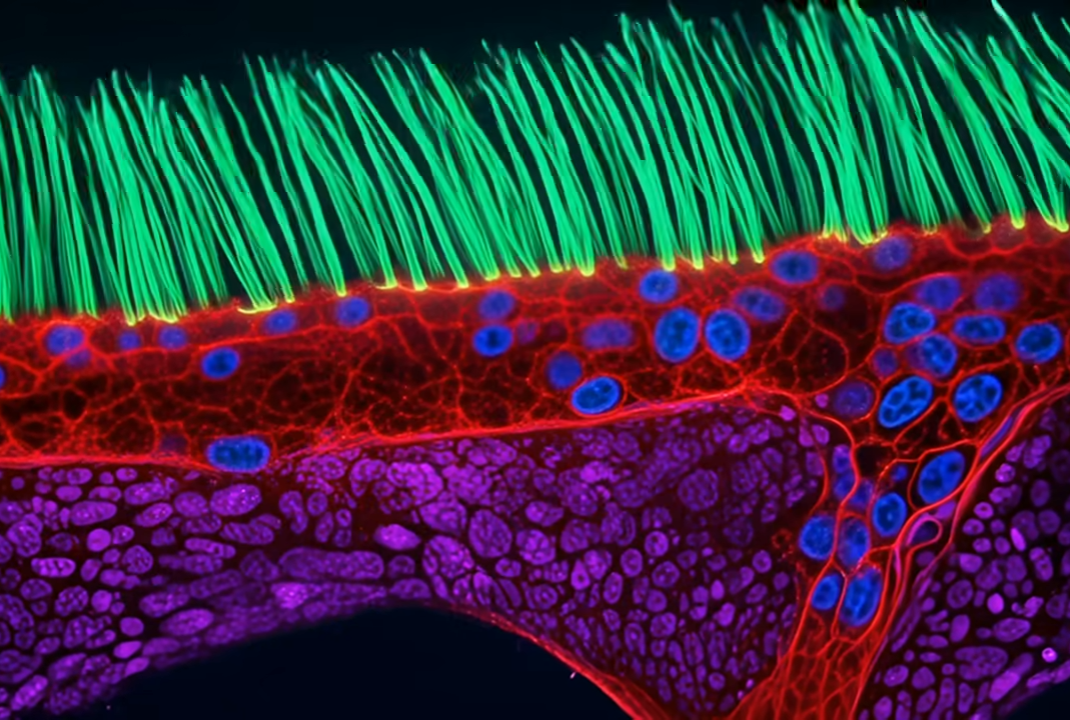
The controversial video, created by researcher Dr. Ning Xu, claims to show the movement of cilia in the airways of a child with primary ciliary dyskinesia (PCD). Primary ciliary dyskinesia is a rare genetic disorder that affects the normal function of cilia. Cilia are tiny hair-like structures on the surface of the human respiratory tract and other parts of the human body. They can help remove mucus and foreign matter in it through regular swings.
Nikon has previously announced a review of the work as the microstructure and movement presented in the video raised suspicion. As the controversy continued, Dr. Xu Ning later admitted on LinkedIn that he had used artificial intelligence technology in the image processing process.
Xu Ning said that he used an unsupervised neural network method to perform artificial intelligence-assisted post-processing on the grayscale images reconstructed by super-resolution optical imaging in order to distinguish and present specific structures in the images. This means that artificial intelligence is not just used for conventional image enhancement, but is involved in the process by which researchers ultimately display relevant microstructures.
Nikon believed that this approach violated the competition's regulations on the use of generative artificial intelligence and therefore disqualified the work. Currently, this video has been removed from the relevant competition page on Nikon’s official website. With the original winner's entry disqualified, the entry of Nguyen Nam Nhat from Vietnam rose to the top of the updated rankings.
Nikon stated in its response that the company will review the relevant rules and review procedures for future competitions to further clarify the boundaries of the use of artificial intelligence technology in entries. At the same time, Nikon also emphasized that the disqualification of the work should not be understood as a denial of Dr. Xu Ning’s personal professional reputation, scientific research contributions or creative intentions.
This incident reflects that the application of artificial intelligence technology in the field of scientific imaging is bringing new review difficulties. Neural networks can help researchers extract features, enhance details and improve visual presentation from complex microscopic images, but when algorithms are involved in image reconstruction and structure recognition, the extent to which the final picture reflects the original observation data becomes a question that must be taken seriously.
Especially in photomicrography and scientific imaging competitions, the work must not only be visually appealing but also faithfully represent real observations. If an AI algorithm changes the way a structure is presented, or makes details that were otherwise unidentifiable appear clearer, the process needs to be clearly explained and ensure that the final result does not go beyond what the original data can support.
Nikon's withdrawal from the championship illustrates that the scientific imaging field is working hard to draw the line between artificial intelligence-assisted processing and technical applications that do not meet competition specifications. As artificial intelligence tools increasingly enter the scientific research workflow, how to ensure the authenticity, verifiability and transparency of images while leveraging the advantages of algorithms will become a problem that relevant competition organizers and scientific research institutions must face.
Comments