
Abstract:
Today, the Indian Space Research Organization (ISRO) announced that
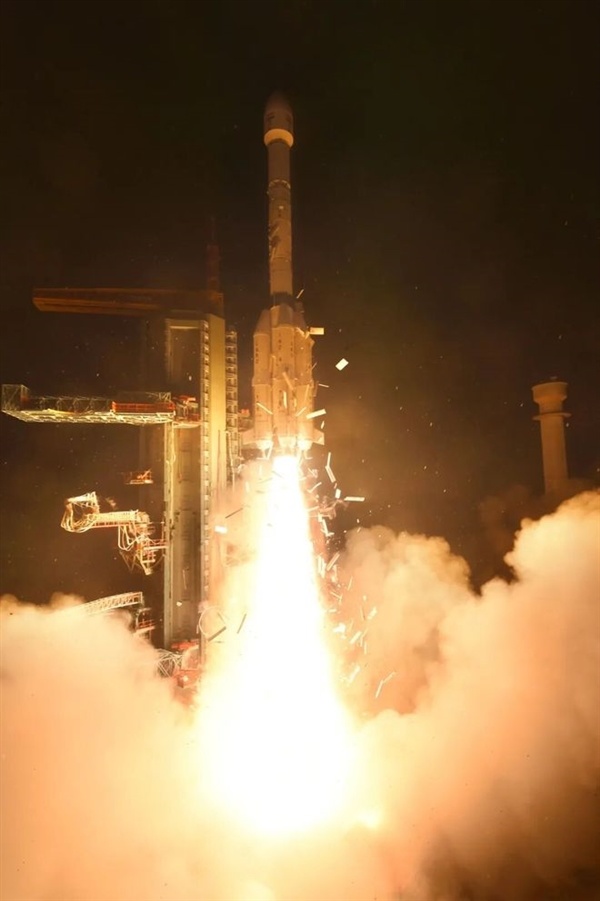
it successfully launched the EOS-05 earth observation satellite using the GSLV-F17 rocket.
This is India’s first imaging satellite designed to operate in geosynchronous orbit and has now entered its intended orbit.
GSLV-F17 was ignited and launched from the second launch pad of the Satish Dhawan Space Center in Sriharikota at 2:55 a.m. on September 4, local time, placing the EOS-05 satellite into a sub-geosynchronous transfer orbit (Sub-GTO).
This is the 19th flight of GSLV (Geosynchronous Satellite Launch Vehicle) and the 107th launch mission from Sriharikota.
ISRO Chairman Narayanan said that thanks to structural quality optimization and propulsion system improvements, the GSLV’s carrying capacity has increased from the initial 1,536 kilograms to this record-breaking 2,367 kilograms, an increase of 54%.
As of February 2026, India has a total of 21 earth observation satellites in orbit, but most of them are in low-Earth orbit or sun-synchronous orbit. The entry of EOS-05 into orbit has filled the gap in India's geosynchronous orbit imaging capabilities.
This launch also ended ISRO’s eight-month launch drought. ISRO's last launch was the PSLV-C62/EOS-N1 mission on January 12, 2026. Since then, it has entered a window period due to technical verification and mission scheduling reasons. GSLV-F17 was originally planned to be launched in mid-2026, but was postponed to September due to satellite payload testing and rocket system integration verification.
Comments