
Abstract:
There have been various judgments in the industry regarding how long the DRAM shortage will last. SK Hynix predicts that supply tightness may continue until 2030, Micron CEO believes that the situation will be worse in 2027 and 2028, and Dell CEO also made similar statements. However, the latest industry forecasts suggest this timeline may be overestimated.
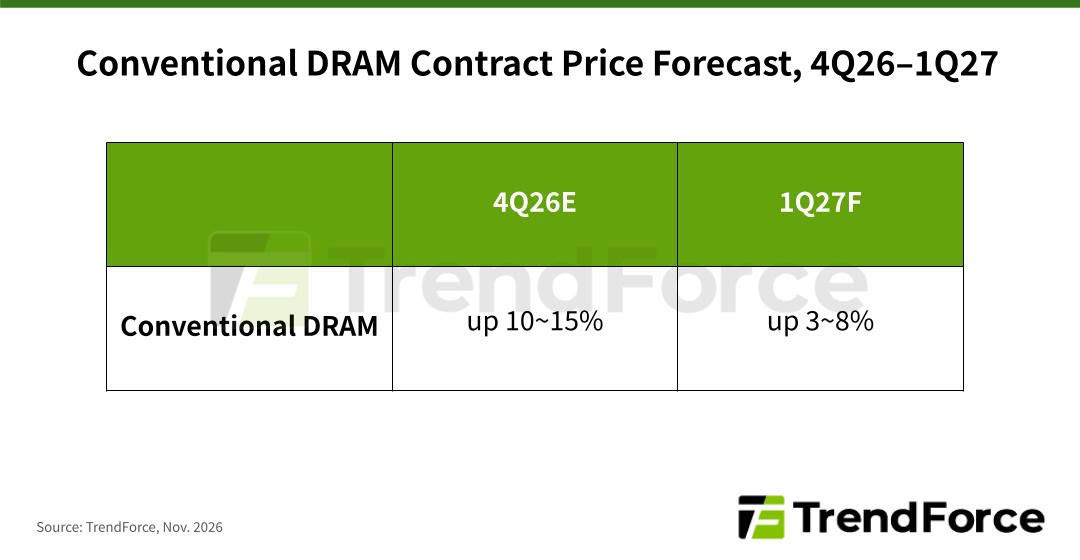
According to the latest report from TrendForce, DRAM contract prices may begin to stop rising and level off in the second half of 2027, and are even expected to decline in 2028. The report pointed out that since the beginning of the fourth quarter of 2026, all parties in the DRAM supply chain have been re-evaluating production and sales plans for 2027 and 2028, which has led to a slowdown in DRAM procurement activities.
The reasons for the slowdown in procurement involve many factors. Chinese cloud service providers reportedly began reducing server DRAM orders at the beginning of the quarter, but most of this supply was diverted to North American customers. In addition, the U.S. may adjust its stance on data center construction after the midterm elections, which also brings uncertainty. NVIDIA is also a variable, and the company may scale back its financing support for new cloud service providers.
TrendForce’s overall judgment is that the growth of server shipments will not start to slow down until 2027 at the earliest. At the same time, new production capacity and process migration are expected to drive growth in DRAM bit supply. This judgment is quite similar to that of Acer CEO Chen Junsheng, who has said that memory manufacturers may exaggerate the extent of the shortage to protect their profit margins.
However, this is still a forecast based on industry trends. There is still no definite answer as to when prices will actually start to drop for DDR5 memory kits purchased by consumers.
Comments