
Abstract:
U.S. President Trump previously stated that U.S. companies will face high taxes if they build data centers outside the United States. "There are many areas that are eager to introduce data centers. These places have excellent conditions, sufficient energy supply, and complete supporting facilities." Trump said at the end of an important event that week.
On the one hand, there is widespread opposition to data center projects across the United States, and on the other hand, the artificial intelligence industry itself is experiencing market turmoil; Trump's policy proposal also faces a more difficult practical problem, that is, the shortage of workers.
Across the United States, technology companies are competing for a limited number of electricians, plumbers, and other skilled construction workers. Only by relying on this labor force can they build the giant computing facilities that support the booming development of AI. The American Association of Builders and Contractors estimates that the construction industry will need a net increase of 349,000 new workers in 2026 just to keep up with market demand.
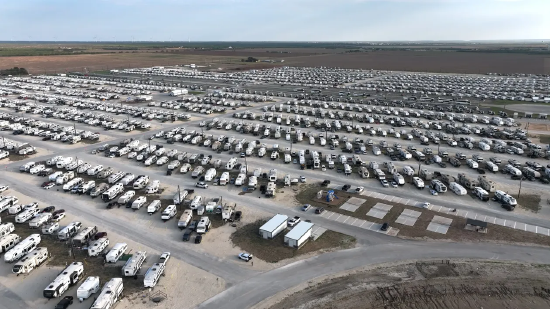
The labor shortage problem is evident in Abilene, Texas, where thousands of workers are pouring into the area to participate in the construction of large data center projects. RV campsites and temporary homes continue to expand to accommodate large numbers of migrant workers. However, local home builders and contractors have said that data centers are offering salaries that are much higher than local wages, resulting in a large loss of skilled workers.
For Abilene homebuilder Gene Lantrip, this construction boom is what he calls a double-edged sword. Data centers have brought new business opportunities and immigrants to the city, but at the same time, it has become harder to recruit workers and the cost of building housing has risen.
Since 2025, a large number of technical workers have poured into Texas to participate in the construction of giant data center projects owned by OpenAI, Oracle, and Japan’s Softbank, including the US$500 billion Stargate Project OpenAI data center. The vast grasslands around Abilene are now dotted with miles of construction sites, RV campsites and mobile housing to accommodate this new group of blue-collar residents.
Technology giants promote these giant data centers as necessary infrastructure for training and running high-performance basic large models. In order to put data center parks into operation as soon as possible, technology companies have offered generous salaries to recruit construction workers from all over the United States, attracting them to rural areas such as Richland Parish, Louisiana, where Meta plans to invest more than $50 billion in building data centers.
Lantrip said that thanks to the data center, Abilene's economic situation is improving. To accommodate the steady influx of new residents, his building business has been busier than ever. But he also said that fewer workers can be hired, leading to higher overall housing construction costs and longer construction cycles.
Scotty Risten, a local senior electrician who works with Lantrip, said that many of his electricians have switched jobs to work on AI data center projects, just for higher salaries. Even local commercial electrical companies have seen workers poached by data centers.
"I know of a company that lost 42 employees in one day." Risten said, "If I were young and didn't have a wife and children to drag me down, I would most likely work there. The salary they offer is at least three times what I get here."
Technology companies also provide on-the-job training for these positions.
In order to expand the supply of construction workers, technology giants such as Meta, Google, and Amazon have invested tens of millions of dollars to create training programs to train construction practitioners who are interested in entering the industry, allowing them to gain paid practical experience at data center construction sites. The American Association of Builders and Contractors is working with Meta to promote the social giant's $115 million American Workforce Academy project, which it says is an unprecedented fast track in the United States to help people obtain long-term career development paths in skilled trades.
Joel Thames, vice president of safety, environment and workforce development for the American Association of Builders and Contractors, said that the Meta training program has so far attracted thousands of people who want to enter the construction industry, learn technical skills, and eventually find employment in data centers.
But there’s no clear answer as to what will happen to towns like Abilene, and the legions of data center construction workers, once the data centers are completed. After the midterm elections, American companies will face greater resistance if they want to implement new data center projects, with a large number of voters voting in favor of various bills restricting the construction of data centers.
Gina Hinojosa, the elected Democratic governor of Texas, called for a state-wide moratorium on approval of new data centers until more regulatory rules are introduced to give local residents a greater say in deciding whether to build new computing facilities.
For Anita Verma-Lalyan, a data center real estate developer who has projects in Texas and Arizona, imposing any restrictions on new projects will actually force the completion of existing projects to be accelerated.
"In my opinion, policy tightening will only further push up demand, because supply will be greatly compressed." said Verma Lalyan, CEO of Arizona Land Consulting Company, "There will be a wave of rush for work, and everyone will rush to complete and put existing projects into production as soon as possible."
Verma-Lalyan said it is unclear what restrictions Texas will impose in the future, and new data center projects will face certain uncertainties. She believes Arizona is more friendly to data center development. The state’s current Democratic governor, Katie Hobbs, has a relatively moderate stance on data center issues.
Verma-Lalyan also mentioned that if the construction of data centers in Texas and other places cools down in the future, this mobile construction workforce is likely to flow to other states or join other projects.
Comments