
Abstract:
Intel CEO Chen Liwu said that the memory shortage problem will further intensify. He also added that power supply security and cooling technology research and development will also become core problems in the semiconductor market. On the 15th, at the AI Infrastructure Forum held in Santa Clara, California, when asked what industry problems he hoped to solve for start-up founders interested in joining the field of AI infrastructure, Chen Liwu talked about the memory shortage.
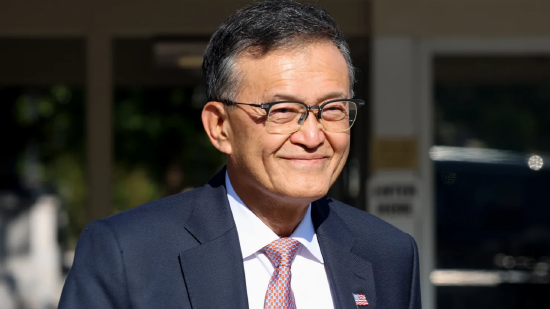
"Early last year, I proposed that memory may become a major bottleneck, but not many people realized this at the time," Chen Liwu said. "Now this situation has become true, and the situation will continue to worsen." He said: "Memory production capacity is extremely limited. Many projects have been delayed because they cannot obtain sufficient memory, and memory prices have increased 5 to 7 times. When building mid-to-low-end mobile phones and laptops, it is very difficult to obtain memory supply."
As AI processors such as GPUs encounter bottlenecks in increasing computing power, the importance of high-bandwidth memory (HBM), known as AI memory, continues to rise. HBM demand has surged, but the production capacity supply of Samsung Electronics, SK Hynix and Micron cannot keep up with demand, and the shortage problem continues to intensify. Due to the shift of production lines to HBM production, general memory also has a supply gap.
Power and cooling are equally thorny issues. "Everyone is aware of the seriousness of the power problem. Electricity is crucial, just like when nuclear engineers and scientists tried to find ways to obtain energy," Chen Liwu said. "To achieve low power consumption in some application scenarios, chip architecture design and interconnection technology have also become very critical." He continued: "Another key direction is cooling technology. In addition to air cooling, there are also liquid cooling and microfluidic cooling solutions, and we are investing in a number of related technologies."
Chen Liwu suggested that the industry pay attention to the trend of the semiconductor market transitioning to system-level architecture. He is referring to the industry trend of Nvidia and AMD integrating GPU, CPU, network components and software into complete machine racks for external sales. "Huang Renxun and Su Zifeng are doing this," he mentioned Nvidia CEO Huang Renxun and AMD CEO Su Zifeng. "Please pay close attention to the news we are about to release in the substrate field." He added: "It is very important to start from the whole machine rack level, deal with the load problem, make customized solutions according to customer needs, and collaborate with customers."
Chen Liwu said that Intel will continue to maintain its cooperative relationship with Nvidia. Nvidia is Intel’s major shareholder and a competitor on the AI chip track. When asked about which areas Intel chose to cooperate and which areas to compete independently, he said: "It is impossible for a company to take over all businesses. The key is to select and focus on the tracks that it is really good at, and at the same time establish partnerships with other companies with advantages for collaborative development."
Comments