
Abstract:
Despite the overall weak performance of the global PC market and the continued rise in memory chip prices, the independent graphics card market delivered an unexpected report card in the second quarter of 2026. The latest industry data shows that discrete graphics processing unit (dGPU) shipments achieved significant growth in the second quarter, which not only broke the traditional off-season pattern, but also showed that the market demand for devices equipped with independent graphics cards is still strong and resilient.
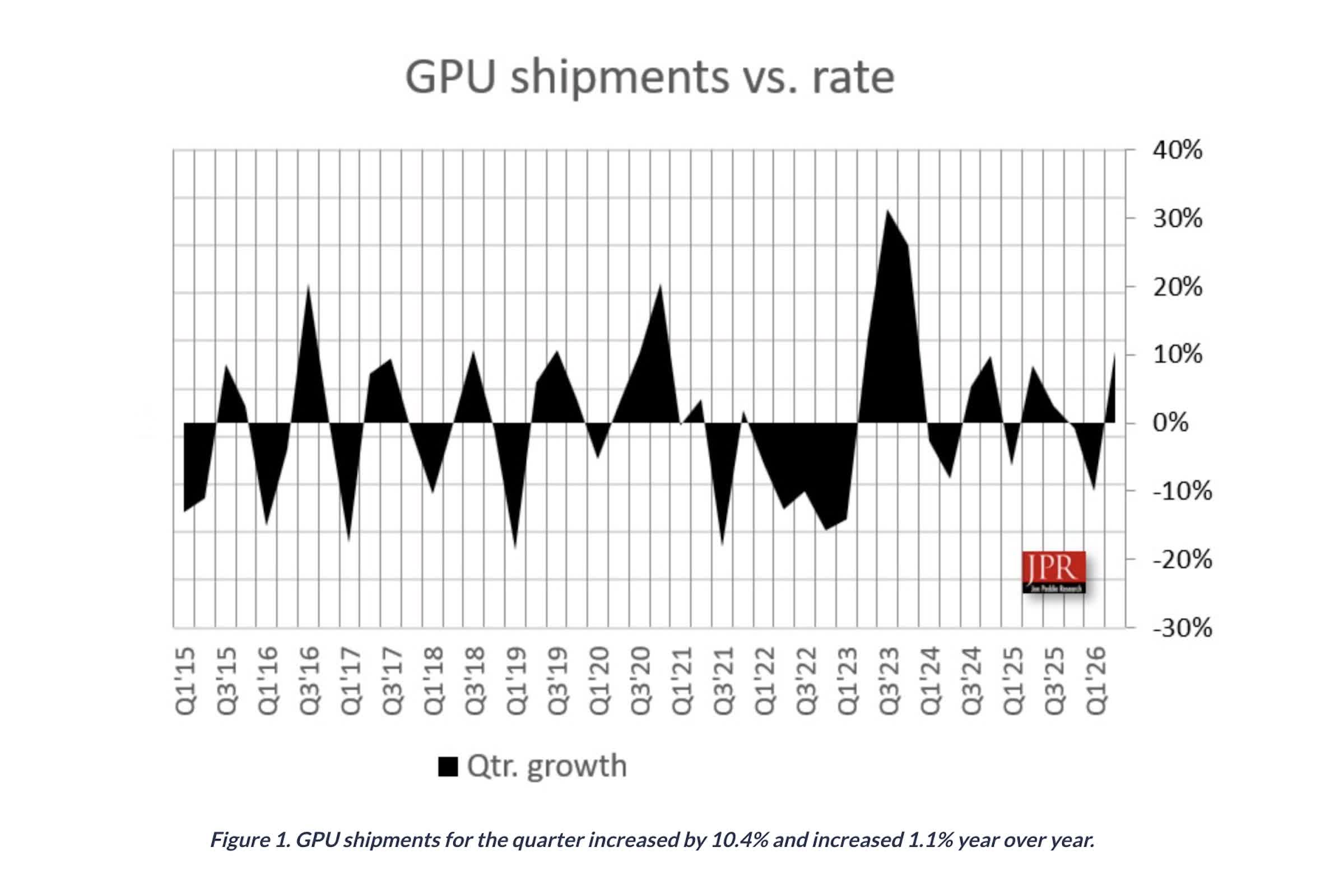
Data released by market research firm Jon Peddie Research (JPR) show that in the second quarter of 2026, independent GPU shipments increased by 12.2% month-on-month and 14.1% year-on-year. This result is particularly noteworthy because the second quarter has historically been regarded as a seasonal off-season for the PC hardware market, and this year the entire industry is also facing pressures such as tight memory supply and rising costs.
At the same time, the overall PC market has not grown simultaneously. Data shows that the client CPU market fell by 1.1% year-on-year in the second quarter of 2026, and desktop demand showed obvious signs of weakening. Against this background, independent graphics cards are able to grow against the trend and are considered to be one of the most noteworthy phenomena in the hardware market this quarter.
Looking at the overall GPU market, total global consumer PC GPU shipments reached 75.5 million units in the second quarter. This figure covers both integrated graphics and discrete graphics, an increase of 10.4% from the previous quarter and an increase of 1.1% from the same period last year.
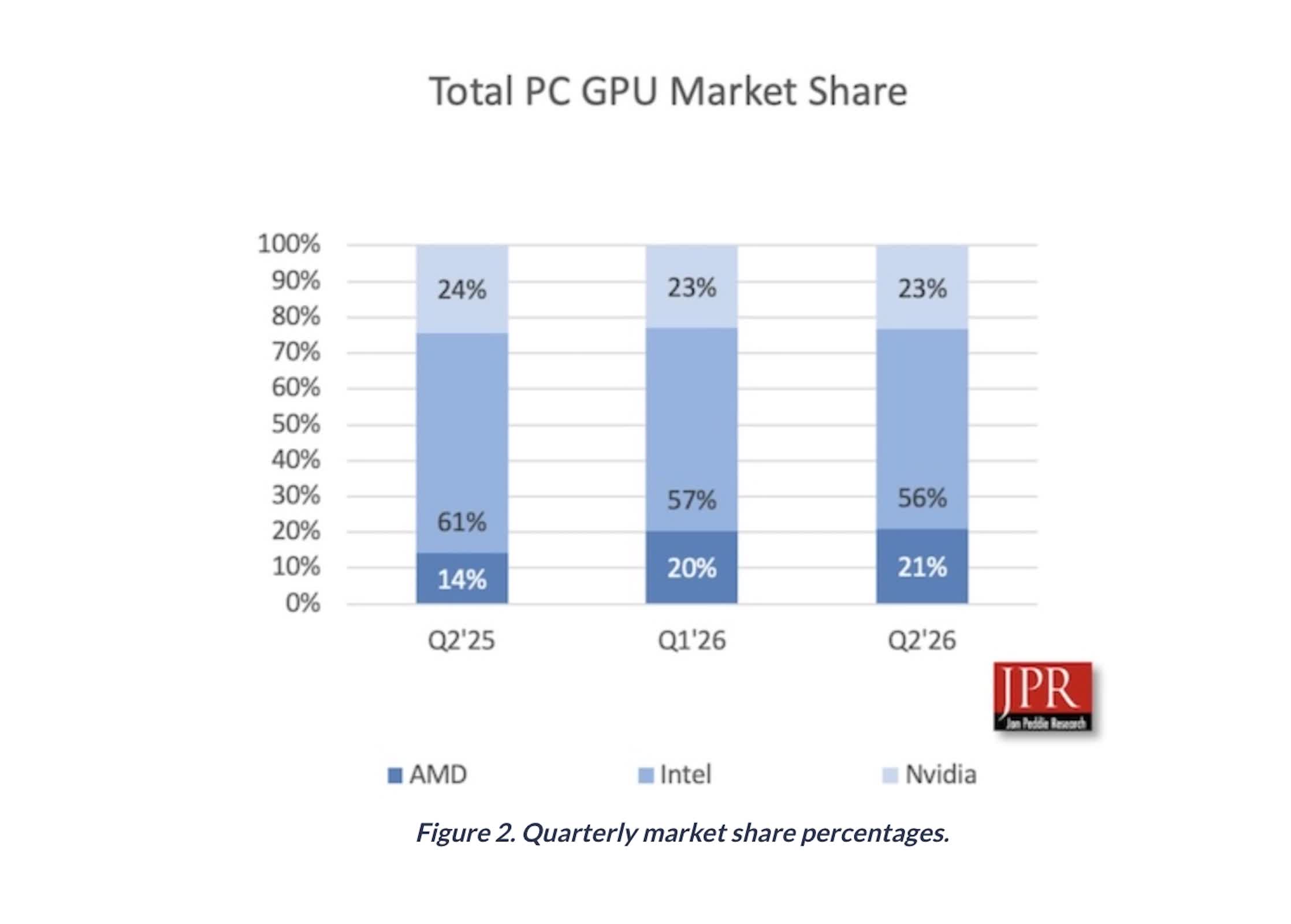
After further splitting, it can be found that this round of growth mainly comes from the notebook computer market. In the second quarter, notebook GPU shipments increased by 16.8% quarter-on-quarter, while desktop GPU shipments fell by 4% quarter-on-quarter. This trend is highly consistent with changes in the CPU market. Demand for mobile platforms continues to increase, while traditional desktop platforms are showing a downward trend.
JPR did not announce the specific shipment quantity of independent graphics cards. However, based on calculations based on GPU deployment rates, market shares, and shipment data of each manufacturer, the three manufacturers AMD, Intel, and Nvidia shipped a total of approximately 20 million independent GPUs in the second quarter.
However, the research institution did not clearly indicate which type of product drove the growth of independent graphics cards. It's unclear whether the growth will come primarily from the desktop graphics retail market, gaming laptops, or other PC products designed with discrete GPUs. However, judging from the existing data, the demand for systems equipped with independent graphics cards is obviously stronger than the overall performance of the traditional desktop computer market.
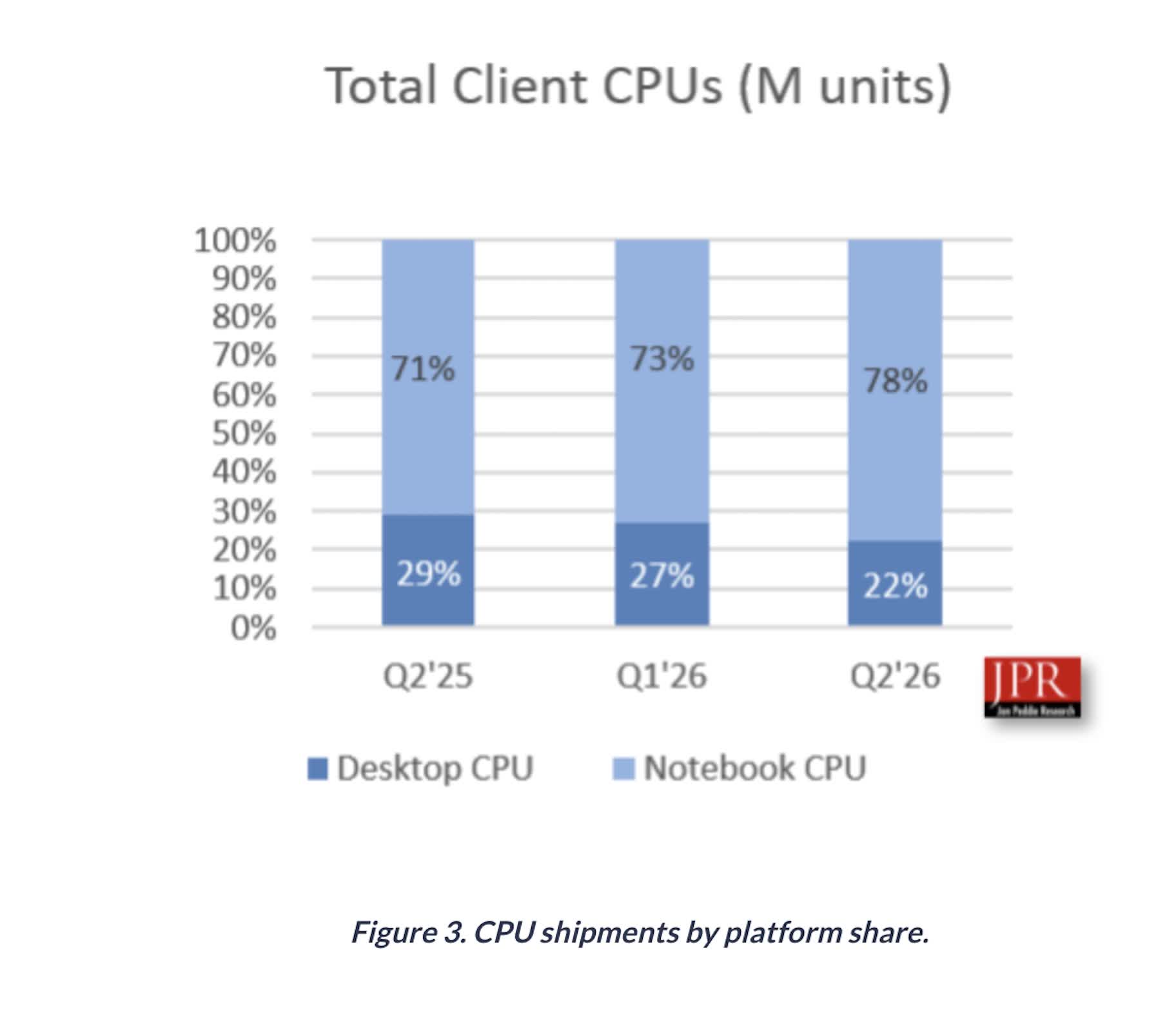
In terms of manufacturer structure, Intel still occupies the largest share of the consumer GPU market with built-in core graphics in its processors. In the second quarter, Intel ranked first with a market share of 56%; Nvidia ranked second with a 23% share; AMD reached 21%.
It is worth noting that AMD’s market share increased by 7 percentage points compared with 14% in the same period last year. However, this statistic includes the Radeon graphics core built into the processor, so the increase in share reflects more of the increase in AMD's consumer processor sales, and does not necessarily mean that its independent graphics card business has achieved the same growth.
Analysts believe that this quarter’s data shows that although high-end graphics cards are affected by rising memory chip prices and PC prices are also facing upward pressure, consumer demand for devices with stronger graphics performance remains stable. Especially driven by the continued expansion of game notebooks, creator notebooks, and AI application scenarios, the independent GPU market has temporarily escaped the negative impact of the slowdown in the traditional PC market.
However, shipment growth is not entirely equivalent to terminal sales growth. Part of the growth may come from manufacturers' stocking up, channel restocking, and OEM order releases. Regarding the real demand of the desktop graphics card market, we still need to wait for the release of a more detailed independent graphics card market report before we can make a more accurate judgment.
Comments