
Abstract:
Anyone who pays attention to the game industry can clearly feel that the entire industry is in a very difficult situation right now. You can see massive layoffs everywhere you look: Sony, Microsoft, EA, Ubisoft, Take-Two, Epic Games...the list goes on and on. There are many reasons, but companies generally attribute the reasons for "reorganization" to: market contraction after the explosive growth of the game industry during the epidemic, rising R&D costs, lengthened production cycles (increased salary levels), changes in consumer consumption patterns, and hardware shortages caused by the surge in demand for global AI data centers.
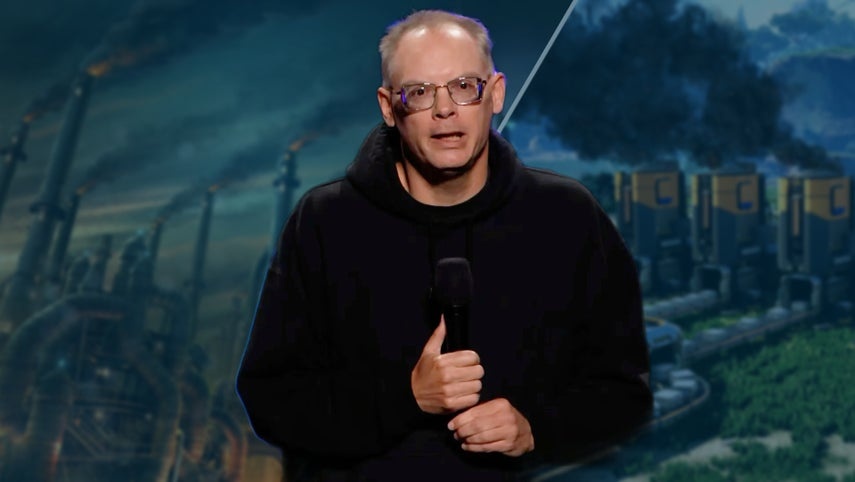
According to GI.biz, Epic Games CEO Tim Sweeney expressed his views on the current situation of the industry in a latest interview with Edge magazine. He said that we are facing the most serious industry crisis since the famous industry collapse caused by the "Atari Shock" in 1983. When asked about component shortages, he talked about how the entire industry could be completely disrupted if companies don't take proactive steps to address the issue soon.
“This is an unexpected and severe impact,” Sweeney explained. “Currently, various industries are investing in AI systems and data centers on an unprecedented scale because people believe that AI will bring disruptive changes to the economy. The huge economic opportunities in this field mean that they can outbid the entire entertainment industry in component procurement.”
"So we have become the loser. The price of memory and storage has quadrupled, and the increase may not stop here. In the next three years, all game-related hardware will continue to face a supply crisis. In my opinion, the only solution is to build a large number of new factories to meet global production capacity needs - this day will come. But there is no Moore's Law in infrastructure production capacity."
Swinney believes, "You can either create your own ecosystem and cultivate a large user base that can support the product; or you can join the existing ecosystem and reach the existing users there." He proposed the idea of an open ecosystem for games: content purchased by players in one place can be imported into another game - "Create an open, interoperable economic system so that the items you purchase can be used not only in "Fortnite" but also in all other games that are willing to join."
Does this sound familiar? But at least Sweeney admits that the NFT idea has completely failed. “NFTs have tried the same model before, but failed completely, and everyone suffered losses in the process,” he noted. “Some kind of revenue sharing model needs to be established, so that if you buy a set of skins in game A, but mainly play game B, the manufacturer of game B can also get part of the revenue.” He also believes that this change will allow players who only play one game to broaden their choices and no longer be bound by sunk costs because they worry about the invalidation of purchased content.
Swinney acknowledged that there is still a lot of work to be done to solve the current problems in the industry, and he believes that unity is the best way out. "If we want to come up with a solution that all developers and publishers can accept, we have to work together as equals," he said. "Companies only do this in times of crisis, and we are in a crisis now. So maybe now is the time to act."
Not long ago, Sweeney was in the news for another statement. He said that Roblox, a competing game platform for "Fortnite", would "continue to grow and swallow up the entire gaming industry." Just a few weeks after he made these remarks, "Fortnite" announced a large-scale collaboration with many classic game characters, including Crash Bandicoot, Lara Croft, "Street Fighter" and "Kingdom Hearts".
Epic itself also laid off 1,000 developers in March this year. Before the layoffs, Epic had expanded to support the explosive growth of "Fortnite", but the decline in player activity of "Fortnite" eventually led to the company's reorganization and the elimination of some positions. Sweeney also pointed out at the time that issues such as declining console hardware sales not only affected Epic, but also plagued the entire industry.
Comments