
Abstract:
The U.S. government’s decision to approve the supply of Nvidia’s H200 artificial intelligence accelerator to Chinese companies is triggering new national security controversies. An investigation by the New York Times found that the U.S. Department of Commerce has approved approximately 24 Chinese companies to purchase or handle H200 chips. However, the registered addresses of some of the approved companies are actually vacant rooms with no offices, and others have ties to Chinese semiconductor suppliers and military-related institutions that are subject to U.S. sanctions. This discovery exposed possible loopholes in the U.S. export licensing review mechanism for advanced AI chips.
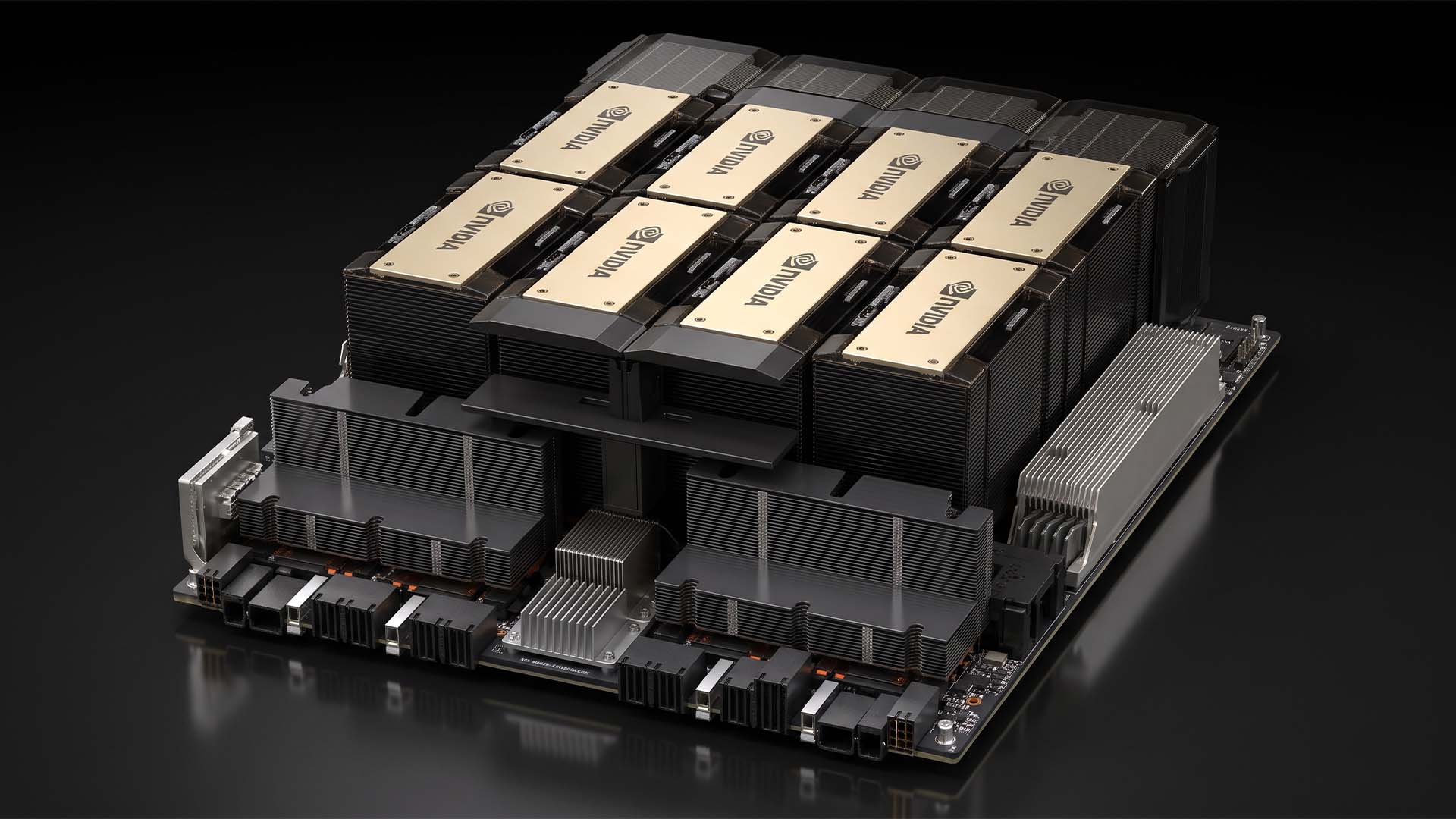
According to the previous export policy adjusted by the Trump administration, NVIDIA H200 has not been completely banned from exporting to China, but relevant transactions still need to be approved by the US government on a case-by-case basis. U.S. President Trump relaxed some export restrictions at the end of 2025. Previously, Nvidia CEO Huang Jenxun had been lobbying the U.S. government in hopes of retaining the company's commercial space in the Chinese market.
The current supply arrangement is quite special: after H200 chips are manufactured and assembled in Taiwan, they need to pass through the United States and then be shipped to approved Chinese customers according to licensing arrangements. The U.S. government can receive 25% of fees or tariffs from related transactions.
This investigation found that the list of approved companies includes well-known companies such as Baidu, BYD, Tesla Shanghai, Alibaba, Tencent, ByteDance and ZTE Kangxun, as well as some companies with complex backgrounds and questionable actual operating conditions.
One company called New Matrix is particularly interesting. When investigative reporters went to the company's registered office address in Beijing, they found that the site was just an empty cement building with wires hanging from the ceiling. There was neither a company logo nor corporate directory information. Building managers even said they had never heard of the company.
New Matrix has only been established for 17 months, and its major equity owners are related to Wise Road. Wise Road is a private equity investment fund that was blacklisted by the United States in 2024 because the United States believed that it had assisted Beijing in acquiring sensitive semiconductor assets.
In addition, Li Bin, the important founder of New Matrix, also serves as the chairman of Ziguang Group. New H3C Semiconductor Technology Co., Ltd., a subsidiary of Unisplendour Group, a related company of Unigroup, was included in the entity list because the United States determined that it had a direct cooperative relationship with the Chinese military.
Another licensed company, Maginfra, also had anomalies. After investigators went to its registered address, they found that it was just a vacant office with a few chairs and empty desks. The surrounding staff said they had never seen anyone enter the office.
Analysts suspect that Maginfra may be a front-end company associated with Inspur, a large Chinese server supplier. The U.S. government put Inspur on the Entity List as early as 2023 on the grounds that it provided hardware equipment to the Chinese People's Liberation Army.
What is more noteworthy is that the licenses obtained by New Matrix and Maginfra are not to directly purchase H200 chips as end users, but are allowed to assemble these chips into AI servers and then deliver them to unspecified customers. In other words, the U.S. government has approved relevant companies to participate in the chip server supply chain, but it has not clearly understood who will use the final equipment.
The investigation also found that some licensed companies have ties to China's military and defense infrastructure.
For example, Zhejiang Yindun Cloud Technology is located in a data center operated by Range Intelligent Computing. The latter is a cloud computing service provider whose business involves provincial defense departments and satellite defense networks.
Another approved company, Shanghai Jiatang, was born out of the state-owned enterprise Datang Telecom System. Datang Telecom's business involves military communications and cryptography technology, which also draws attention to Shanghai Jiatang's ultimate business use.
Former National Security Council China Affairs Director Liza Tobin warned about this, saying that neither the U.S. Department of Commerce nor Nvidia seemed to have adequately conducted necessary background checks. She pointed out that if the relevant companies are indeed connected to sanctioned entities or military supply chains, then the U.S. government’s current approval mechanism poses risks worthy of attention.
This issue is also expected to become the subject of congressional inquiries that Huang Renxun will need to face in the near future. Previously, U.S. congressmen had asked Jen-Hsun Huang to go to Capitol Hill for a closed-door briefing on November 18 to explain Nvidia’s business dealings with relevant Chinese companies and how the company prevents foreign intelligence agencies and sanctioned entities from obtaining advanced AI chips through commercial channels.
From the perspective of U.S. export control policy, the core issue exposed by this incident is not just which Chinese companies have obtained H200, but whether the U.S. government can truly identify the end user of the chip. Even if a company itself is not included on the sanctions list, if it only purchases, assembles or transships chips for other companies, the existing licensing system may still be used to circumvent restrictions originally set for end users.
At the same time, Nvidia is also facing pressure between business interests and compliance responsibilities. The company hopes to retain the Chinese market while having to comply with U.S. export controls. If approved customers end up delivering chips to institutions related to military use, Nvidia may not only face regulatory scrutiny, but may also further affect the U.S. government’s judgment on China’s chip export policy.
This investigation does not mean that all approved companies have violated regulations, nor can it be concluded that relevant chips have been used for military purposes simply based on vacant registered addresses or equity relationships. But it does raise an important question: When the export license of advanced AI chips involves not only direct buyers, but also server assemblers, cloud computing operators and intermediate suppliers, whether the existing U.S. review system can truly track the final flow of the chips.
For the U.S. government, the controversy over the H200 export policy may shift from whether to allow the sale of chips to China to how to verify the identity of the buyer, review corporate relationships, and track end users.
Comments