
Abstract:
This is something that has never happened before. Apple's new mobile phone has encountered a lukewarm pre-sale in the United States. At 8 a.m. last weekend, Apple’s new mobile phone iPhone 18 Pro series this year opened for pre-order in the United States. But half an hour later, this phone was still fully stocked in the US market. All colors and capacity specifications were still available for delivery on the day of release on September 18, and none of them were fully booked.
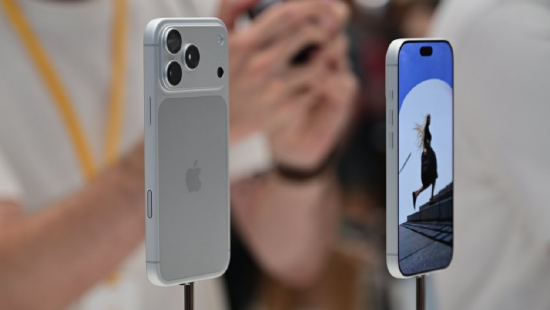
"Silicon Valley Observer" found that this new situation is in sharp contrast with previous years, and may also make Apple's new CEO Turner feel embarrassed. Because in previous years, after Apple's new iPhones started to be pre-ordered in the United States, popular configurations were always sold out within minutes of going on sale, and the delivery date was quickly postponed to weeks or even more than a month later.
Another interesting phenomenon is that almost every year, after the pre-sales are booming, CEO Cook will low-key and coquettishly state that demand "exceeds expectations." This year, Turners should not be able to say this, at least there will be no demand for the folding machine Duo in the latest quarterly financial report.
Still available even after one day of pre-sale
Let’s take a look at the actual situation on the pre-sale day for the two new models of the iPhone 18 series. Apple has not released any low-end models this year. Only two Pro models are on sale as scheduled, and the first foldable phone Duo will not go on sale until the middle of next month.
Usually, Apple opens pre-sales on the Friday after a new product is released, but this year, because it coincides with the anniversary of the 9/11 incident, Apple deliberately postponed the launch in the US market by one day, and started pre-ordering from Saturday (that is, yesterday). But half an hour after it went on sale, iPhone 18 Pro was still in sufficient supply, and all configurations were not sold out. A whole day passed, and by yesterday evening, only the burgundy and silver 256GB and 512GB versions of the iPhone 18 Pro had been postponed for a week, while other configurations could still be shipped on the launch day.
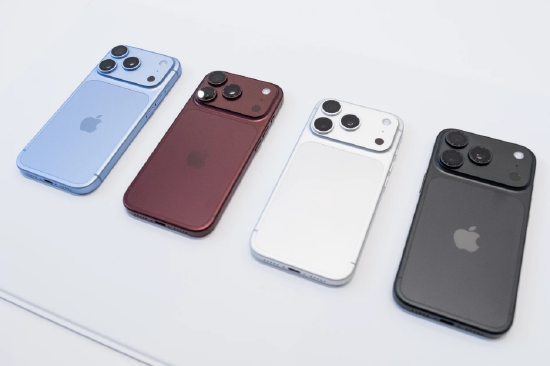
The pre-sale situation of iPhone 18 Pro Max is slightly better, but it is also lower than previous years. The first version to experience delivery delays was the 256GB burgundy version. About half an hour after it went on sale, the delivery period slipped to September 29th to October 6th; an hour later it was further postponed to October 6th to October 13th. Later, some 256GB configurations in glacier color, silver, and black also slipped into October.
However, it is worth noting that there does not seem to be much market demand for the high-capacity top version. Because the 2TB versions of all colors, whether Pro or Pro Max, are still available for first-day delivery as of Saturday evening. The 1TB version of Pro Max also had no delays at all during its initial launch. Perhaps, the price of the 2TB version at US$2,499 has exceeded the psychological range of most consumers, and Apple's estimate of market demand for this level may be too high.
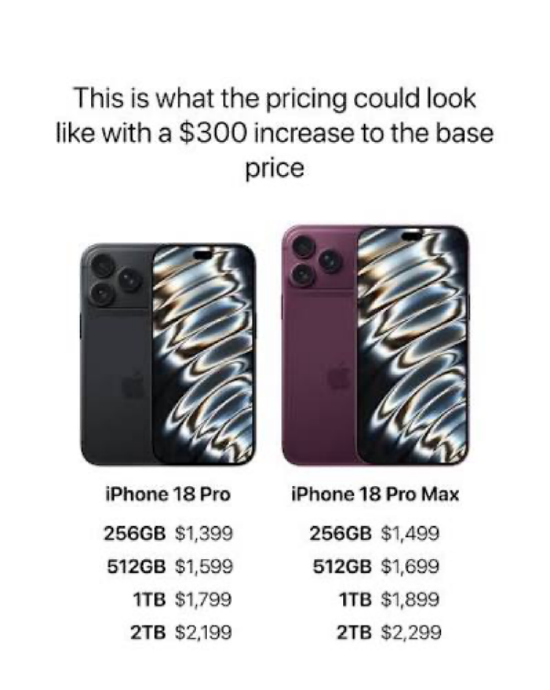
Pricing is of course the most important factor for consumers. Due to the surge in storage prices, Apple’s 18 Pro series this year has increased the price by US$100 compared to last year’s 17 Pro series, and the pricing of the large-capacity version is even more astonishingly high. This year’s iPhone 18 Pro is priced at US$1,199 for the 256GB version, US$1,399 for the 512GB version, US$1,799 for the 1TB version, and US$2,399 for the 2TB version; iPhone 18 Pro Max starts at US$1,299, US$1,499 for the 512GB version, US$1,899 for the 1TB version, and US$2,499 for the 2TB version.
It is not unusual for iPhone prices to rise. In 2017, Apple launched the iPhone But in the past two years, Apple has raised the price by US$100 each year, and now the new iPhone Pro with the lowest configuration is US$1,199.
Upgrades are limited or too expensive?
Apple has not yet commented on pre-sale status. However, American media and analysts have roughly analyzed several possible reasons why pre-sales of Apple's new mobile phones have been sluggish this year.
First, Apple’s price increase makes consumers cautious. The price of the Pro series is increased by US$100 across the board, and this occurs at a time when inflationary pressures in the United States continue and optional consumption is tightening. Home insurance, utility bills, gasoline, food, everything is increasing in price. The rising cost of living has put direct pressure on consumers. In this context, buying a new mobile phone starting at US$1,199 requires more sufficient reasons to switch.
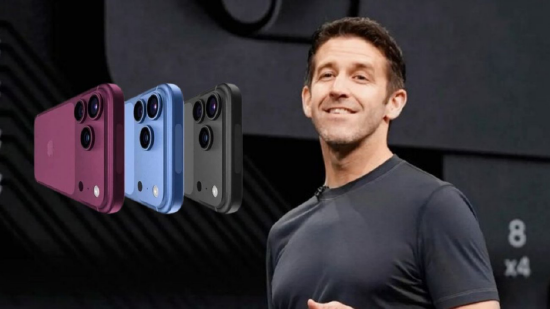
Second, the scope of new product upgrades this year is limited. The appearance dimensions of the iPhone 18 Pro are exactly the same as the iPhone 17 Pro, and even most of the old protective cases can be used directly. The core upgrade is the A20 Pro chip with new cooling technology and the 48-megapixel Fusion main camera, but the subjective feelings these bring to consumers are not obvious. A user on the MacRumors forum commented: "For Pro models, this is the year of S." (In the past, Apple would add S after slightly upgraded models, such as iPhone 5 and 5S, but later changed the naming method.)
Third, it is very likely that a large number of consumers are holding cash to buy iPhone Duo. Although Apple’s first-generation foldable screen phone was released together with the Pro series, pre-orders will not start until October 16th and will not be shipped until October 23rd. This is the first time Apple has delayed the release of a new flagship phone since the iPhone X. For those high-end users with sufficient budget, they may be more willing to wait an extra month to see the experience of a folding machine starting at US$1,999.
Fourth, Saturday pre-sale time affects the buying cycle. In previous years, Apple's pre-sales opened on the Friday morning after the launch. However, September 11 this year coincides with the 25th anniversary of the 9/11 incident, so Apple postponed the pre-sales to Saturday to show respect. Perhaps many consumers are not used to ordering online at 8 a.m. on Saturday.
Fifth, of course, it is not ruled out that Apple has prepared a large amount of stock this year, so it will not be sold out even if it is sold casually. Some analysts pointed out that this year Apple’s forecast of first-release demand is more accurate and its production capacity reserves are more in place, so the lack of delays in shipments does not necessarily mean poor sales.
Operator subsidies are not affordable either
The U.S. smartphone market is still dominated by operator channels. Although shipments from public market channels such as Apple’s official store and Amazon have increased in recent years, market research data from CIRP shows that the proportion of U.S. operator channel shipments is still as high as 75%-79%. Most iPhone users are still accustomed to buying new phones from several major operators because there are promotional subsidies and they can pay in installments.
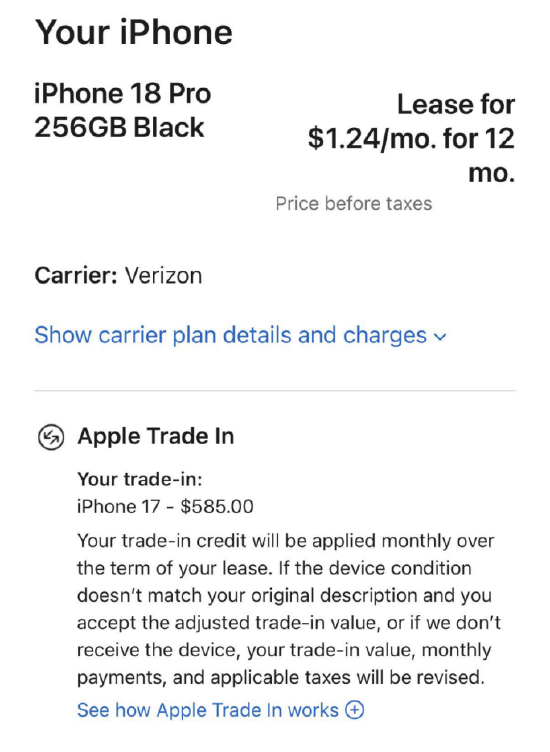
Verizon, AT&T and T-Mobile, the three major operators in the United States, have all offered "trade-in, up to US$1,200" purchase discounts this year. AT&T accepts discounts for iPhone 14 and newer models in any condition; T-Mobile also accepts any condition and has launched a new installment plan that can divide the phone into 36 installments together with taxes and fees. Qualified customers can pay zero down payment at checkout. Verizon offers a trade-in credit of up to US$1,200 (for new users) or US$1,020 (for existing users), which can be returned in 36 installments (i.e. three years).
But there are tricks behind these seemingly tempting promotions. The advertised $1,200 is conditional and must be traded in for last year’s 17 Pro model, while the trade-in for the 16 Pro model has dropped sharply to $650. In addition, to get the high trade-in subsidy, you need to subscribe to the operator's high-priced package. The basic package does not have such a favorable subsidy.
Sacrificing low-end machine warranty profits
But this pre-sale failure has a more structural background. Because this fall, Apple did not release any low-end models, and even increased the prices of older models.
At the autumn conference in previous years, the basic version and the Pro version were unveiled on the same stage. This year there are only three models: iPhone 18 Pro, Pro Max and folding screen Duo, all of which are high-end products. The basic iPhone 18, entry-level iPhone 18e and second-generation iPhone Air have all been postponed to spring 2027. This is the first time in Apple’s history that it has delayed the launch of the basic iPhone.
Why doesn’t Apple release low-end models?
According to "Nikkei Asia" citing multiple sources, this adjustment "is intended to optimize resource allocation and maximize the revenue and profits of high-end models in the context of soaring memory chip prices"; at the same time, this is "critical for Apple to minimize potential production fluctuations when mass-producing the first folding iPhone."
The reason behind it is also very simple. Because there is not enough memory, Apple has to prioritize allocating limited production capacity to products with the highest gross profit. This is Apple's most direct and helpless way to deal with the memory supply chain crisis.
The construction of AI data centers has led to a serious shortage of memory chips, which has driven up the price of memory for consumer electronics products. The proportion of memory in iPhone material costs is rising from about 10% before to 45% by the end of this year. Apple has raised prices on all Macs, iPads, Apple TV, HomePod and Vision Pro in June; Cook previously described this round of semiconductor shortages as a "once-in-a-century flood."
So, Apple’s logic for temporarily sacrificing low-end models is very clear: use fewer models and higher unit prices to maintain the 50% gross profit margin despite limited production capacity. Consumers who want to switch to an iPhone this fall have only two choices: the Pro starting at $1,199, or the foldable phone starting at $1,999. Those Apple users who would spend $799 on the basic model in previous years are very torn this year: either increase their budget and buy a Pro, buy an older model with a reduced price, or wait until next spring when Apple releases the basic model.
Apple also simultaneously increased the prices of older models: iPhone 17 rose from US$799 to US$899, iPhone Air rose to US$1,099, iPhone 17e rose to US$699, and even the earlier iPhone 16 also rose to US$799. In order not to affect the sales of iPhone 18 Pro, Apple directly discontinued the iPhone 17 Pro. After all, the upgrade was too small.
Of course, pre-sale data does not equal sales. Apple never announces pre-sales figures, and the delivery cycle is only a side indicator. There are many signs that high-end consumers are eagerly waiting for iPhone Duo.
If the pre-sale of Duo is popular next month, it can verify the explanation of "holding money for purchase"; otherwise, it means that the overall market for this generation of iPhone may cool down. But Duo's production capacity is a challenge. According to industry reports, due to hinge durability, customized DRAM supply and high component costs, Duo's initial production in the second half of 2026 may only be 7 million to 8 million units, and priority may be given to ensuring phased distribution in the United States.
For Turners, this is his first market test since becoming CEO. He hosted the press conference on the ninth day after taking office, and ushered in this slightly deserted pre-sale on the twelfth day. And the product that really determines the success or failure of this generation of iPhone - the folding machine will not go on sale for more than a month.
Comments